If you have any questions, you are always welcome to contact us. We'll get back to you as soon as possible, withing 24 hours on weekdays.
Customer service
All questions about your order, return and delivery must be sent to our customer service team by e-mail at yourstore@yourdomain.com
Sale & Press
If you are interested in selling our products, need more information about our brand or wish to make a collaboration, please contact us at press@yourdomain.com
Help
If you have any questions, you are always welcome to contact us. We'll get back to you as soon as possible, withing 24 hours on weekdays.
Customer service
All questions about your order, return and delivery must be sent to our customer service team by e-mail at yourstore@yourdomain.com
Sale & Press
If you are interested in selling our products, need more information about our brand or wish to make a collaboration, please contact us at press@yourdomain.com
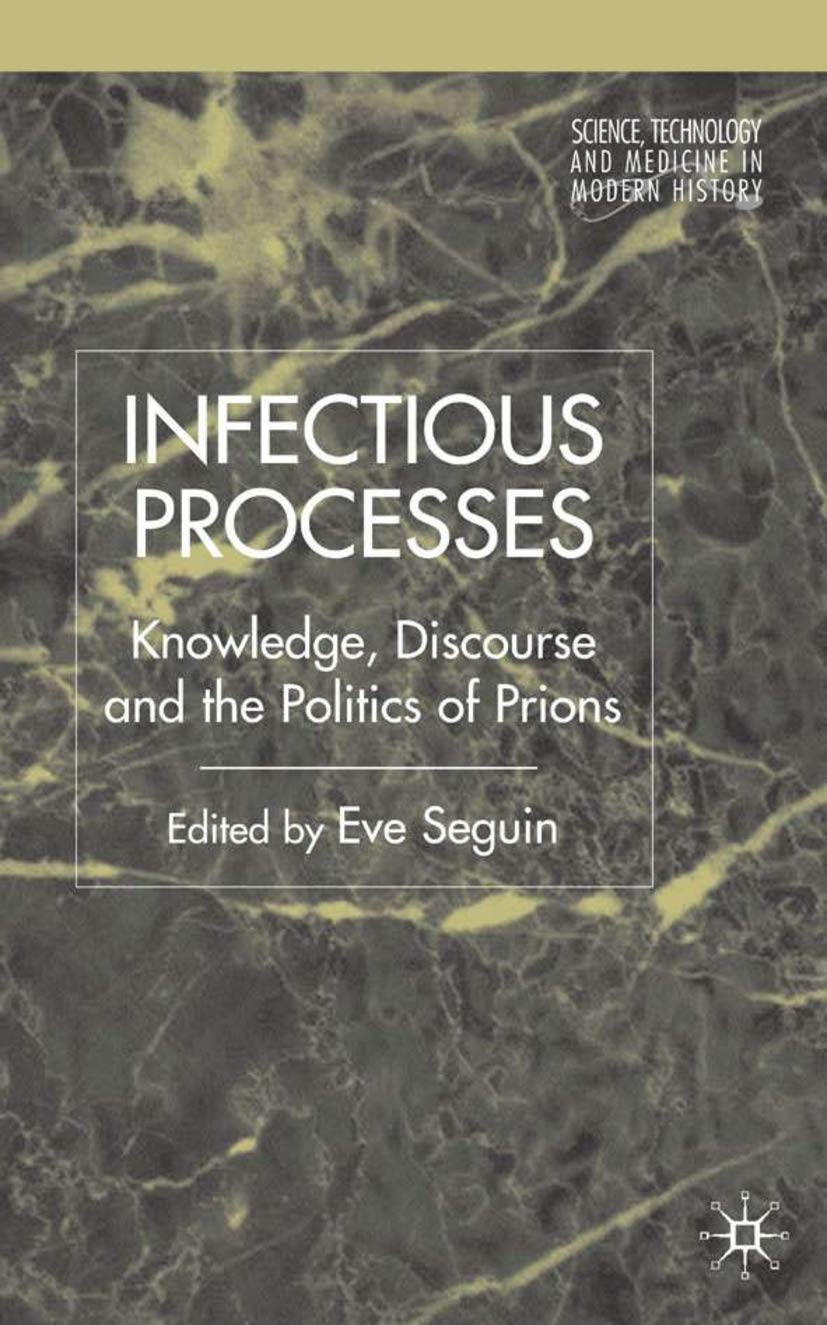
In recent years a number of scholars have analyzed the management of BSE, also known as 'mad cow disease'. The BSE crisis is regarded by many as an example of the failure of officials and politicians to handle risk situations. Yet, BSE is also characterized by a unique trait, that is, the infectious agent that causes it. Thus far, no one has paid attention to the fact that BSE and other transmissible spongiform encephalopathy's (TSEs) are allegedly caused by a novel agent a prion distinct from all other known infectious agents such as bacteria and viruses. The prion hypothesis was introduced by the American scientist Stanley Prusiner in 1982. It immediately created a controversy among scientists and is still rejected by some. Yet, despite this lack of consensus in the scientific community, Prusiner was awarded the Nobel Prize for medicine in 1997. This book analyzes the introduction, reception, development and consequences of the prion hypothesis. It shows that BSE is a unique case not only in virtue of its political mismanagement but also because its infectious agent has created a form of revolution in biology.
⚠️ WARNING (California Proposition 65):
This product may contain chemicals known to the State of California to cause cancer,
birth defects, or other reproductive harm.
For MAP (Minimum Advertised Price) violations and Intellectual Property (IP) or Trademark concerns, please contact:
support@ergodebooks.com
⚠️ California Proposition 65 Warning: Some products sold on this website may expose you to chemicals known to the State of California to cause cancer, birth defects, or other reproductive harm. For more information, visit www.P65Warnings.ca.gov.