
Title
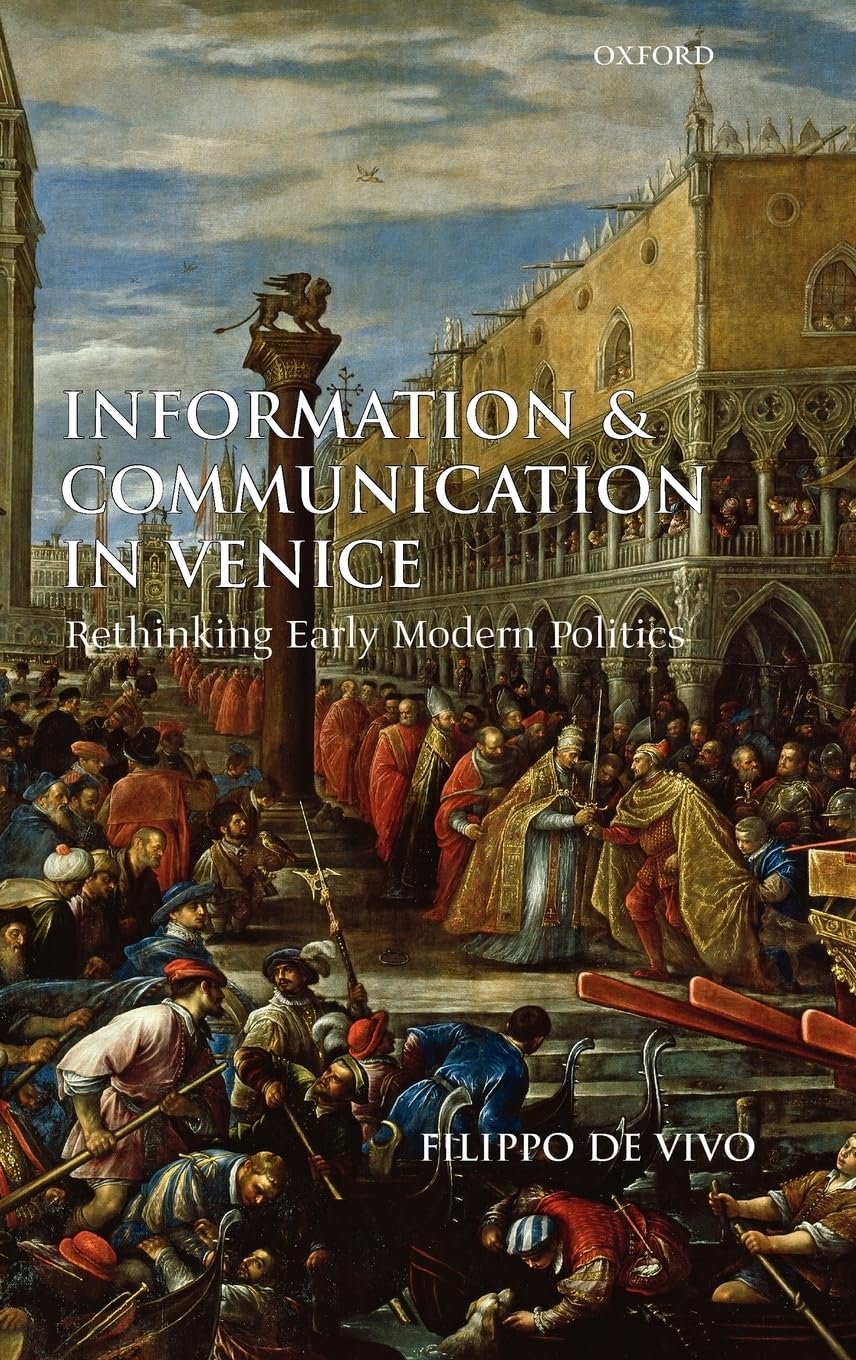
Information and Communication in Venice: Rethinking Early Modern Politics,Used
Sold by Ergodebooks, an authorized reseller.
Returns accepted within 30 days | support@ergodebooks.com
Shipping Information
- Free Standard Shipping — United States only
- Processing Time: 3–5 business days
- Estimated Delivery: 6–10 business days after dispatch
- Double-boxed, fully insured & discreetly packaged
- Tracking number sent via email once dispatched
Returns & Refund
Returns accepted within 30 days of delivery.
Damaged or Defective Item
Free return shipping + replacement or full refund
Wrong Item Received
Free return shipping + replacement or full refund
Change of Mind
Return shipping at customer's expense · 25% restocking fee applies
Payment Option

This is a unique investigation of the political uses of different forms of communication oral, manuscript, and printed in sixteenth and seventeenth century Venice. De Vivo uses a rich and diverse range of sources from council debates to leaks and spies' reports, from printed pamphlets to graffiti and rumors to demonstrate just how closely political communication was intertwined with the wider social and economic life of the city.The book also engages with important wider problems, inviting comparison beyond Venice. For instance, today we take it for granted that communication and politics influence each other through spindoctoring and media power. What, however, was the use of communication in an age when rulers recognized no political role for their subjects? And what access to political information did those excluded from government have?In answering these questions, de Vivo offers a highly original reinterpretation of early modern politics that steers a course between the tendency of the political historian to view events from the windows of government buildings and the 'history from below' of social historians. As this account shows, neither perspective is sufficient in isolation, because even the most secretive oligarchs, ensconced in the Ducal Palace's most restricted councils, were constantly preoccupied by their vociferous subjects in the squares below. Challenging the social and cultural boundaries of more traditional accounts, the book goes on to show how politics in early modern Venice extended far beyond the patrician elite to involve the entire population, from humble clerks and foreign spies, to notaries, artisans, barbers, and prostitutes.
⚠️ WARNING (California Proposition 65):
This product may contain chemicals known to the State of California to cause cancer, birth defects, or other reproductive harm.
For more information, please visit www.P65Warnings.ca.gov.