
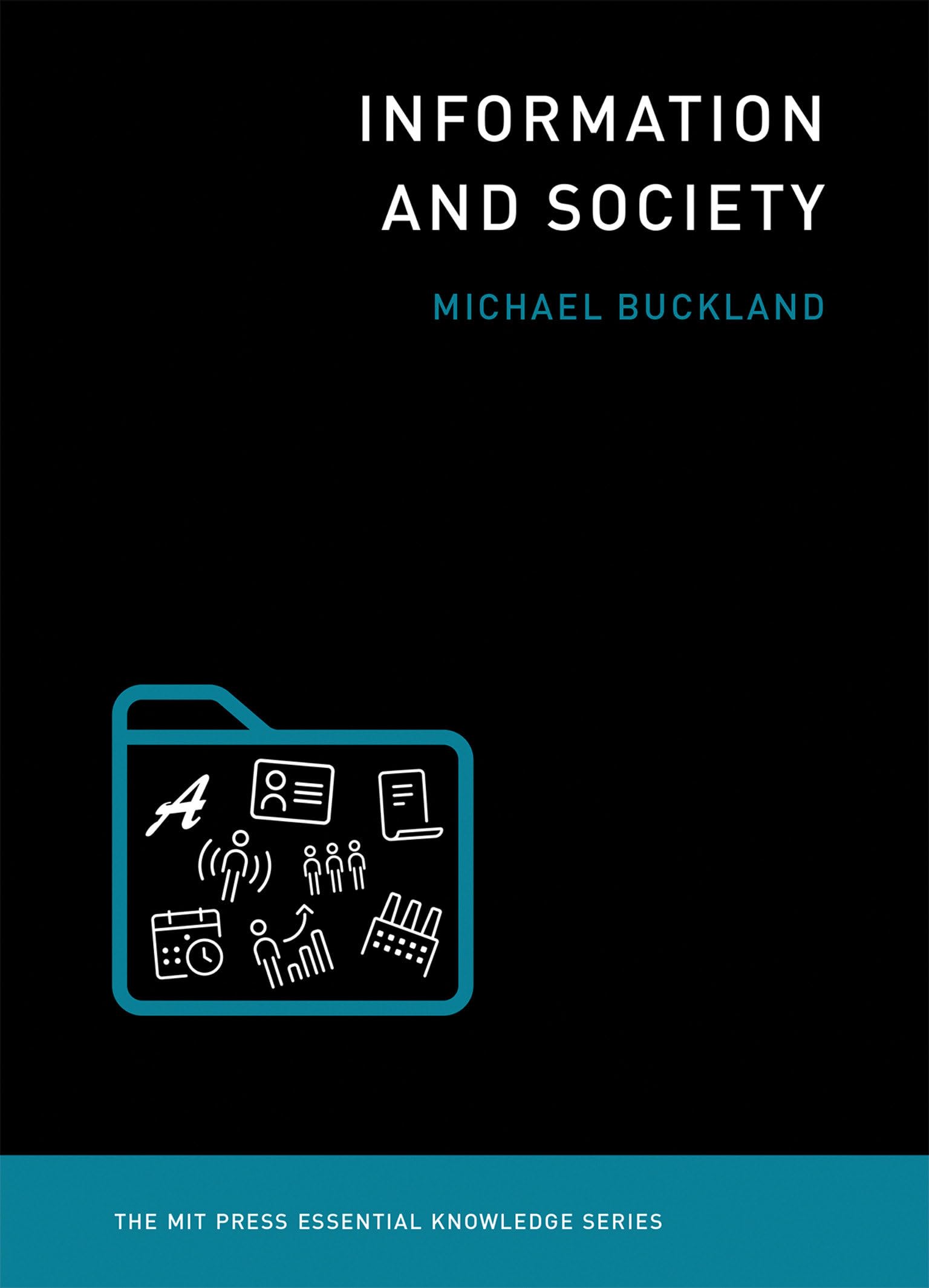
Title
Information and Society (The MIT Press Essential Knowledge series),Used
Sold by Ergodebooks, an authorized reseller.
Returns accepted within 30 days | support@ergodebooks.com
Shipping Information
- Free Standard Shipping — United States only
- Processing Time: 3–5 business days
- Estimated Delivery: 6–10 business days after dispatch
- Double-boxed, fully insured & discreetly packaged
- Tracking number sent via email once dispatched
Returns & Refund
Returns accepted within 30 days of delivery.
Damaged or Defective Item
Free return shipping + replacement or full refund
Wrong Item Received
Free return shipping + replacement or full refund
Change of Mind
Return shipping at customer's expense · 25% restocking fee applies
Payment Option

A short, informal account of our everincreasing dependence on a complex multiplicity of messages, records, documents, and data.We live in an information society, or so we are often told. But what does that mean? This volume in the MIT Press Essential Knowledge series offers a concise, informal account of the ways in which information and society are related and of our everincreasing dependence on a complex multiplicity of messages, records, documents, and data. Using information in its everyday, nonspecialized sense, Michael Buckland explores the influence of information on what we know, the role of communication and recorded information in our daily lives, and the difficulty (or ease) of finding information. He shows that all this involves human perception, social behavior, changing technologies, and issues of trust.Buckland argues that every society is an information society; a noninformation society would be a contradiction in terms. But the shift from oral and gestural communication to documents, and the wider use of documents facilitated by new technologies, have made our society particularly information intensive. Buckland describes the rising flood of data, documents, and records, outlines the dramatic longterm growth of documents, and traces the rise of techniques to cope with them. He examines the physical manifestation of information as documents, the emergence of data sets, and how documents and data are discovered and used. He explores what individuals and societies do with information; offers a basic summary of how collected documents are arranged and described; considers the nature of naming; explains the uses of metadata; and evaluates selection methods, considering relevance, recall, and precision.
⚠️ WARNING (California Proposition 65):
This product may contain chemicals known to the State of California to cause cancer, birth defects, or other reproductive harm.
For more information, please visit www.P65Warnings.ca.gov.