
Title
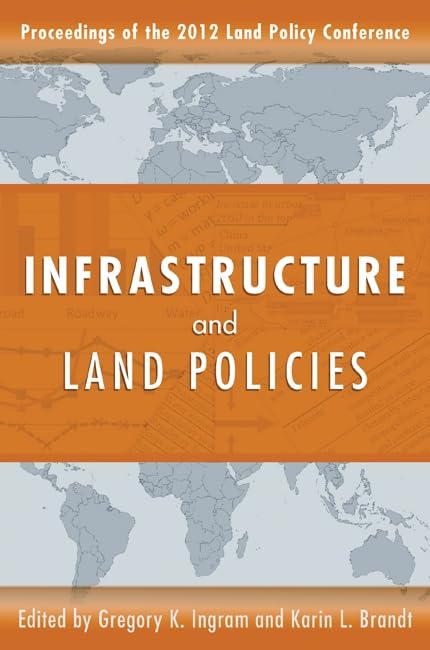
Infrastructure and Land Policies (Land Policy Series),Used
Sold by Ergodebooks, an authorized reseller.
Returns accepted within 30 days | support@ergodebooks.com
Shipping Information
- Free Standard Shipping — United States only
- Processing Time: 3–5 business days
- Estimated Delivery: 6–10 business days after dispatch
- Double-boxed, fully insured & discreetly packaged
- Tracking number sent via email once dispatched
Returns & Refund
Returns accepted within 30 days of delivery.
Damaged or Defective Item
Free return shipping + replacement or full refund
Wrong Item Received
Free return shipping + replacement or full refund
Change of Mind
Return shipping at customer's expense · 25% restocking fee applies
Payment Option

More than 50 percent of the global population resides in urban areas where land policy and infrastructure interactions facilitate economic opportunities, affect the quality of life, and influence patterns of urban development. While infrastructure is as old as cities, technological changes and public policies on taxation and regulation produce new issues worthy of analysis, ranging from megaprojects and greenhouse gas emissions to involuntary resettlement. This volume, based on the 2012 seventh annual Land Policy Conference at the Lincoln Institute, brings together economists, social scientists, urban planners, and engineers to discuss how infrastructure issues impact low, middle, and highincome countries.Infrastructure drives economic and social activities. For urban areas, the challenges of balancing economic growth with infrastructure development and maintenance are reflected in debates about finance, regulation, and location and about the sustainable levels of infrastructure services. Relevant sectors include energy (electricity and natural gas); telecommunications (phone lines, mobile phone service, and Internet); transportation (airports, railways, roads, waterways, and seaports); and water supply and sanitation (piped water, irrigation, and sewage collection and treatment).Recent research shows that inadequate infrastructure is associated with income inequality. This is likely linked to the delivery of infrastructure services to households, such as direct health benefits, improved access to education, and enhanced economic opportunities. Because so much infrastructure is energy intensive, efforts to reduce greenhouse gas emissions and other negative impacts must address services such as electric power and transport. Bringing the management of infrastructure up to levels of good practice has a large economic payoff, and performance levels vary dramatically between and within countries. A crucial unmet challenge is to convince policy makers and voters that large economic returns can result from improving infrastructure performance and maintenance.
⚠️ WARNING (California Proposition 65):
This product may contain chemicals known to the State of California to cause cancer, birth defects, or other reproductive harm.
For more information, please visit www.P65Warnings.ca.gov.