
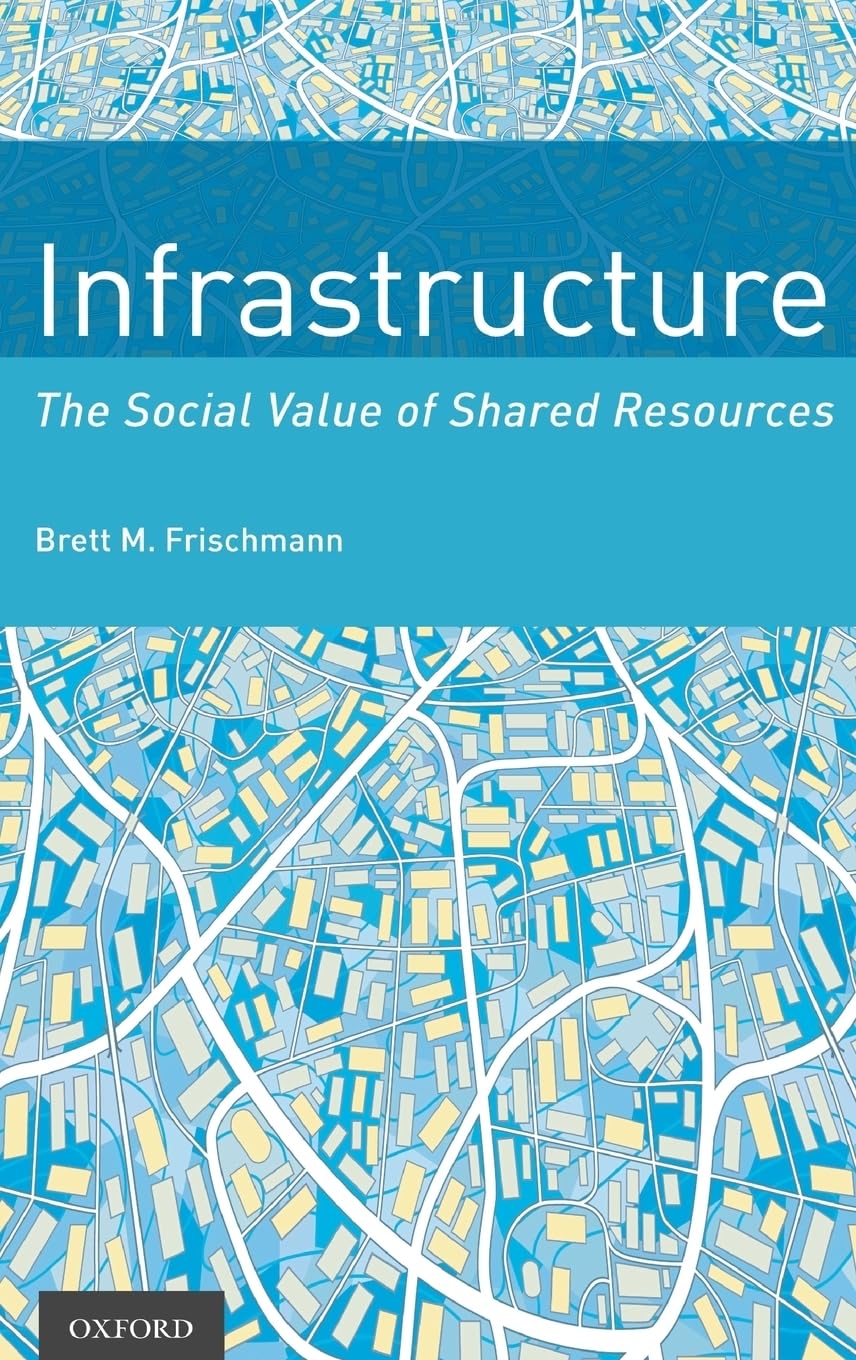
Title
Infrastructure: The Social Value of Shared Resources,Used
Sold by Ergodebooks, an authorized reseller.
Returns accepted within 30 days | support@ergodebooks.com
Shipping Information
- Free Standard Shipping — United States only
- Processing Time: 3–5 business days
- Estimated Delivery: 6–10 business days after dispatch
- Double-boxed, fully insured & discreetly packaged
- Tracking number sent via email once dispatched
Returns & Refund
Returns accepted within 30 days of delivery.
Damaged or Defective Item
Free return shipping + replacement or full refund
Wrong Item Received
Free return shipping + replacement or full refund
Change of Mind
Return shipping at customer's expense · 25% restocking fee applies
Payment Option

Infrastructure resources are the subject of many contentious public policy debates, including what to do about crumbling roads and bridges, whether and how to protect our natural environment, energy policy, even patent law reform, universal health care, network neutrality regulation and the future of the Internet. Each of these involves a battle to control infrastructure resources, to establish the terms and conditions under which the public receives access, and to determine how the infrastructure and various dependent systems evolve over time.Infrastructure: The Social Value of Shared Resources devotes much needed attention to understanding how society benefits from infrastructure resources and how management decisions affect a wide variety of interests. The book links infrastructure, a particular set of resources defined in terms of the manner in which they create value, with commons, a resource management principle by which a resource is shared within a community. The infrastructure commons ideas have broad implications for scholarship and public policy across many fields ranging from traditional infrastructure like roads to environmental economics to intellectual property to Internet policy.Economics has become the methodology of choice for many scholars and policymakers in these areas. The book offers a rigorous economic challenge to the prevailing wisdom, which focuses primarily on problems associated with ensuring adequate supply. The author explores a set of questions that, once asked, seem obvious: what drives the demand side of the equation, and how should demandside drivers affect public policy? Demand for infrastructure resources involves a range of important considerations that bear on the optimal design of a regime for infrastructure management. The book identifies resource valuation and attendant management problems that recur across many different fields and many different resource types, and it develops a functional economic approach to understanding and analyzing these problems and potential solutions.
⚠️ WARNING (California Proposition 65):
This product may contain chemicals known to the State of California to cause cancer, birth defects, or other reproductive harm.
For more information, please visit www.P65Warnings.ca.gov.