
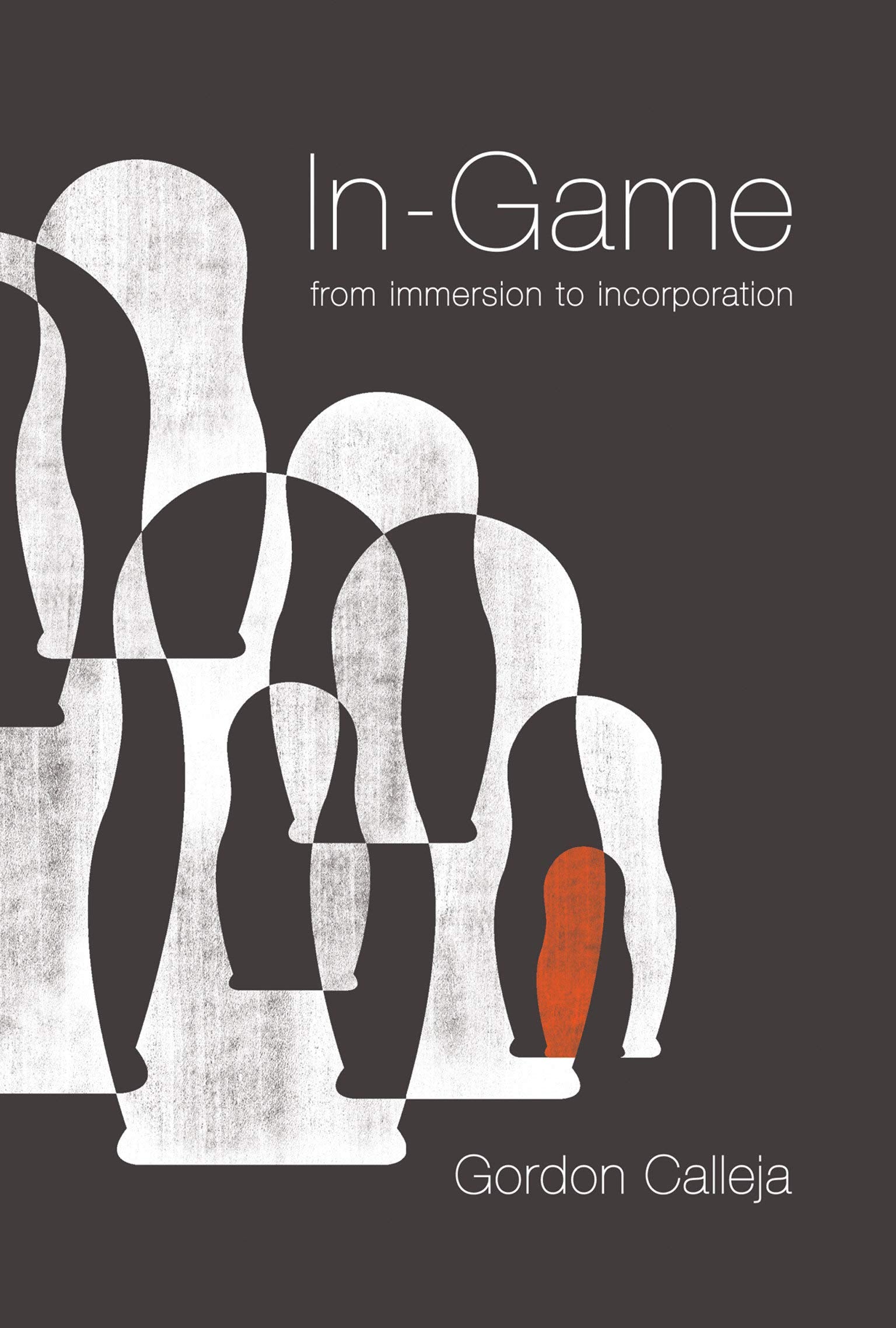
Title
InGame: From Immersion to Incorporation (Mit Press),Used
Sold by Ergodebooks, an authorized reseller.
Returns accepted within 30 days | support@ergodebooks.com
Shipping Information
- Free Standard Shipping — United States only
- Processing Time: 3–5 business days
- Estimated Delivery: 6–10 business days after dispatch
- Double-boxed, fully insured & discreetly packaged
- Tracking number sent via email once dispatched
Returns & Refund
Returns accepted within 30 days of delivery.
Damaged or Defective Item
Free return shipping + replacement or full refund
Wrong Item Received
Free return shipping + replacement or full refund
Change of Mind
Return shipping at customer's expense · 25% restocking fee applies
Payment Option

An investigation of what makes digital games engaging to players and a reexamination of the concept of immersion.Digital games offer a vast range of engaging experiences, from the serene exploration of beautifully rendered landscapes to the deeply cognitive challenges presented by strategic simulations to the adrenaline rush of competitive teambased shootouts. Digital games enable experiences that are considerably different from a reader's engagement with literature or a moviegoer's experience of a movie. In InGame, Gordon Calleja examines what exactly it is that makes digital games so uniquely involving and offers a new, more precise, and gamespecific formulation of this involvement. One of the most commonly yet vaguely deployed concepts in the industry and academia alike is immersiona player's sensation of inhabiting the space represented onscreen. Overuse of this term has diminished its analytical value and confused its meaning, both in analysis and design. Rather than conceiving of immersion as a single experience, Calleja views it as blending different experiential phenomena afforded by involving gameplay. He proposes a framework (based on qualitative research) to describe these phenomena: the player involvement model. This model encompasses two constituent temporal phasesthe macro, representing offline involvement, and the micro, representing momenttomoment involvement during gameplayas well as six dimensions of player involvement: kinesthetic, spatial, shared, narrative, affective, and ludic. The intensified and internalized experiential blend can culminate in incorporationa concept that Calleja proposes as an alternative to the problematic immersion. Incorporation, he argues, is a more accurate metaphor, providing a robust foundation for future research and design.
⚠️ WARNING (California Proposition 65):
This product may contain chemicals known to the State of California to cause cancer, birth defects, or other reproductive harm.
For more information, please visit www.P65Warnings.ca.gov.