
Title
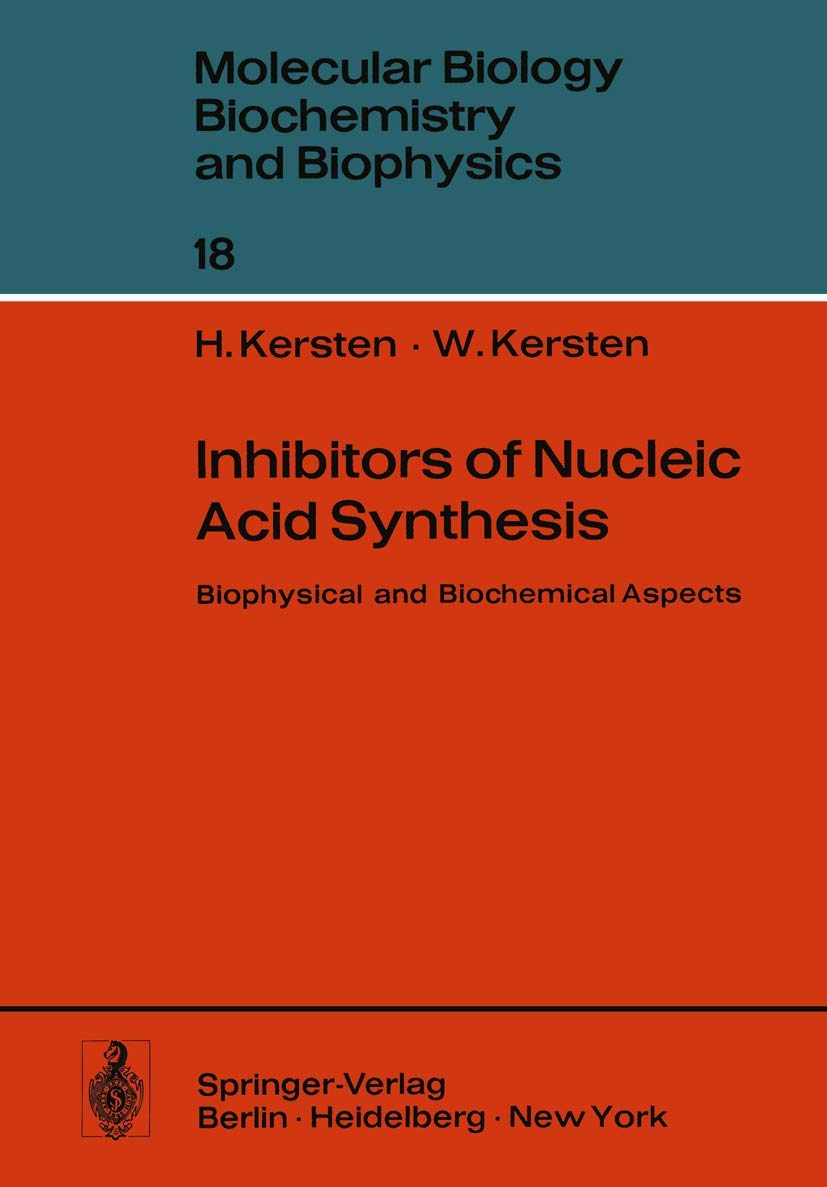
Inhibitors of Nucleic Acid Synthesis: Biophysical and Biochemical Aspects (Molecular Biology, Biochemistry and Biophysics Moleku,Used
Sold by Ergodebooks, an authorized reseller.
Returns accepted within 30 days | support@ergodebooks.com
Shipping Information
- Free Standard Shipping — United States only
- Processing Time: 3–5 business days
- Estimated Delivery: 6–10 business days after dispatch
- Double-boxed, fully insured & discreetly packaged
- Tracking number sent via email once dispatched
Returns & Refund
Returns accepted within 30 days of delivery.
Damaged or Defective Item
Free return shipping + replacement or full refund
Wrong Item Received
Free return shipping + replacement or full refund
Change of Mind
Return shipping at customer's expense · 25% restocking fee applies
Payment Option

During the last decade physical and chemical methods have improved rapidly a fact which allowed the mode of action of antibiotics to be studied and many biochemicallyoriented scientists have devoted their research to the following questions: 1. What is the metabolic pathway that is inhibited selectively, and what are the target molecules within a sensitive cell? 2. What are the relationships between the chemical structure of an antibiotic and the physicochemical properties of the sensitive mole cule(s)? 3. Why and how far is the action selective? 4. Is it possible to correlate the interaction with the target mole cule(s) with the particular biological activities observed? This monograph deals with those antibiotics which interfere with the biosynthesis of nucleic acids. The idea was to provide an insight into how to investigate the preceding questions experimentally and to solve as yet unresolved problems rather than to give a review of the current state of knowledge. Although the biochemistry of nucleic acid synthesis is known in general, the precise molecular mechanisms by which deoxyribonucleic acid is replicated or transcribed has still to be clarified. For this reason it is not yet possible to describe the molecular mechanisms by which the inhibitors of nucleic acid and protein synthesis exhibit their effects. The fact that the inhibitors of nucleic acid and protein synthesis themselves served as useful tools to obtain an insight into the mechanisms of replication, transcription and translation was one of the most exciting discoveries in this field.
⚠️ WARNING (California Proposition 65):
This product may contain chemicals known to the State of California to cause cancer, birth defects, or other reproductive harm.
For more information, please visit www.P65Warnings.ca.gov.