
Title
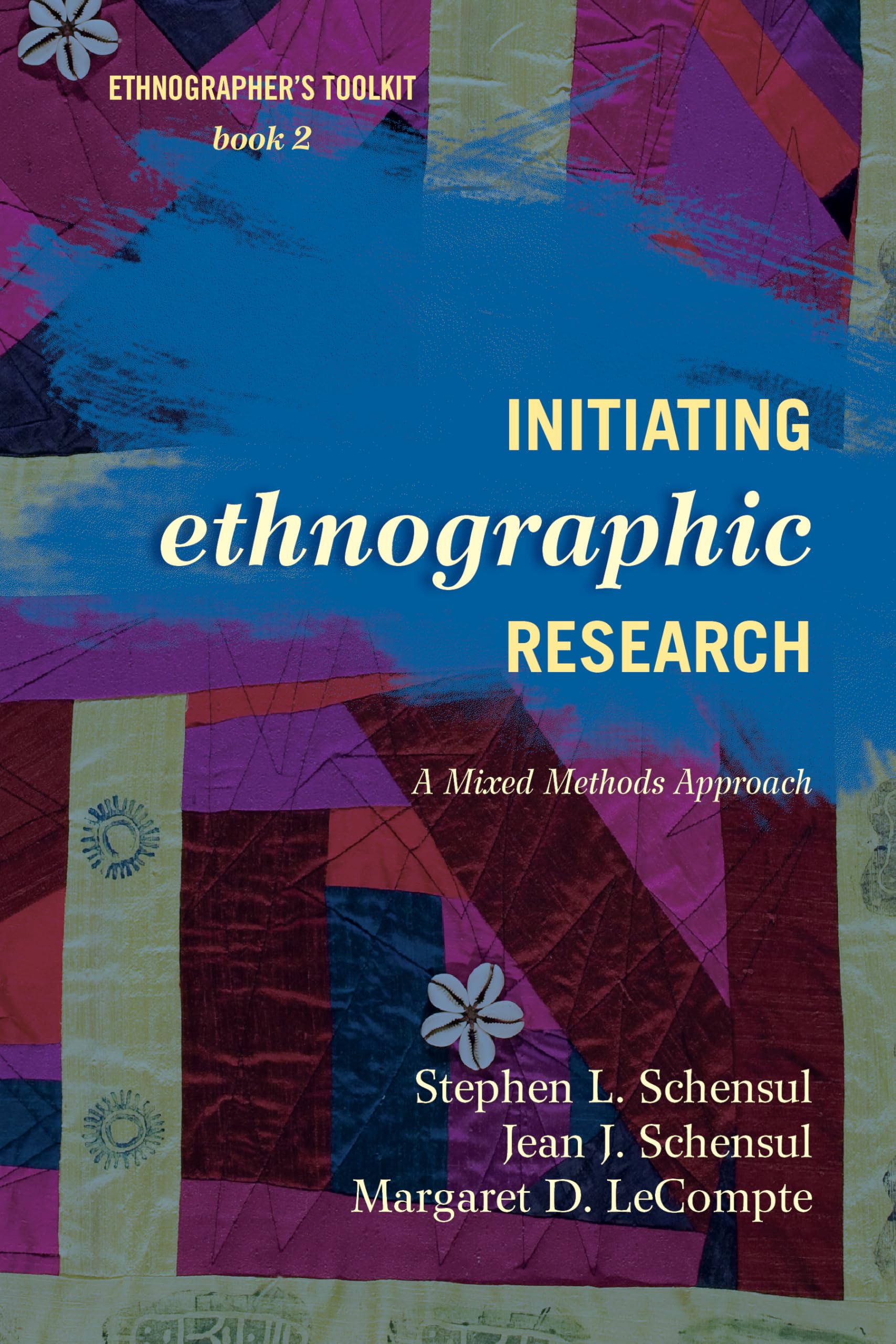
Initiating Ethnographic Research: A Mixed Methods Approach (Volume 2) (Ethnographer's Toolkit, Second Edition, 2),New
Sold by Ergodebooks, an authorized reseller.
Returns accepted within 30 days | support@ergodebooks.com
Shipping Information
- Free Standard Shipping — United States only
- Processing Time: 3–5 business days
- Estimated Delivery: 6–10 business days after dispatch
- Double-boxed, fully insured & discreetly packaged
- Tracking number sent via email once dispatched
Returns & Refund
Returns accepted within 30 days of delivery.
Damaged or Defective Item
Free return shipping + replacement or full refund
Wrong Item Received
Free return shipping + replacement or full refund
Change of Mind
Return shipping at customer's expense · 25% restocking fee applies
Payment Option

This is Book 2 of 7 in the Ethnographer's Toolkit, Second Edition.Initiating Ethnographic Research:A Mixed Methods Approach, is the first book of its kind. Unlike texts that describe and detail methods for doing ethnographic and qualitative research once in the field, Book 2 explores in depth the many critical issues that ethnographic researchers need to consider before going to the field and in the earliest stages of the field experience. These include preparation of self, establishing relationships that ensure access to the field, and steps in the construction of a formative theoretical model that will inform the entire research process from start to finish. Following guidelines established in Book 1, the first three chapters describe the reasons why ethnography should be considered a mixed methods approach to social science research. They discuss why theory is important in guiding a study, and the important institutional and personal preparations required to enter a field setting and begin work. Additional chapters debunk the idea that ethnographers always enter the field with their minds a clean slate in terms of what they will find during their investigation. They show why and how researchers can develop initial theoretical models based on local knowledge and literature reviews. Ethnography uses a holistic approach, so such models take into consideration both individual/population and systemic or structural considerations. They lead the way to integrating ecological, empirical, critical, and interpretivist approaches into a comprehensive analysis of a dynamic system. Two chapters also provide detailed examples to illustrate the connection between steps in the modeling process, creation of observational measures, and steps in data collectionfrom most openended kinds of interviewing and observation to the kind of highly structured ethnographic surveying described in Book 3. Extensive illustrative case examples are included. The final chapter shows how the modeling process can be extended to guide the development of interventions and change strategies at multiple levelsa process that should be part of any research program. A wide variety of diagrams, instructions, examples, and illustrations make the topics and processes covered in Book 2 easy to read and understand, even by novice researchers. Overall, Book 2 offers a unique mixed methods lens through which to build theory by engaging in research modeling, to enter the field, to set up to gather data, and to anticipate influencing change.Other books in the set:Book 1:Designing and Conducting Ethnographic Research: An Introduction, Second Editionby Margaret D. LeCompte and Jean J. Schensul9780759118690Book 3:Essential Ethnographic Methods: A Mixed Methods Approach, Second Editionby Jean J. Schensul and Margaret D. LeCompte9780759122031Book 4:Specialized Ethnographic Methods: A Mixed Methods Approachedited by Jean J. Schensul and Margaret D. LeCompte9780759122055Book 5:Analysis and Interpretation of Ethnographic Data: A Mixed Methods Approach, Second Editionby Margaret D. LeCompte and Jean J. Schensul9780759122079Book 6:Ethics in Ethnography: A Mixed Methods Approachby Margaret D. LeCompte and Jean J. Schensul9780759122093Book 7:Ethnography in Action: A Mixed Methods Approachby Jean J. Schensul and Margaret D. LeCompte9780759122116
⚠️ WARNING (California Proposition 65):
This product may contain chemicals known to the State of California to cause cancer, birth defects, or other reproductive harm.
For more information, please visit www.P65Warnings.ca.gov.