
Title
Innovative Development: Global Hawk And Darkstar Transitions Within And Out Of The Hae Uav Actd Program (2002),Used
Sold by Ergodebooks, an authorized reseller.
Returns accepted within 30 days | support@ergodebooks.com
Shipping Information
- Free Standard Shipping — United States only
- Processing Time: 3–5 business days
- Estimated Delivery: 6–10 business days after dispatch
- Double-boxed, fully insured & discreetly packaged
- Tracking number sent via email once dispatched
Returns & Refund
Returns accepted within 30 days of delivery.
Damaged or Defective Item
Free return shipping + replacement or full refund
Wrong Item Received
Free return shipping + replacement or full refund
Change of Mind
Return shipping at customer's expense · 25% restocking fee applies
Payment Option

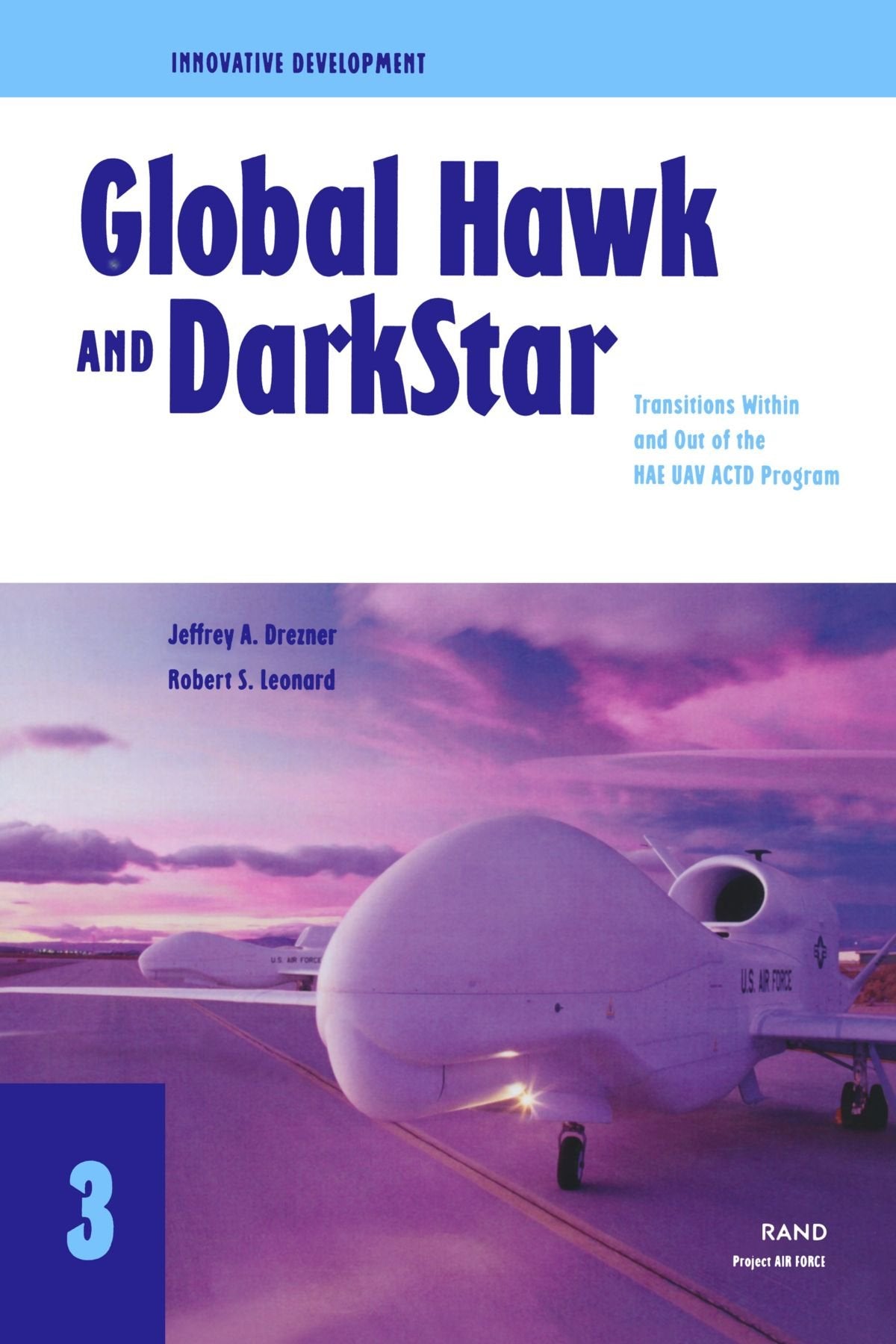
Over the past three decades, a number of attempts have been made to develop unmanned aerial vehicles, but many of these efforts have met with suboptimal results. Recently, however, the Defense Advanced Research Projects Agency (DARPA), in conjunction with the Defense Airborne Reconnaissance Office, launched an effort designated the HighAltitude Endurance Unmanned Aerial Vehicle Advanced concept Technology Demonstration (HAE UAV ACTD) program whose objective was to overcome past constraints in UAV development through the use of a new acquisition policy. This report assesses two transitions of the HAE UAV ACTD program the first from DARPA to Air Force management and the second from an ACTD to a Major Defense Acquisition Program (MDAP) toward the goal of determining which elements of the program's novel acquisition strategy facilitated these transitions and which engendered problems. The authors found that in aggregate, the innovative acquisition strategy adopted in the HAE UAV ACTD program had a positive effect on program execution in that it successfully attained the program's key goals: demonstrating a new operational concept at a lower cost and in a shorter time frame than would have been possible with a traditional acquisition approach. The program's transition from the ACTD construct to an MDAP, however although ultimately successful posed a number of challenges, many of which stemmed directly from its acquisition strategy. To circumvent these problems in the future, the authors recommend that all organizations involved in a program, particularly operational users, be given substantive input into program planning at the earliest possible juncture.
⚠️ WARNING (California Proposition 65):
This product may contain chemicals known to the State of California to cause cancer, birth defects, or other reproductive harm.
For more information, please visit www.P65Warnings.ca.gov.