If you have any questions, you are always welcome to contact us. We'll get back to you as soon as possible, withing 24 hours on weekdays.
Customer service
All questions about your order, return and delivery must be sent to our customer service team by e-mail at yourstore@yourdomain.com
Sale & Press
If you are interested in selling our products, need more information about our brand or wish to make a collaboration, please contact us at press@yourdomain.com
Help
If you have any questions, you are always welcome to contact us. We'll get back to you as soon as possible, withing 24 hours on weekdays.
Customer service
All questions about your order, return and delivery must be sent to our customer service team by e-mail at yourstore@yourdomain.com
Sale & Press
If you are interested in selling our products, need more information about our brand or wish to make a collaboration, please contact us at press@yourdomain.com
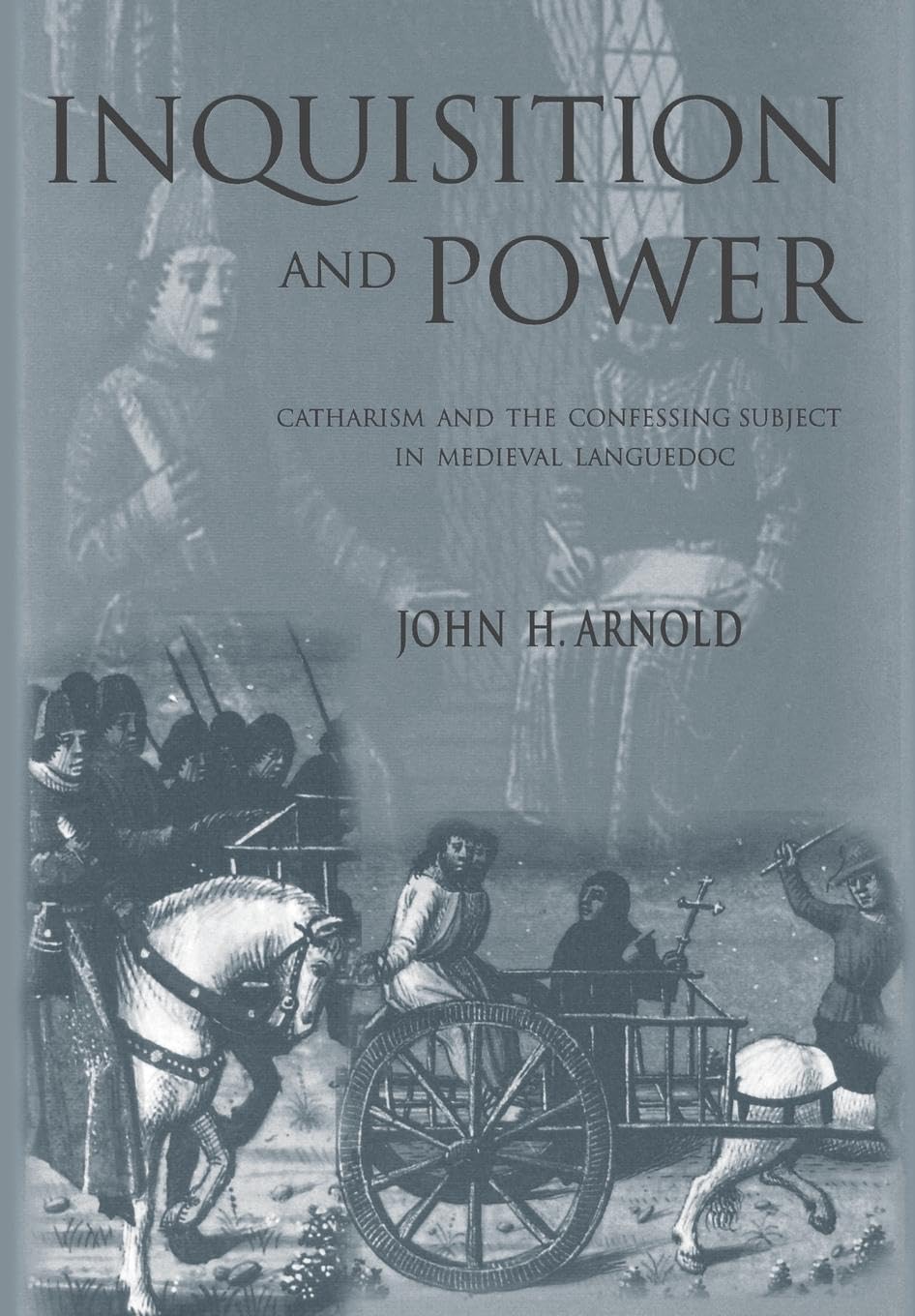
What should historians do with the words of the dead? Inquisition and Power reformulates the historiography of heresy and the inquisition by focusing on depositions taken from the Cathars, a religious sect that opposed the Catholic church and took root in southern France during the twelfth century. Despite the fact that these depositions were spoken in the vernacular, but recorded in Latin in the third person and rewritten in the past tense, historians have often taken these accounts as verbatim transcriptions of personal testimony. This belief has prompted some historians, including E. Le Roy Ladurie, to go so far as to retranslate the testimonies into the firstperson. These testimonies have been a long source of controversy for historians and scholars of the Middle Ages.Arnold enters current theoretical debates about subjectivity and the nature of power to develop reading strategies that will permit a more nuanced reinterpretation of these documents of interrogation. Rather than seeking to recover the true voice of the Cathars from behind the inquisitor's framework, this book shows how the historian is better served by analyzing texts as sites of competing discourses that construct and position a variety of subjectivities. In this critically informed history, Arnold suggests that what we do with the voices of history in fact has as much to do with ourselves as with those we seek to 'rescue' from the silences of past.
⚠️ WARNING (California Proposition 65):
This product may contain chemicals known to the State of California to cause cancer,
birth defects, or other reproductive harm.
For MAP (Minimum Advertised Price) violations and Intellectual Property (IP) or Trademark concerns, please contact:
support@ergodebooks.com
⚠️ California Proposition 65 Warning: Some products sold on this website may expose you to chemicals known to the State of California to cause cancer, birth defects, or other reproductive harm. For more information, visit www.P65Warnings.ca.gov.