
Title
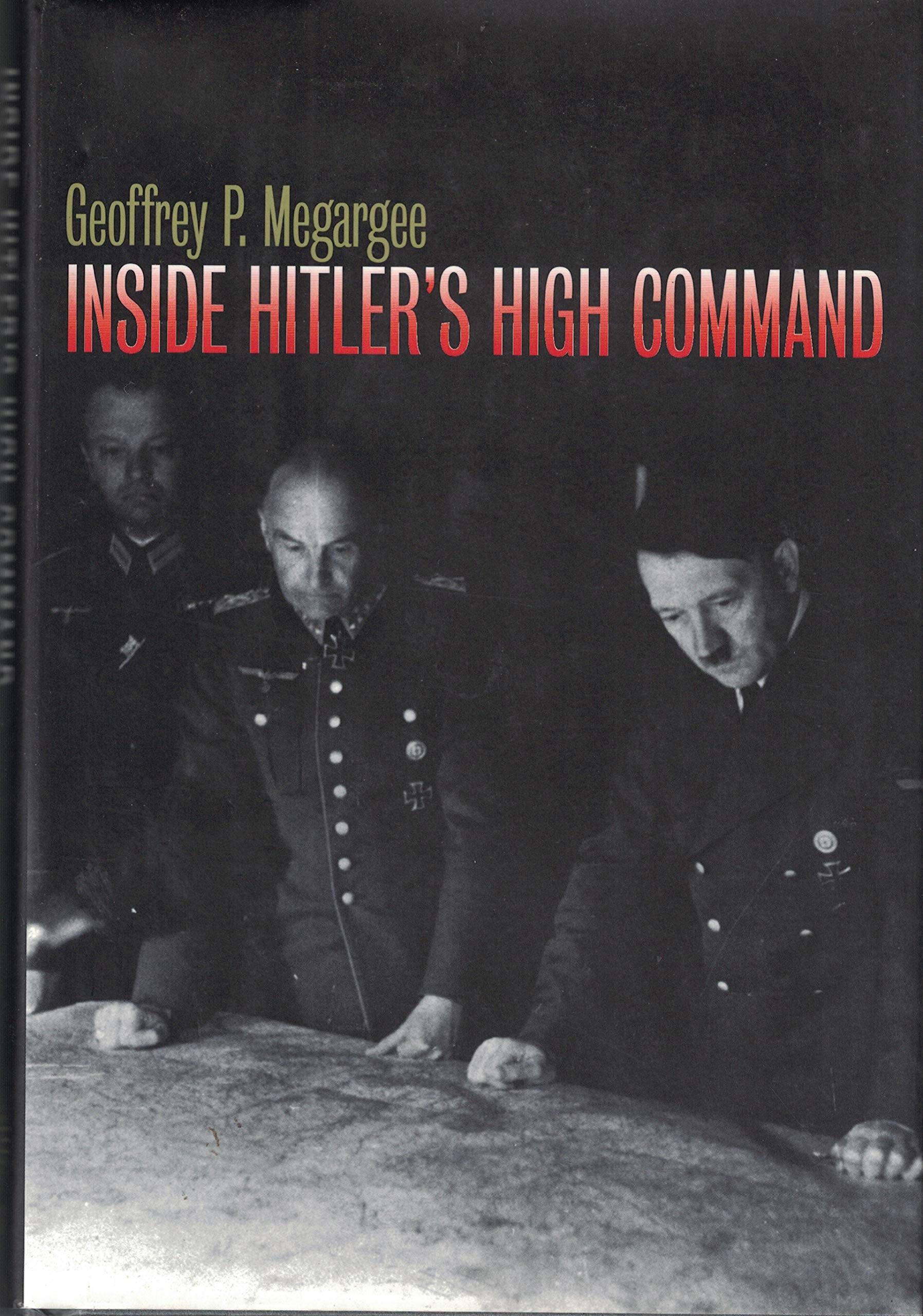
Inside Hitler'S High Command,Used
Sold by Ergodebooks, an authorized reseller.
Returns accepted within 30 days | support@ergodebooks.com
Shipping Information
- Free Standard Shipping — United States only
- Processing Time: 3–5 business days
- Estimated Delivery: 6–10 business days after dispatch
- Double-boxed, fully insured & discreetly packaged
- Tracking number sent via email once dispatched
Returns & Refund
Returns accepted within 30 days of delivery.
Damaged or Defective Item
Free return shipping + replacement or full refund
Wrong Item Received
Free return shipping + replacement or full refund
Change of Mind
Return shipping at customer's expense · 25% restocking fee applies
Payment Option

Challenging Previous Accounts, Geoffrey Megargee Shatters The Myth That German Generals Would Have Prevailed In World War Ii If Only Hitler Had Not Meddled In Their Affairs. Indeed, Megargee Argues, The German High Command Was Much More Flawed Than Many Have Suspected Or Acknowledged. Inside Hitler'S High Command Reveals That While Hitler Was The Central Figure In Many Military Decisions, His Generals Were Equal Partners In Germany'S Catastrophic Defeat.Megargee Exposes The Structure, Processes, And Personalities That Governed The Third Reich'S Military Decision Making And Shows How Germany'S Presumed Battlefield Superiority Was Undermined By Poor Strategic And Operational Planning At The Highest Levels. His Study Tracks The Evolution Of German Military Leadership Under The Nazis From 1933 To 1945 And Expands Our Understanding Of The Balance Of Power Within The High Command, The Role Of Personalities In Its Organizational Development, And The Influence Of German Military Intellectuals On Its Structure And Function. He Also Shows How The Organization Of The High Command Was Plagued By Ambition, Stubbornness, Political Intrigue, And Overworked Staff Officers. And His 'A Week In The Life' Chapter Puts The High Command Under A Magnifying Glass To Reveal Its Inner Workings During The Fierce Fighting On The Russian Front In December 1941.Megargee Also Offers New Insights Into The High Command Crises Of 1938 And Shows How German General Staff Made Fatal Mistakes In Their Planning For Operation Barbarossa In 1941. Their Arrogant Dismissal Of The Soviet Military'S Ability To Defend Its Homeland And Virtual Disregard For The Extensive Intelligence And Sound Logistics That Undergird Successful Largescale Military Campaigns Ultimately Came Back To Haunt Them.In The Final Assessment, Observes Megargee, The Generals' Strategic Ideas Were No Better Than Hitler'S And Often Worse. Heinz Guderian, Franz Halder, And The Rest Were As Guilty Of Selfdeception As Their Fuhrer, Believing That Innate German Superiority And Strength Of Will Were Enough To Overcome Nearly Any Obstacle. Inside Hitler'S High Command Exposes These Surprising Flaws And Illuminates The Process Of Strategy And Decision Making In The Third Reich.
⚠️ WARNING (California Proposition 65):
This product may contain chemicals known to the State of California to cause cancer, birth defects, or other reproductive harm.
For more information, please visit www.P65Warnings.ca.gov.
- Q: What is the page count of Inside Hitler's High Command? A: The book has three hundred fifty pages. This length provides an in-depth exploration of the German high command during World War II.
- Q: What is the binding type of Inside Hitler's High Command? A: It is a hardcover book. This ensures durability and longevity, making it suitable for both reading and display.
- Q: Who is the author of Inside Hitler's High Command? A: The author is Geoffrey P. Megargee. He is known for his research on military strategy and history.
- Q: How do I read Inside Hitler's High Command? A: You can read it like any standard book. It is suitable for adults interested in military history and World War II.
- Q: Is Inside Hitler's High Command suitable for beginners in military history? A: Yes, it is suitable for beginners. The book is well-structured and provides a comprehensive overview of its subject matter.
- Q: Can I use Inside Hitler's High Command for academic purposes? A: Yes, it can be used for academic references. The detailed analysis and historical insights make it a valuable resource.
- Q: How should I store Inside Hitler's High Command? A: Store it in a cool, dry place away from direct sunlight. This will help preserve the book's condition over time.
- Q: Does Inside Hitler's High Command require special care? A: No special care is needed. Just handle it carefully to prevent any damage to the binding or pages.
- Q: Is Inside Hitler's High Command safe for readers under eighteen? A: Yes, it is safe for readers under eighteen. However, it contains complex themes related to war and military strategy.
- Q: What genre does Inside Hitler's High Command belong to? A: It belongs to the military history genre. The book focuses on the decision-making processes of the German military during World War II.
- Q: How does Inside Hitler's High Command compare to other military history books? A: It offers unique insights into the flaws of the German high command. Unlike other texts, it challenges popular myths about military leadership.
- Q: What should I do if Inside Hitler's High Command arrives damaged? A: Contact the seller for return or exchange options. Most sellers have policies in place for damaged items.
- Q: Can I return Inside Hitler's High Command if I don't like it? A: Yes, you can return it if it meets the seller's return policies. Always check the conditions for returns before purchasing.
- Q: Does Inside Hitler's High Command include illustrations or maps? A: No, it does not include illustrations or maps. The focus is on textual analysis and historical narrative.
- Q: Is there a specific audience this book is aimed at? A: The book is aimed at historians, students, and anyone interested in military strategy. It appeals to a wide range of readers.
- Q: How does the author's background influence Inside Hitler's High Command? A: Geoffrey P. Megargee's expertise in military history enhances the book's credibility. His research provides depth and accuracy to the narrative.