
Title
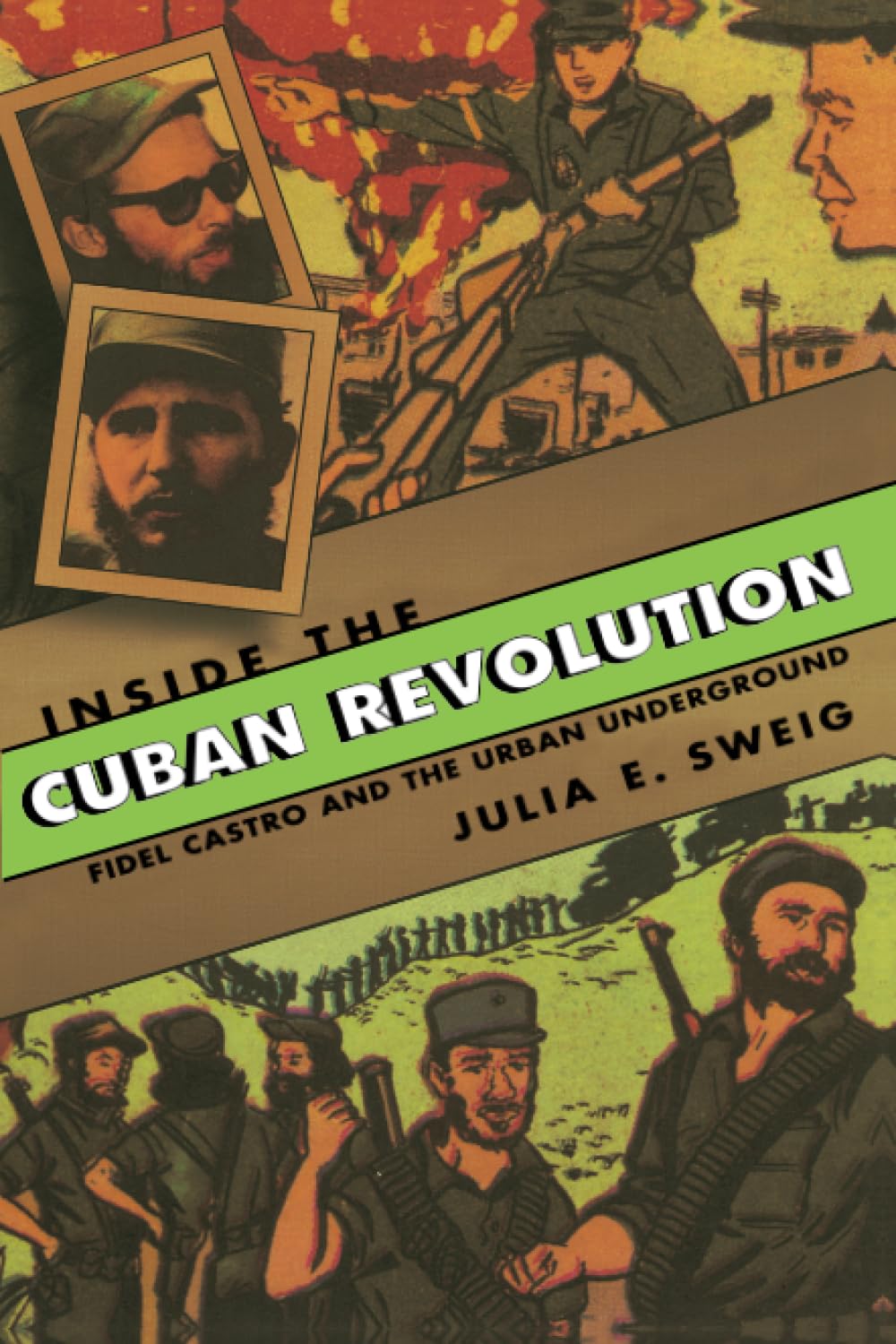
Inside the Cuban Revolution: Fidel Castro and the Urban Underground,Used
Sold by Ergodebooks, an authorized reseller.
Returns accepted within 30 days | support@ergodebooks.com
Shipping Information
- Free Standard Shipping — United States only
- Processing Time: 3–5 business days
- Estimated Delivery: 6–10 business days after dispatch
- Double-boxed, fully insured & discreetly packaged
- Tracking number sent via email once dispatched
Returns & Refund
Returns accepted within 30 days of delivery.
Damaged or Defective Item
Free return shipping + replacement or full refund
Wrong Item Received
Free return shipping + replacement or full refund
Change of Mind
Return shipping at customer's expense · 25% restocking fee applies
Payment Option

Julia Sweig shatters the mythology surrounding the Cuban Revolution in a compelling revisionist history that reconsiders the revolutionary roles of Fidel Castro and Che Guevara and restores to a central position the leadership of the Cuban urban underground, the Llano. Granted unprecedented access to the classified records of Castro's 26th of July Movement's underground operativesthe only scholar inside or outside of Cuba allowed access to the complete collection in the Cuban Council of State's Office of Historic Affairsshe details the ideological, political, and strategic debates between Castro's mountainbased guerrilla movement and the urban revolutionaries in Havana, Santiago, and other cities.In a close study of the fifteen months from November 1956 to July 1958, when the urban underground leadership was dominant, Sweig examines the debate between the two groups over whether to wage guerrilla warfare in the countryside or armed insurrection in the cities, and is the first to document the extent of Castro's cooperation with the Llano. She unveils the essential role of the urban underground, led by such figures as Frank Pas, Armando Hart, Hayde Santamaria, Enrique Oltuski, and Faustino Prez, in controlling critical decisions on tactics, strategy, allocation of resources, and relations with opposition forces, political parties, Cuban exiles, even the United Statescontradicting the standard view of Castro as the primary decision maker during the revolution.In revealing the true relationship between Castro and the urban underground, Sweig redefines the history of the Cuban Revolution, offering guideposts for understanding Cuban politics in the 1960s and raising intriguing questions for the future transition of power in Cuba.
⚠️ WARNING (California Proposition 65):
This product may contain chemicals known to the State of California to cause cancer, birth defects, or other reproductive harm.
For more information, please visit www.P65Warnings.ca.gov.