If you have any questions, you are always welcome to contact us. We'll get back to you as soon as possible, withing 24 hours on weekdays.
Customer service
All questions about your order, return and delivery must be sent to our customer service team by e-mail at yourstore@yourdomain.com
Sale & Press
If you are interested in selling our products, need more information about our brand or wish to make a collaboration, please contact us at press@yourdomain.com
Help
If you have any questions, you are always welcome to contact us. We'll get back to you as soon as possible, withing 24 hours on weekdays.
Customer service
All questions about your order, return and delivery must be sent to our customer service team by e-mail at yourstore@yourdomain.com
Sale & Press
If you are interested in selling our products, need more information about our brand or wish to make a collaboration, please contact us at press@yourdomain.com
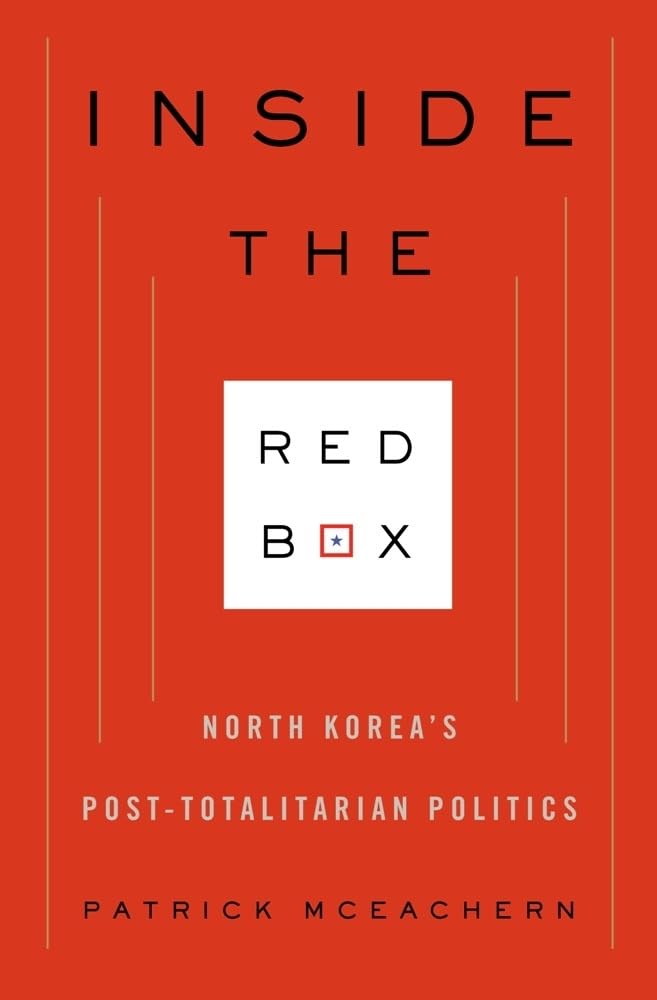
North Korea's institutional politics defy traditional political models, making the country's actions seem surprising or confusing when, in fact, they often conform to the regime's own logic. Drawing on recent materials, such as North Korean speeches, commentaries, and articles, Patrick McEachern, a specialist on North Korean affairs, reveals how the state's political institutions debate policy and inform and execute strategiclevel decisions.Many scholars dismiss Kim JongIl's regime as a 'oneman dictatorship,' calling him the 'last totalitarian leader,' but McEachern identifies three major institutions that help maintain regime continuity: the cabinet, the military, and the party. These groups hold different institutional policy platforms and debate highlevel policy options both before and after Kim and his senior leadership make their final call.This method of rule may challenge expectations, but North Korea does not follow a classically totalitarian, personalistic, or corporatist model. Rather than being monolithic, McEachern argues, the regime, emerging from the crises of the 1990s, rules differently today than it did under Kim's father, Kim Il Sung. The son is less powerful and pits institutions against one another in a strategy of divide and rule. His leadership is fundamentally different: it is 'posttotalitarian.' Authority may be centralized, but power remains diffuse. McEachern maps this process in great detail, supplying vital perspective on North Korea's reactive policy choices, which continue to bewilder the West.
⚠️ WARNING (California Proposition 65):
This product may contain chemicals known to the State of California to cause cancer,
birth defects, or other reproductive harm.
For MAP (Minimum Advertised Price) violations and Intellectual Property (IP) or Trademark concerns, please contact:
support@ergodebooks.com
⚠️ California Proposition 65 Warning: Some products sold on this website may expose you to chemicals known to the State of California to cause cancer, birth defects, or other reproductive harm. For more information, visit www.P65Warnings.ca.gov.