
Title
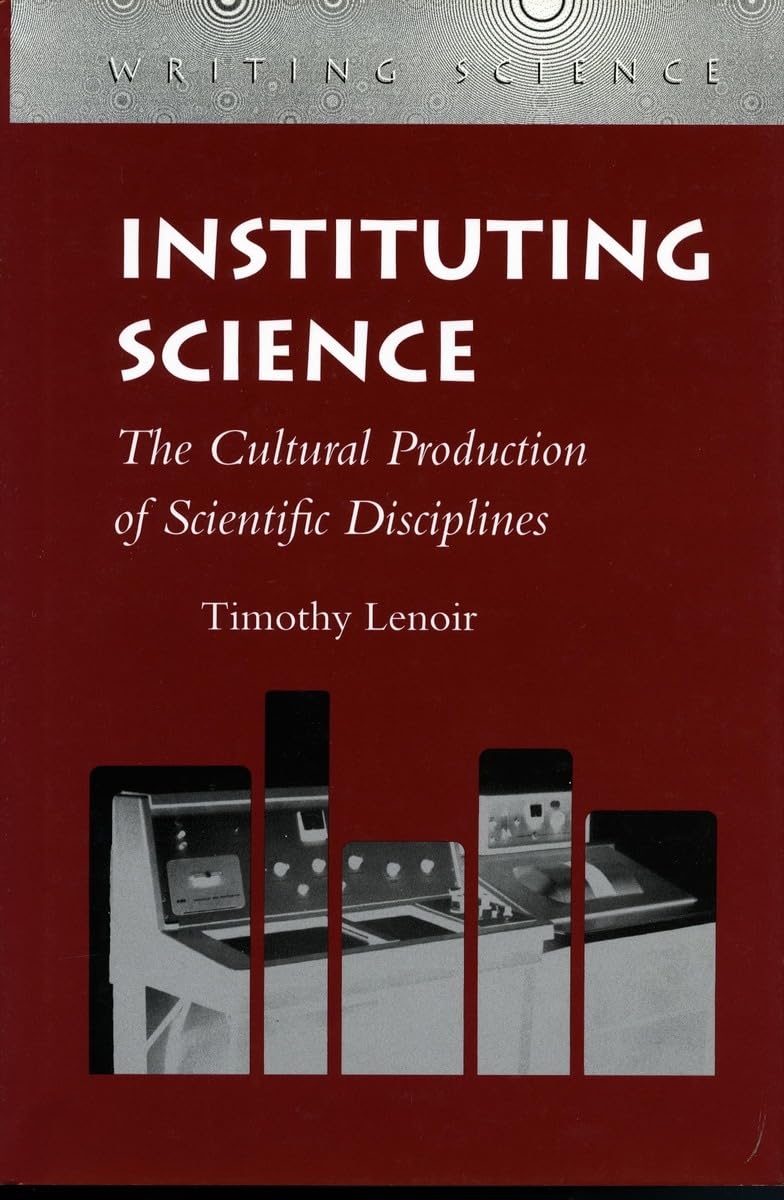
Instituting Science: The Cultural Production Of Scientific Disciplines (Writing Science),Used
Sold by Ergodebooks, an authorized reseller.
Returns accepted within 30 days | support@ergodebooks.com
Shipping Information
- Free Standard Shipping — United States only
- Processing Time: 3–5 business days
- Estimated Delivery: 6–10 business days after dispatch
- Double-boxed, fully insured & discreetly packaged
- Tracking number sent via email once dispatched
Returns & Refund
Returns accepted within 30 days of delivery.
Damaged or Defective Item
Free return shipping + replacement or full refund
Wrong Item Received
Free return shipping + replacement or full refund
Change of Mind
Return shipping at customer's expense · 25% restocking fee applies
Payment Option

Early Practitioners Of The Social Studies Of Science Turned Their Attention Away From Questions Of Institutionalization, Which Had Tended To Emphasize Macrolevel Explanations, And Attended Instead To Microstudies Of Laboratory Practice. Though Sympathetic To This Approachas The Microstudies Included In This Book Attestthe Author Is Interested In Reinvestigating Certain Aspects Of Institution Formation, Notably The Formation Of Scientific, Medical, And Engineering Disciplines. He Emphasizes The Manner In Which Science As Cultural Practice Is Imbricated With Other Forms Of Social, Political, And Even Aesthetic Practices.This Book Offers Case Studies That Reexamine Certain Critical Junctures In The Traditional Historical Picture Of The Evolution Of The Role Of The Scientist In Modern Western Society. It Focuses Especially On The Establishment Of New Disciplines Within German Research Universities In The Nineteenth Century, The Problematic Relationship That Emerged Between Science, Industry, And The State At The Turn Of The Twentieth Century, And Postworld War Ii Developments In Science And Technology.After An Introduction And Two Chapters Dealing With Science And Technology As Cultural Production And The Struggles Of Disciplines To Achieve Legitimation And Authority, The Author Considers The Following Topics: The Organic Physics Of 1847; The Innovative Research Program Of Carl Ludwig As A Model For Institutionalizing Sciencebased Medicine; Optics, Painting, And Ideology In Germany, 184595; Paul Ehrlich'S 'Magic Bullet'; The Haberbosch Synthesis Of Ammonia; And The Introduction Of Nuclear Magnetic Resonance Instrumentation Into The Practice Of Organic Chemistry.
⚠️ WARNING (California Proposition 65):
This product may contain chemicals known to the State of California to cause cancer, birth defects, or other reproductive harm.
For more information, please visit www.P65Warnings.ca.gov.