
Title
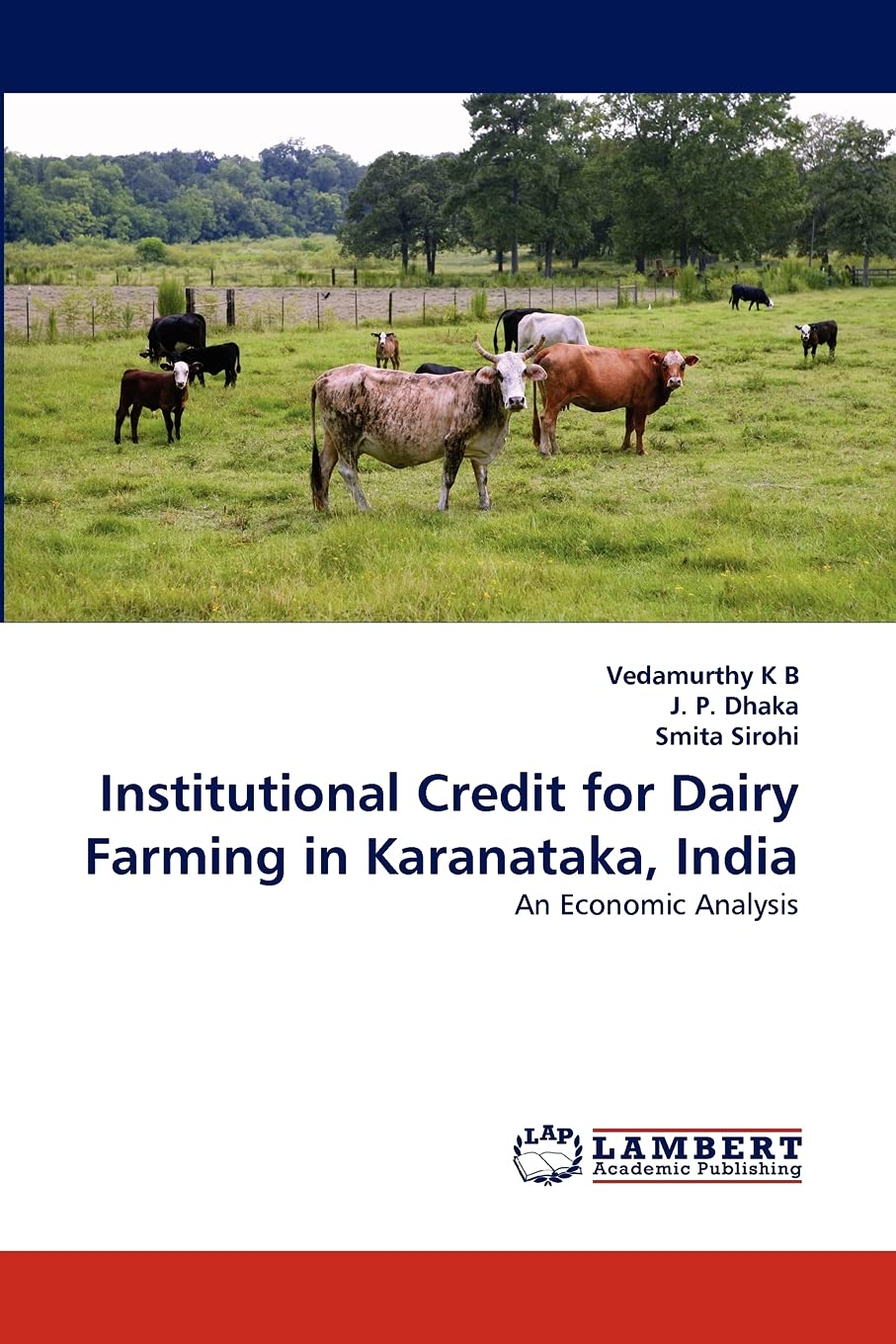
Institutional Credit for Dairy Farming in Karanataka, India: An Economic Analysis,Used
Sold by Ergodebooks, an authorized reseller.
Returns accepted within 30 days | support@ergodebooks.com
Shipping Information
- Free Standard Shipping — United States only
- Processing Time: 3–5 business days
- Estimated Delivery: 6–10 business days after dispatch
- Double-boxed, fully insured & discreetly packaged
- Tracking number sent via email once dispatched
Returns & Refund
Returns accepted within 30 days of delivery.
Damaged or Defective Item
Free return shipping + replacement or full refund
Wrong Item Received
Free return shipping + replacement or full refund
Change of Mind
Return shipping at customer's expense · 25% restocking fee applies
Payment Option

With 112.5 mil.t of production in 200910, India remains number one milk producer in the world. This sector has been set the target of 5% growth for the period 200712 in order to achieve over all agricultural growth of 4%. However, growth rate of this sector has been hovering around 3.7% during 200710 due to stagnation in the productivity of dairy aimals. To increase productivity, it is imperative to increase investment. Since, farmers in India are resource poor, lacking own capital to reinvest in dairying, there is a need to provide institutional credit. With this background the present study was conducted in a major state of India. Study found that despite significant contribution of this sector, credit alloted was only 1% of the agricultural credit. Repayment was found to be far lower than crop sector. Requirement of credit was found to be higher for marginal and land less farmers. Study of utilisation pattern revealed that only 36% of dairy credit was used for target activity. Discriminant analysis showed that higher percentage of earning adults in the family, higher income from dairy contributed towards lower repayment.
⚠️ WARNING (California Proposition 65):
This product may contain chemicals known to the State of California to cause cancer, birth defects, or other reproductive harm.
For more information, please visit www.P65Warnings.ca.gov.