If you have any questions, you are always welcome to contact us. We'll get back to you as soon as possible, withing 24 hours on weekdays.
Customer service
All questions about your order, return and delivery must be sent to our customer service team by e-mail at yourstore@yourdomain.com
Sale & Press
If you are interested in selling our products, need more information about our brand or wish to make a collaboration, please contact us at press@yourdomain.com
Help
If you have any questions, you are always welcome to contact us. We'll get back to you as soon as possible, withing 24 hours on weekdays.
Customer service
All questions about your order, return and delivery must be sent to our customer service team by e-mail at yourstore@yourdomain.com
Sale & Press
If you are interested in selling our products, need more information about our brand or wish to make a collaboration, please contact us at press@yourdomain.com
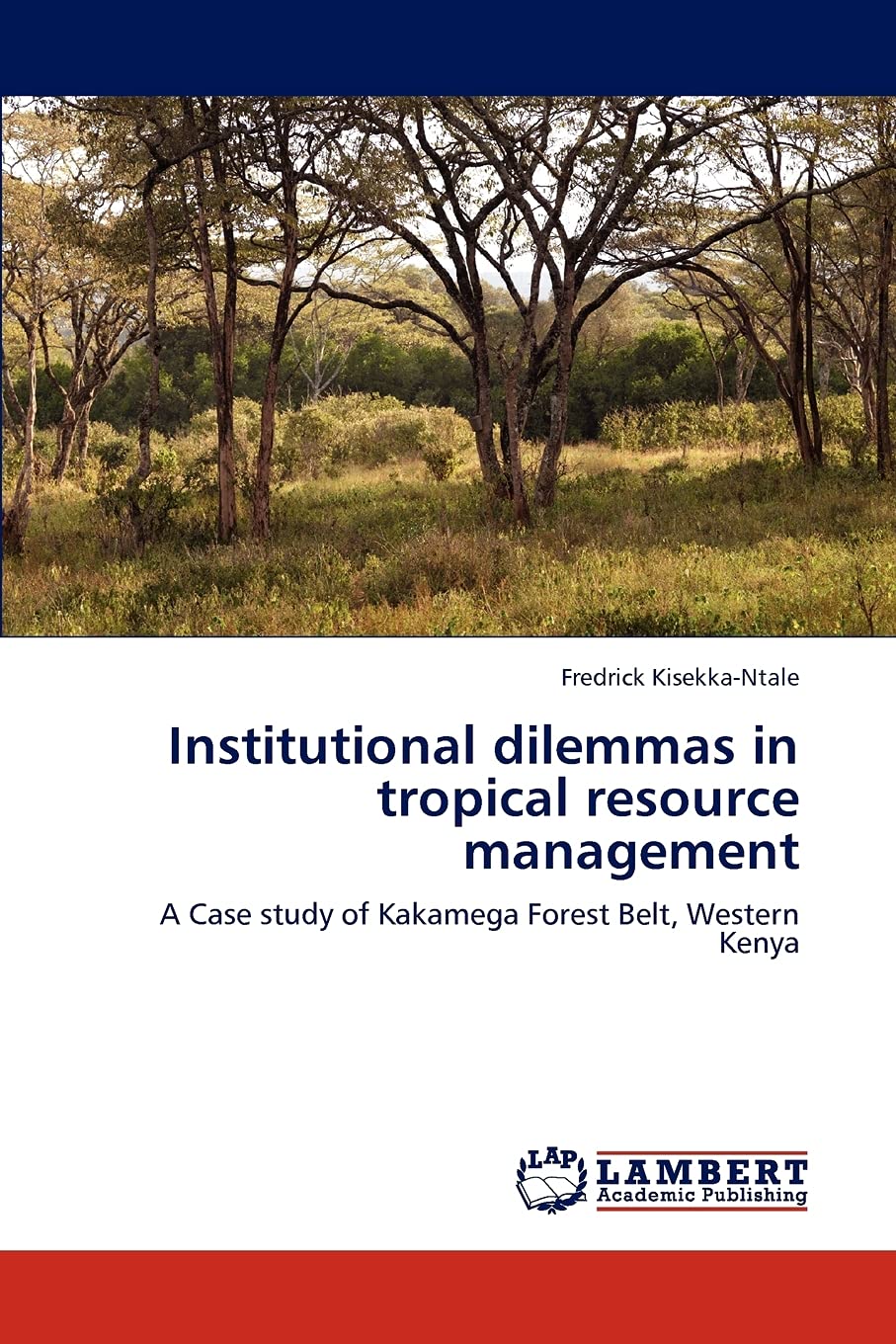
Institutional conflict is a major facet of tropical resource management regimes, and mediation of such conflicts is a rarity. Using the Kakamega forest belt as a case study, it emerges that forest biodiversity in a tropical country like Kenya is associated with a number of benefits and these are central in the framing of the institutions at both the national, regional and local levels. Because these are structurally different, they in most cases, represent the cause of institutional conflict. Indeed this demonstrates the biggest challenge in the management of tropical resources that is absence of institutional mediation mechanisms. This is the central cause of institutional dysfunctioning in tropical resource management. Hence, institutional options targeting forest biodiversity management should be locally adapted and centrally and/or regionally mediated, because of the role local forest resources play in the lives of local forestuser communities.
⚠️ WARNING (California Proposition 65):
This product may contain chemicals known to the State of California to cause cancer,
birth defects, or other reproductive harm.
For MAP (Minimum Advertised Price) violations and Intellectual Property (IP) or Trademark concerns, please contact:
support@ergodebooks.com
⚠️ California Proposition 65 Warning: Some products sold on this website may expose you to chemicals known to the State of California to cause cancer, birth defects, or other reproductive harm. For more information, visit www.P65Warnings.ca.gov.