
Title
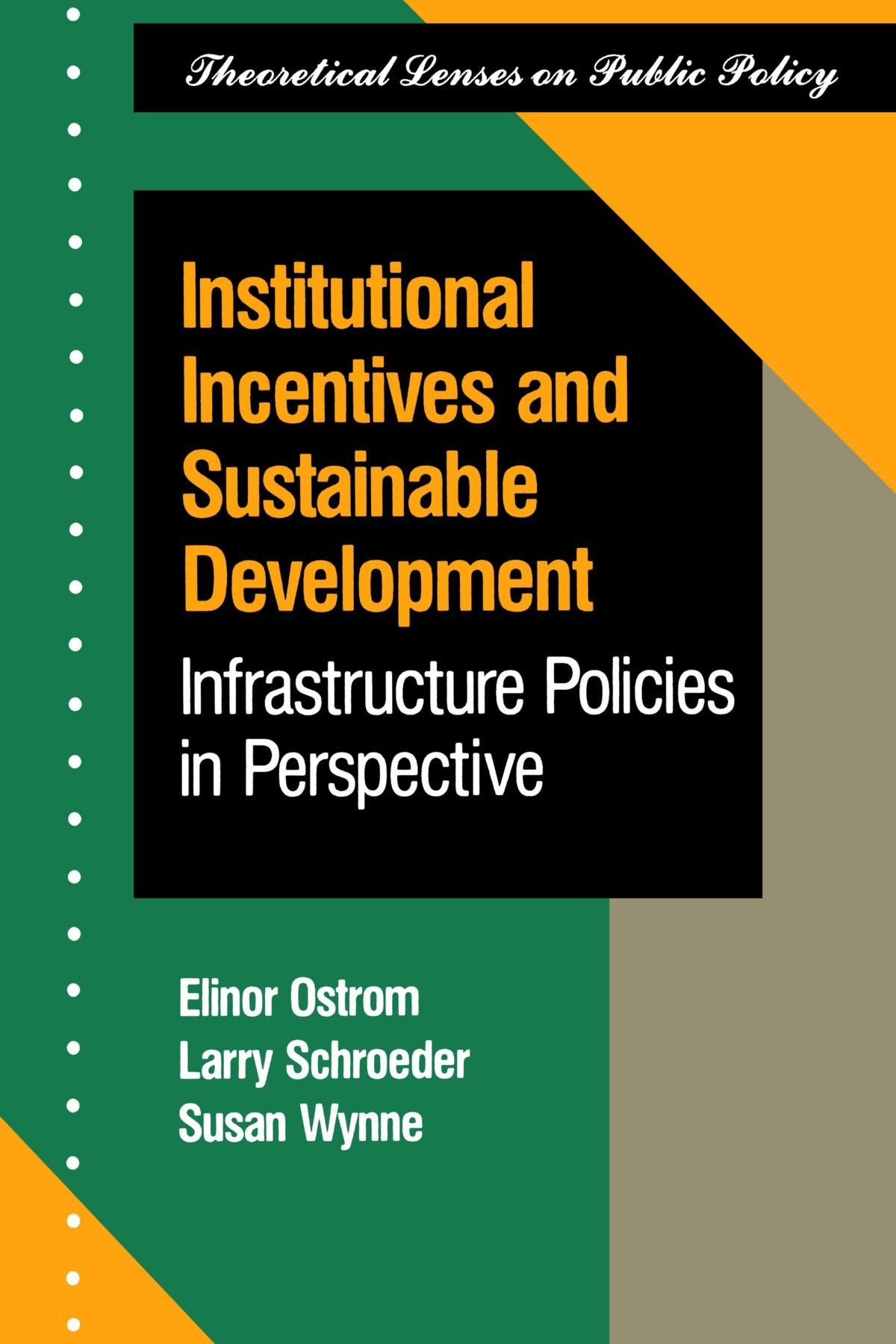
Institutional Incentives And Sustainable Development: Infrastructure Policies In Perspective (Theoretical Lenses on Public Polic,Used
Sold by Ergodebooks, an authorized reseller.
Returns accepted within 30 days | support@ergodebooks.com
Shipping Information
- Free Standard Shipping — United States only
- Processing Time: 3–5 business days
- Estimated Delivery: 6–10 business days after dispatch
- Double-boxed, fully insured & discreetly packaged
- Tracking number sent via email once dispatched
Returns & Refund
Returns accepted within 30 days of delivery.
Damaged or Defective Item
Free return shipping + replacement or full refund
Wrong Item Received
Free return shipping + replacement or full refund
Change of Mind
Return shipping at customer's expense · 25% restocking fee applies
Payment Option

Integrating recent research in the fields of public administration, public finance, institutional economics, and policy analysis, this book shows how institutional arrangements and the incentives they generate can help or hinder development efforts. The authors present a method for systematically comparing alternative institutional arrangements for the development of rural infrastructure. Their analysis reveals the special strengths and weaknesses of polycentric as compared to centralized or decentralized institutional arrangements. Descriptions of a variety of infrastructure projectsincluding roads, bridges, and irrigation systemsin geographical settings as diverse as Africa, Asia, and Latin America are used to illustrate key concepts.Perfect for courses on policy analysis, development administration, and economic development and for use by professional practitioners, Institutional Incentives contributes appreciably and practically to the understanding of sustainable development, infrastructure maintenance, institutional analysis, and the central importance of institutional arrangements.
⚠️ WARNING (California Proposition 65):
This product may contain chemicals known to the State of California to cause cancer, birth defects, or other reproductive harm.
For more information, please visit www.P65Warnings.ca.gov.
- Q: What is the page count of the book? A: The book contains two hundred eighty-eight pages. This length provides a comprehensive exploration of institutional incentives and sustainable development.
- Q: What are the dimensions of this book? A: The book measures nine point twenty-five inches in length, one inch in width, and six point twenty-six inches in height. These dimensions make it easy to handle and store.
- Q: What type of binding does this book have? A: This book is available in paperback binding. Paperback is lightweight and flexible, making it convenient for reading and transport.
- Q: Who is the author of this book? A: The author of the book is Elinor Ostrom. She is a renowned scholar in public policy and economics.
- Q: What is the main subject of this book? A: The book focuses on the intersection of institutional economics and sustainable development. It discusses how different institutional arrangements affect development efforts.
- Q: How is this book useful for students? A: This book is perfect for courses on policy analysis and development administration. It provides valuable insights to help students understand complex concepts in economics.
- Q: Can professionals use this book in their work? A: Yes, the book is designed for use by professional practitioners in the field. It offers practical knowledge applicable to real-world infrastructure projects.
- Q: What geographical areas does the book cover? A: The book illustrates concepts using infrastructure examples from Africa, Asia, and Latin America. This diverse range enriches the analysis of institutional arrangements.
- Q: What types of infrastructure projects are discussed? A: The book discusses various infrastructure projects, including roads, bridges, and irrigation systems. These examples highlight the relevance of institutional incentives.
- Q: Is this book suitable for beginners in economics? A: Yes, the book is suitable for beginners. It presents complex ideas in an accessible manner, making it easier for newcomers to grasp foundational concepts.
- Q: Does this book provide real-world examples? A: Yes, it includes real-world examples of infrastructure projects to illustrate key concepts. These examples enhance understanding of theoretical frameworks.
- Q: Is this book focused on theoretical concepts only? A: No, the book integrates both theoretical concepts and practical applications. This balance makes it valuable for both academic and professional audiences.
- Q: How does this book contribute to understanding sustainable development? A: The book contributes by analyzing institutional arrangements that affect development. It highlights the importance of these arrangements in achieving sustainability.
- Q: What are the key themes discussed in the book? A: Key themes include institutional analysis, infrastructure maintenance, and the role of incentives in development efforts. These themes are critical for understanding public policy.
- Q: Does this book address centralized vs. decentralized systems? A: Yes, it compares polycentric systems to centralized and decentralized arrangements. The analysis reveals their unique strengths and weaknesses.