If you have any questions, you are always welcome to contact us. We'll get back to you as soon as possible, withing 24 hours on weekdays.
Customer service
All questions about your order, return and delivery must be sent to our customer service team by e-mail at yourstore@yourdomain.com
Sale & Press
If you are interested in selling our products, need more information about our brand or wish to make a collaboration, please contact us at press@yourdomain.com
Help
If you have any questions, you are always welcome to contact us. We'll get back to you as soon as possible, withing 24 hours on weekdays.
Customer service
All questions about your order, return and delivery must be sent to our customer service team by e-mail at yourstore@yourdomain.com
Sale & Press
If you are interested in selling our products, need more information about our brand or wish to make a collaboration, please contact us at press@yourdomain.com
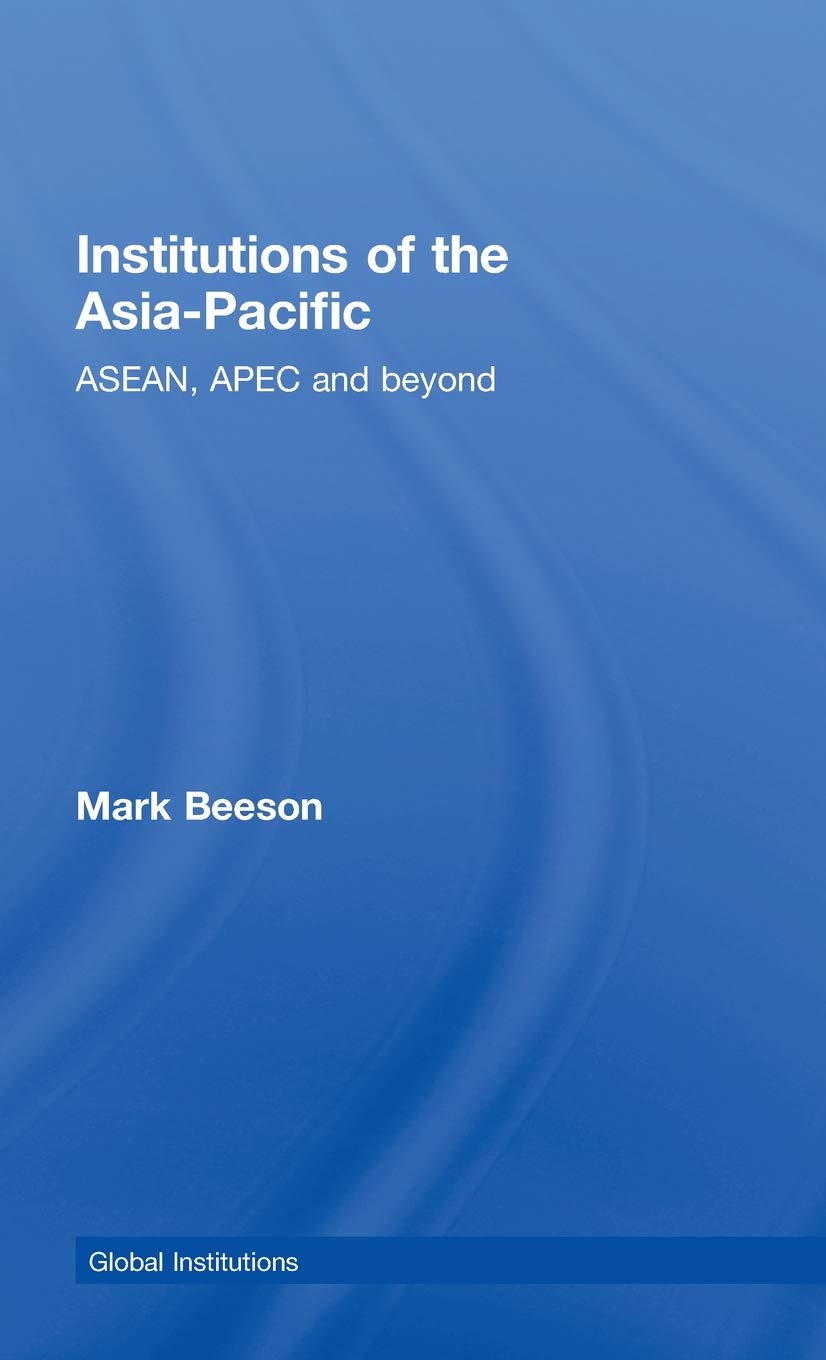
The AsiaPacific is arguably the most important, but also the most complex and contested, region on the planet. Containing three of the worlds largest economies and some of its most important strategic relationships, the regions capacity of regional elites to promote continuing economic development whilst simultaneously maintaining peace and stability will be one of the defining challenges of the twentyfirst century international order.Intuitively, we might expect regional institutions to play a major role in achieving this. Yet one of the most widely noted characteristics of the AsiaPacific region has been its relatively modest levels of institutional development thus far. However, things are changing: as individual economies in the AsiaPacific become more deeply integrated, there is a growing interest in developing and adding to the institutions that already exist.Institutions of the AsiaPacific examines how this region is developing, and what role established organisations like APEC and new bodies like ASEAN Plus Three are playing in this process. An expert in the field, Mark Beeson introduces the contested nature of the very region itself should it be the AsiaPacific or East Asia to which we pay most attention and expect to see most institutional development. By placing these developments in historical context, he reveals why the very definition of the region remains unsettled and why the political, economic and strategic relations of this remarkably diverse region remain fraught and difficult to manage.
⚠️ WARNING (California Proposition 65):
This product may contain chemicals known to the State of California to cause cancer,
birth defects, or other reproductive harm.
For MAP (Minimum Advertised Price) violations and Intellectual Property (IP) or Trademark concerns, please contact:
support@ergodebooks.com
⚠️ California Proposition 65 Warning: Some products sold on this website may expose you to chemicals known to the State of California to cause cancer, birth defects, or other reproductive harm. For more information, visit www.P65Warnings.ca.gov.