If you have any questions, you are always welcome to contact us. We'll get back to you as soon as possible, withing 24 hours on weekdays.
Customer service
All questions about your order, return and delivery must be sent to our customer service team by e-mail at yourstore@yourdomain.com
Sale & Press
If you are interested in selling our products, need more information about our brand or wish to make a collaboration, please contact us at press@yourdomain.com
Help
If you have any questions, you are always welcome to contact us. We'll get back to you as soon as possible, withing 24 hours on weekdays.
Customer service
All questions about your order, return and delivery must be sent to our customer service team by e-mail at yourstore@yourdomain.com
Sale & Press
If you are interested in selling our products, need more information about our brand or wish to make a collaboration, please contact us at press@yourdomain.com
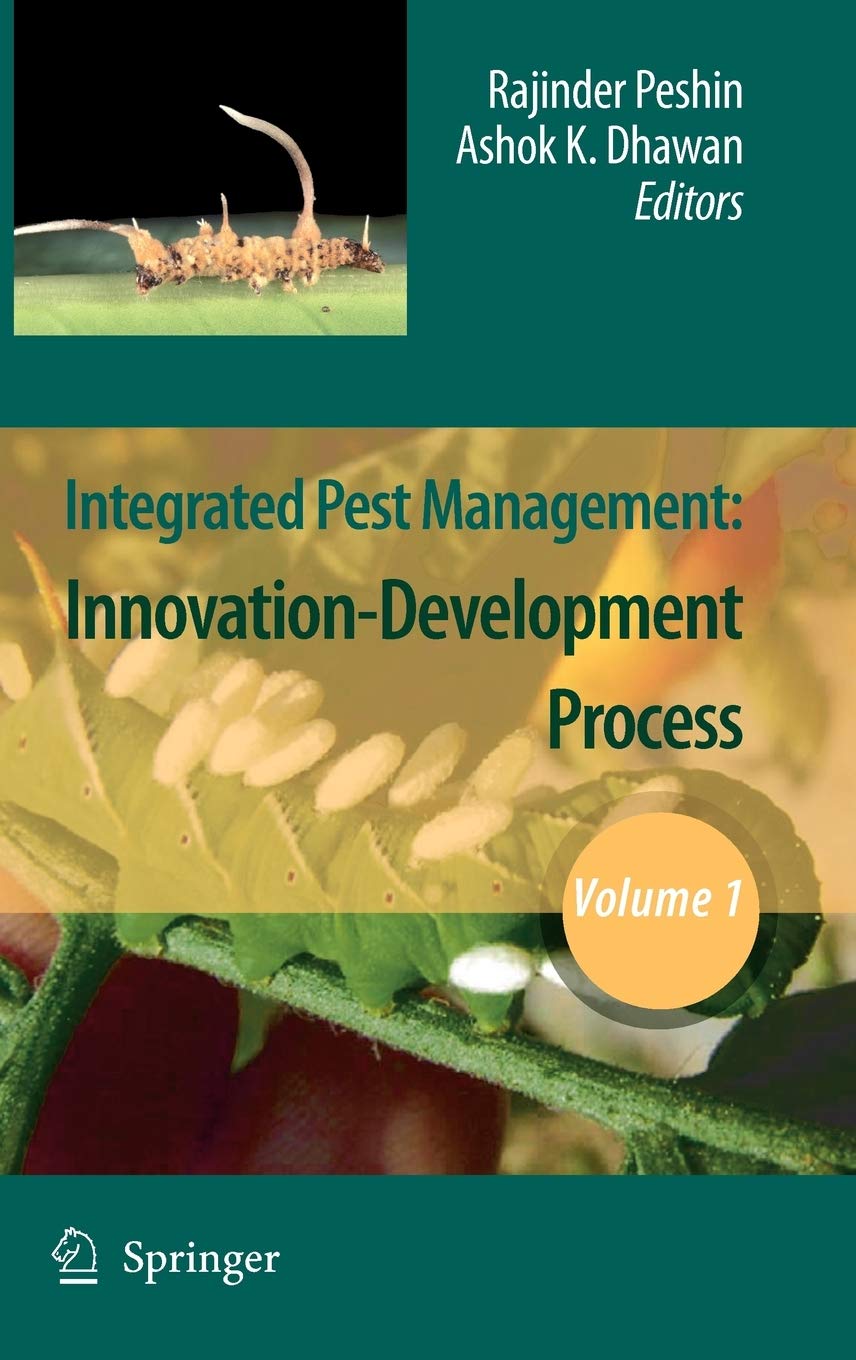
The book Silent Spring written by Rachel Carson in 1962, is considered the la mark in changing the attitude of the scientists and the general public regarding the complete reliance on the synthetic pesticides for controlling the ravages caused by the pests in agriculture crops. For about ve decades, the Integrated Pest Mana ment (IPM) is the accepted strategy for managing crop pests. IPM was practiced in Canet e Valley, Peru in 1950s, even before the term IPM was coined. Integrated Pest management: InnovationDevelopment Process, Volume 1, focuses on the recog tion of the dysfunctional consequences of the pesticide use in agriculture, through researchanddevelopmentoftheIntegratedPest Managementinnovations. Thebook aims to update the information on the global scenario of IPM with respect to the use of pesticides, its dysfunctional consequences, and the concepts and advan ments made in IPM systems. This book is intended as a text as well as reference material for use in teaching the advancements made in IPM. The book provides an interdisciplinary perspective of IPM by the fortythree experts from the eld of entomology, plant pathology, plant breeding, plant physiology, biochemistry, and extension education. The introductory chapter (Chapter 1) gives an overview of IPM initiatives in the developed and developing countries from Asia, Africa, Australia, Europe, Latin America and North America. IPM concepts, opportunities and challenges are d cussed in Chapter 2.
⚠️ WARNING (California Proposition 65):
This product may contain chemicals known to the State of California to cause cancer,
birth defects, or other reproductive harm.
For MAP (Minimum Advertised Price) violations and Intellectual Property (IP) or Trademark concerns, please contact:
support@ergodebooks.com
⚠️ California Proposition 65 Warning: Some products sold on this website may expose you to chemicals known to the State of California to cause cancer, birth defects, or other reproductive harm. For more information, visit www.P65Warnings.ca.gov.