If you have any questions, you are always welcome to contact us. We'll get back to you as soon as possible, withing 24 hours on weekdays.
Customer service
All questions about your order, return and delivery must be sent to our customer service team by e-mail at yourstore@yourdomain.com
Sale & Press
If you are interested in selling our products, need more information about our brand or wish to make a collaboration, please contact us at press@yourdomain.com
Help
If you have any questions, you are always welcome to contact us. We'll get back to you as soon as possible, withing 24 hours on weekdays.
Customer service
All questions about your order, return and delivery must be sent to our customer service team by e-mail at yourstore@yourdomain.com
Sale & Press
If you are interested in selling our products, need more information about our brand or wish to make a collaboration, please contact us at press@yourdomain.com
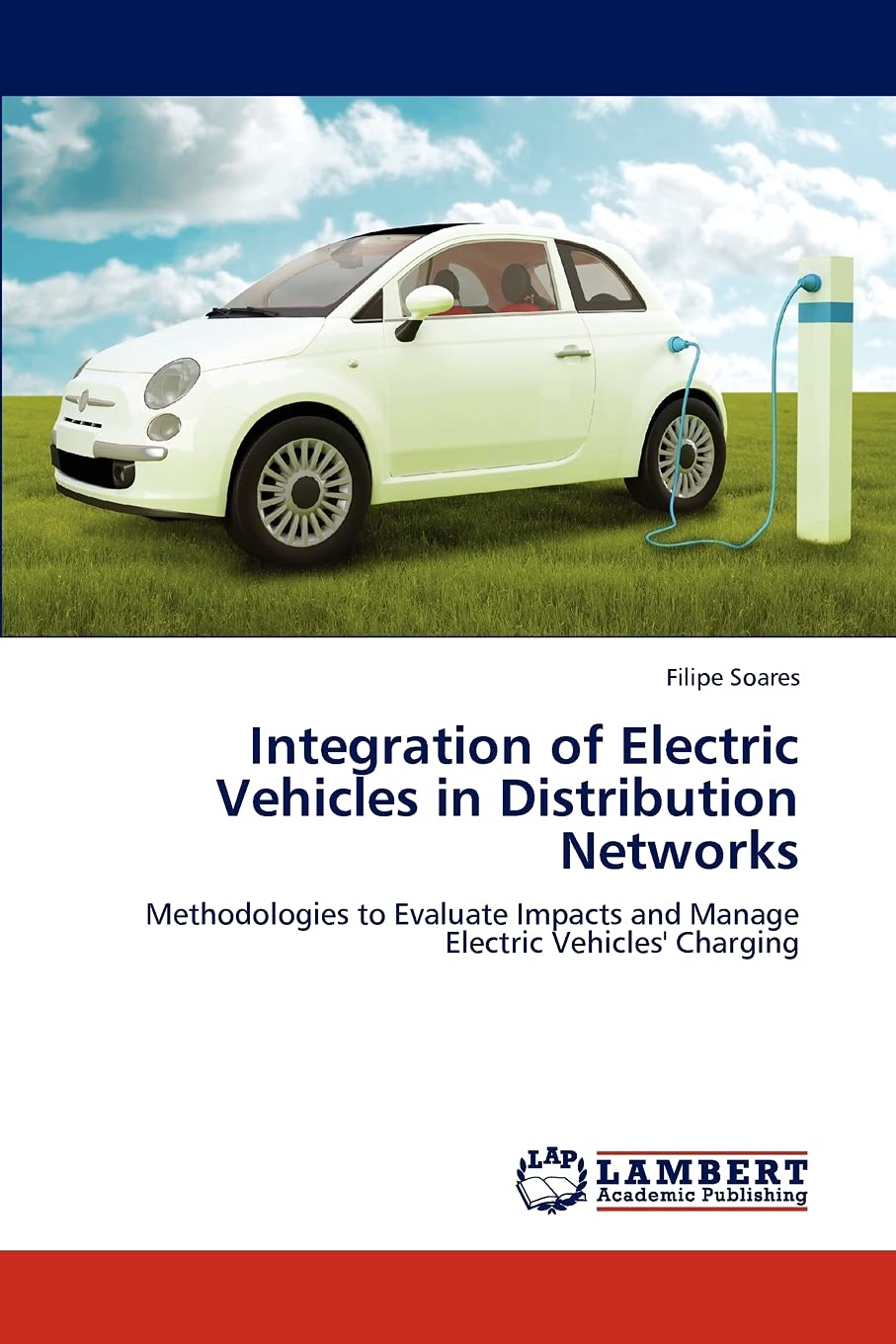
The electrification of the transportation sector is being regarded as an important measure to reduce the fossil fuel consumption and decrease the emission of greenhouse gases. Despite these benefits, the electricity demanded by Electric Vehicles (EV) will represent a major challenge for the electric power systems. The deployment of EV will change the power demand patterns, causing changes in the grids voltage profiles, power flows and energy losses, namely at the distribution level, where EV will be pluggedin for charging. This book is devoted to the integration of EV in distribution grids and it can be divided in three parts: In the first part, a comprehensive framework for EV integration in electrical power systems is presented, providing a holistic perspective of this new reality; The second part is dedicated to the evaluation of the impacts provoked by EV in distribution networks; Finally, appropriate management strategies for EV charging are presented in order to achieve several objectives, like flattening the network load diagrams or minimizing the renewable energy wasted in systems characterized by a large integration of intermittent renewable energy sources (e.g. wind).
⚠️ WARNING (California Proposition 65):
This product may contain chemicals known to the State of California to cause cancer,
birth defects, or other reproductive harm.
For MAP (Minimum Advertised Price) violations and Intellectual Property (IP) or Trademark concerns, please contact:
support@ergodebooks.com
⚠️ California Proposition 65 Warning: Some products sold on this website may expose you to chemicals known to the State of California to cause cancer, birth defects, or other reproductive harm. For more information, visit www.P65Warnings.ca.gov.