
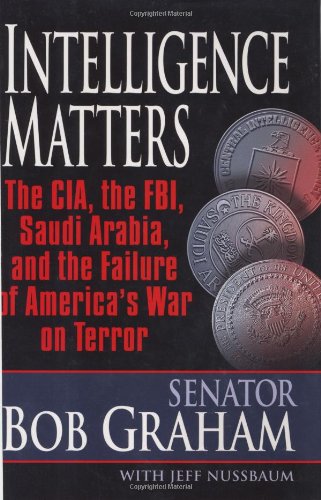
Title
Intelligence Matters: The Cia, The Fbi, Saudi Arabia, And The Failure Of America'S War On Terror
Sold by Ergodebooks, an authorized reseller.
Returns accepted within 30 days | support@ergodebooks.com
Shipping Information
- Free Standard Shipping — United States only
- Processing Time: 3–5 business days
- Estimated Delivery: 6–10 business days after dispatch
- Double-boxed, fully insured & discreetly packaged
- Tracking number sent via email once dispatched
Returns & Refund
Returns accepted within 30 days of delivery.
Damaged or Defective Item
Free return shipping + replacement or full refund
Wrong Item Received
Free return shipping + replacement or full refund
Change of Mind
Return shipping at customer's expense · 25% restocking fee applies
Payment Option

Shining Muchneeded Light On Areas The 9/11 Commission Preferred To Keep Dark, Intelligence Matters Chronicles The Efforts Of A Historic Joint Housesenate Inquiry To Get To The Bottom Of Our Intelligence Failures On That Infamous Day In 2001. Originally Published In 2004 Amid The Media Circus Surrounding The 9/11 Commission Report, It Told More Than A Riveting Taleit Also Provided An Unflinching Expos Of Failure, Incompetence, And Deceit At The Highest Levels Of Our Government.The Joint Inquiry, Cochaired By Senator Bob Graham (Dflorida), Was The First And Arguably Most Effective Government Body To Investigate The Horrendous 2001 Attacks. Indeed, It Helped Compel A Reluctant George W. Bush To Establish The 9/11 Commission. But While Both Investigations Sharply Criticized The Failures Of Our Nation'S Intelligence Establishment, Only Graham'S Dared To Challenge The Bush Administration On A Number Of Troubling Pointsespecially The Apparent Complicity Of Saudi Officials In The Events Of 9/11, The Subsequent Protection Provided By President Bush For A Large Number Of Saudis (Including Members Of The Bin Laden Family), And The Runup To The Iraq War, Which Graham Voted Against.The Original Work Combined A Compelling Narrative Of 9/11 With An Insightful Eyewitness Chronicle Of The Joint Inquiry'S Investigation, Conclusions, And Recommendations. Sharply Critiquing The Failures At The Cia, Fbi, And The White House And Detailing At Least Twelve Occasions When The 9/11 Plot Could Have Been Stopped, It Concluded With A Clear Plan For Overhauling Our Intelligence And National Security Establishment. For This Paperback Edition, Graham Has Added A Substantial New Preface And Postscript That Lucidly Examine How Effectively The Nation Has Respondedor Failed To Respondto The Joint Inquiry'S Recommendations.This Edition Restores Intelligence Matters To Its Rightful Place As One Of The Key Texts On The Subject Of 9/11 And Provides A Grim Reminder Of The Challenges That Remain For Us In The War On Terror.
⚠️ WARNING (California Proposition 65):
This product may contain chemicals known to the State of California to cause cancer, birth defects, or other reproductive harm.
For more information, please visit www.P65Warnings.ca.gov.
- Q: How many pages does the book have? A: This book contains two hundred ninety-six pages. It provides a comprehensive exploration of intelligence failures related to the events of September 11.
- Q: What are the dimensions of the book? A: The book measures six point seventy-five inches in length, one point twenty-six inches in width, and nine point seventy-six inches in height. These dimensions make it a suitable size for both reading and display.
- Q: What type of binding does this book have? A: This book is available in hardcover binding. Hardcover books are known for their durability and longevity compared to paperback editions.
- Q: Who is the author of this book? A: The author of this book is Bob Graham, who served as a United States Senator. His insights are based on his experiences during the Joint Inquiry into 9/11.
- Q: What genre does this book belong to? A: This book falls under the genre of political freedom and non-fiction. It provides an investigative look into the failures of the U.S. intelligence community.
- Q: What age group is this book suitable for? A: This book is intended for adult readers. Its complex themes and discussions of intelligence and terrorism are geared towards a mature audience.
- Q: How should I care for this book? A: To keep this book in good condition, store it upright in a dry place. Avoid exposing it to direct sunlight to prevent fading.
- Q: Can I read this book if I am new to the subject? A: Yes, this book is accessible for readers new to the subject. It provides clear explanations and context surrounding the events of 9/11 and intelligence failures.
- Q: Is this book appropriate for educational purposes? A: Yes, this book is suitable for educational purposes. It offers valuable insights into the U.S. government's response to the 9/11 attacks and intelligence oversight.
- Q: What should I do if my book arrives damaged? A: If your book arrives damaged, you should contact the seller's customer service for a return or replacement. Most sellers offer a satisfaction guarantee.
- Q: How can I find more books by the same author? A: You can find more books by Bob Graham by searching online bookstores or libraries. Many retailers will feature other works by the author.
- Q: What is the main focus of this book? A: The main focus of this book is the investigation into intelligence failures related to the September 11 attacks. It highlights key criticisms of government agencies.
- Q: Does this book include new content in the paperback edition? A: Yes, the paperback edition includes a substantial new preface and postscript by the author. These sections reflect on responses to the Joint Inquiry's recommendations.
- Q: How does this book compare to the 9/11 Commission Report? A: This book provides a more detailed examination of certain failures not fully addressed in the 9/11 Commission Report. It challenges some of the conclusions drawn by the Commission.
- Q: Is this book a good resource for understanding political freedom? A: Yes, this book is an excellent resource for understanding political freedom. It discusses the implications of intelligence failures on civil liberties and national security.