If you have any questions, you are always welcome to contact us. We'll get back to you as soon as possible, withing 24 hours on weekdays.
Customer service
All questions about your order, return and delivery must be sent to our customer service team by e-mail at yourstore@yourdomain.com
Sale & Press
If you are interested in selling our products, need more information about our brand or wish to make a collaboration, please contact us at press@yourdomain.com
Help
If you have any questions, you are always welcome to contact us. We'll get back to you as soon as possible, withing 24 hours on weekdays.
Customer service
All questions about your order, return and delivery must be sent to our customer service team by e-mail at yourstore@yourdomain.com
Sale & Press
If you are interested in selling our products, need more information about our brand or wish to make a collaboration, please contact us at press@yourdomain.com
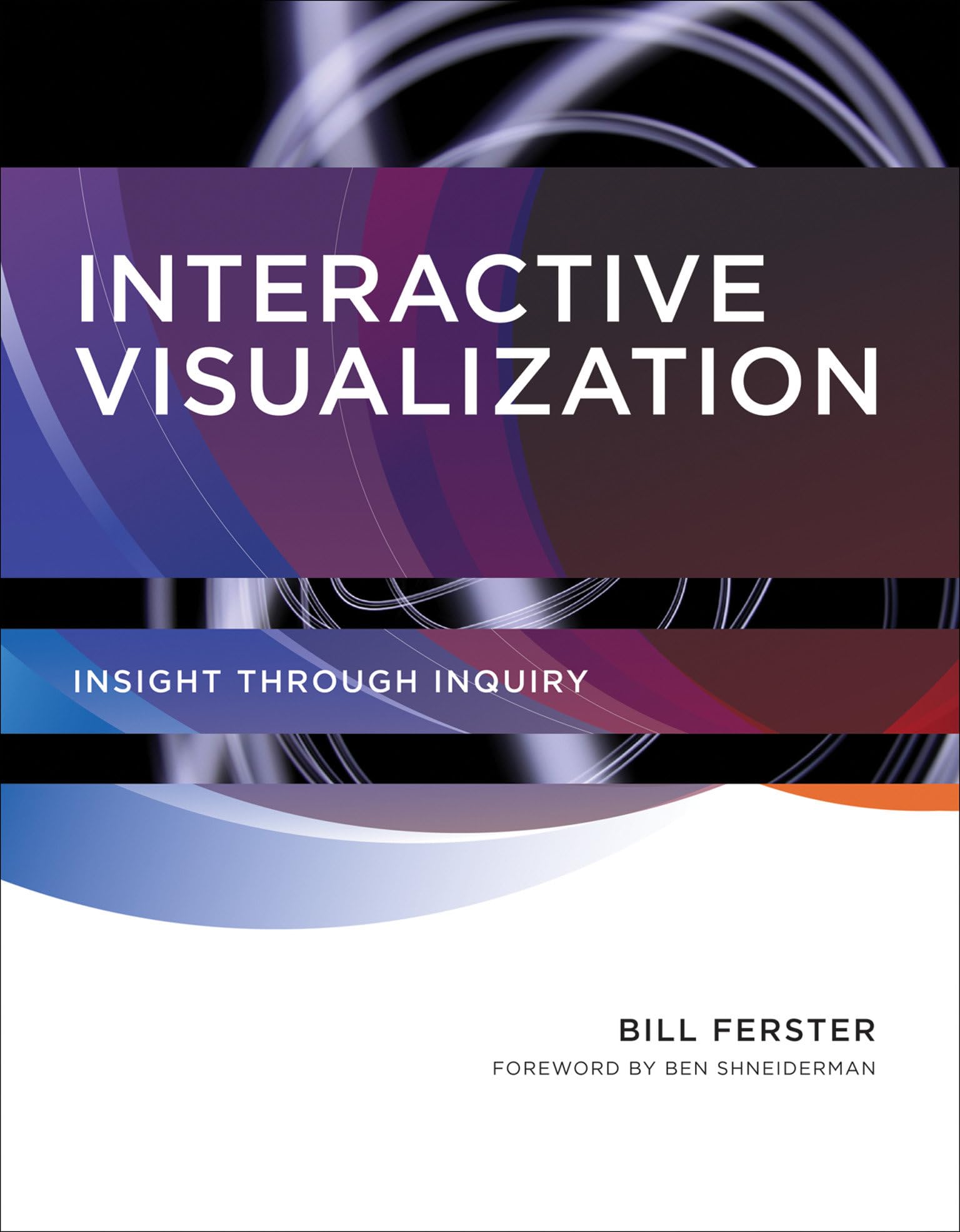
A guide to fundamental issues in designing interactive visualizations, exploring ideas of inquiry, design, structured data, and usability.Interactive visualization is emerging as a vibrant new form of communication, providing compelling presentations that allow viewers to interact directly with information in order to construct their own understandings of it. Building on a long tradition of printbased information visualization, interactive visualization utilizes the technological capabilities of computers, the Internet, and computer graphics to marshal multifaceted information in the service of making a point visually. This book offers an introduction to the field, presenting a framework for exploring historical, theoretical, and practical issues. It is not a howto book tied to specific and soontobeoutdated software tools, but a guide to the concepts that are central to building interactive visualization projects whatever their ultimate form.The framework the book presents (known as the ASSERT model, developed by the author), allows the reader to explore the process of interactive visualization in terms of choosing good questions to ask; finding appropriate data for answering them; structuring that information; exploring and analyzing the data; representing the data visually; and telling a story using the data. Interactive visualization draws on many disciplines to inform the final representation, and the book reflects this, covering basic principles of inquiry, data structuring, information design, statistics, cognitive theory, usability, working with spreadsheets, the Internet, and storytelling.
⚠️ WARNING (California Proposition 65):
This product may contain chemicals known to the State of California to cause cancer,
birth defects, or other reproductive harm.
For MAP (Minimum Advertised Price) violations and Intellectual Property (IP) or Trademark concerns, please contact:
support@ergodebooks.com
⚠️ California Proposition 65 Warning: Some products sold on this website may expose you to chemicals known to the State of California to cause cancer, birth defects, or other reproductive harm. For more information, visit www.P65Warnings.ca.gov.