If you have any questions, you are always welcome to contact us. We'll get back to you as soon as possible, withing 24 hours on weekdays.
Customer service
All questions about your order, return and delivery must be sent to our customer service team by e-mail at yourstore@yourdomain.com
Sale & Press
If you are interested in selling our products, need more information about our brand or wish to make a collaboration, please contact us at press@yourdomain.com
Help
If you have any questions, you are always welcome to contact us. We'll get back to you as soon as possible, withing 24 hours on weekdays.
Customer service
All questions about your order, return and delivery must be sent to our customer service team by e-mail at yourstore@yourdomain.com
Sale & Press
If you are interested in selling our products, need more information about our brand or wish to make a collaboration, please contact us at press@yourdomain.com
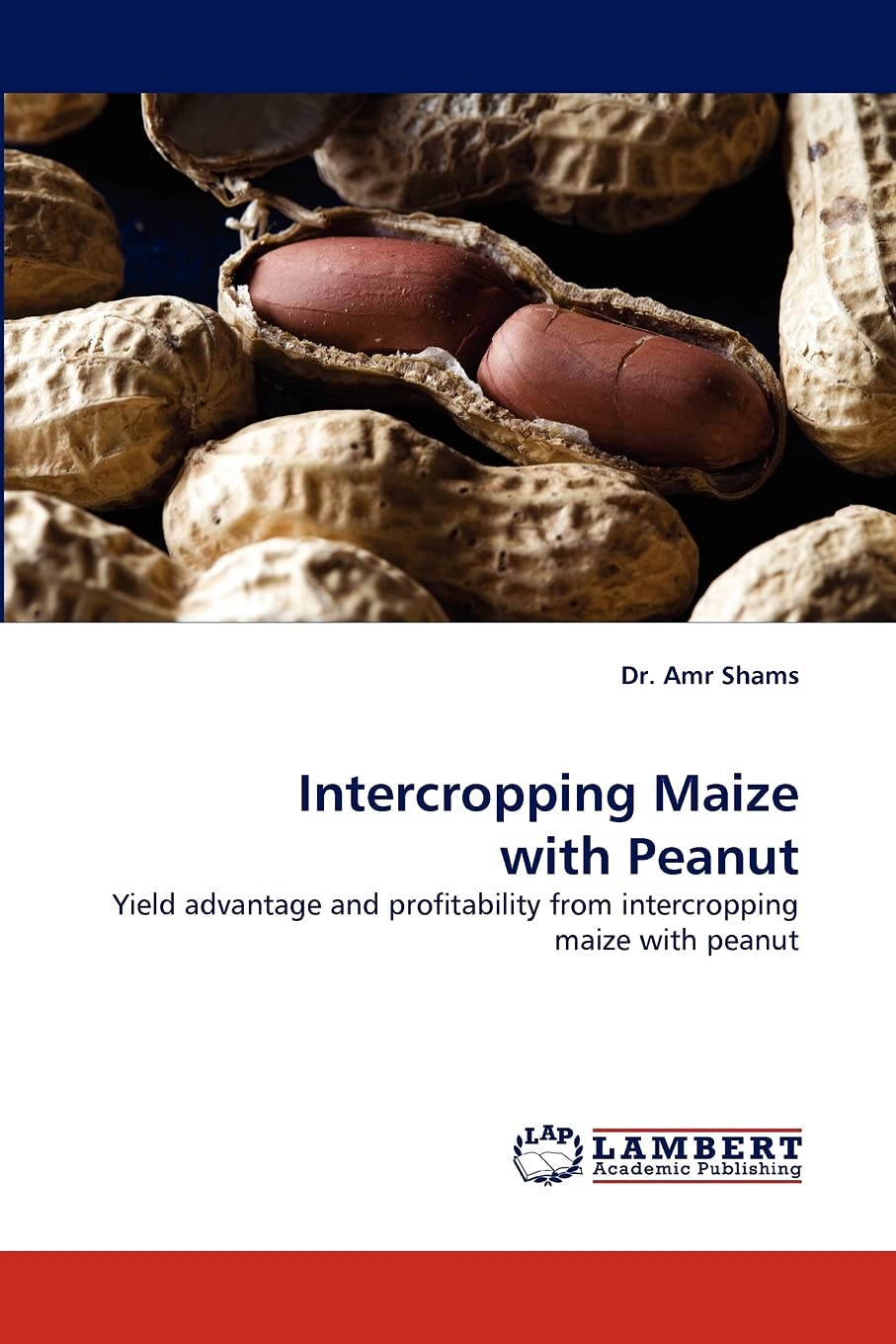
Intercropping is the practice of growing two or more crops simultaneously on the same field to maximize total production per unit area. The most important advantage of intercropping systems comprised of both tall and short plants in the potential complementarities in sun light utilization for crop production. The advantages of intercropping a cereal with a legume are often limited by the dominance of the cereal, which severely inhibits the legume. A goal of many small farmers using a maizelegume intercropping system is to achieve full production of the peanut crop plus the additional yield of the associated maize crop. Intercropping as a kind of crop diversification is popular now among the small holders. A reason for this popularity is built on profit and resource maximization and efficient water utilization. Therefore, the objective of the present study is to investigate the interrelationship of peanutmaize intercropping patterns, the geometric and plant density of maize the shade crop in sandy soil compared with sole planting of the two crops and various levels of nitrogen fertilization.
⚠️ WARNING (California Proposition 65):
This product may contain chemicals known to the State of California to cause cancer,
birth defects, or other reproductive harm.
For MAP (Minimum Advertised Price) violations and Intellectual Property (IP) or Trademark concerns, please contact:
support@ergodebooks.com
⚠️ California Proposition 65 Warning: Some products sold on this website may expose you to chemicals known to the State of California to cause cancer, birth defects, or other reproductive harm. For more information, visit www.P65Warnings.ca.gov.