
Title
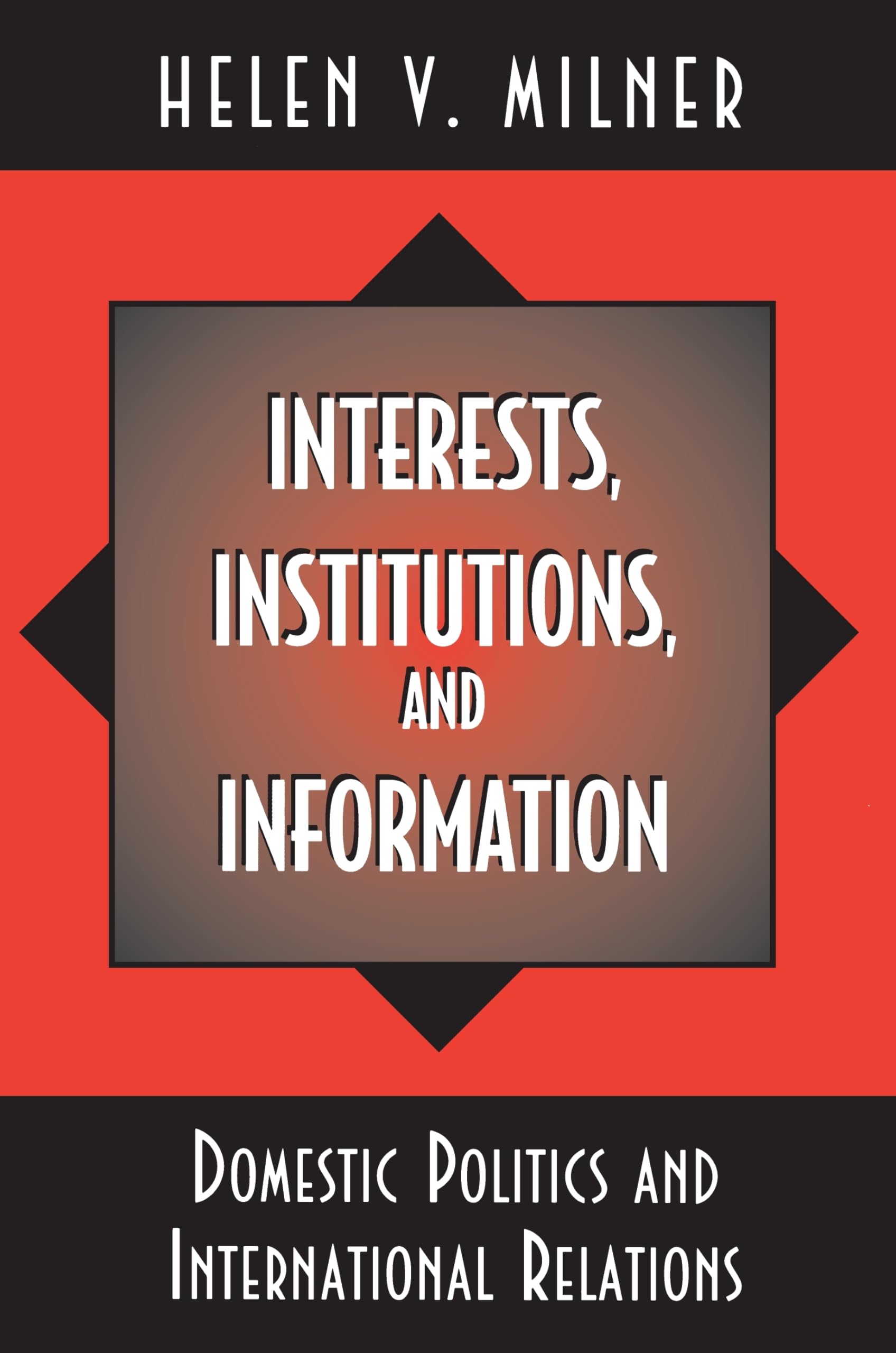
Interests, Institutions, and Information,New
Sold by Ergodebooks, an authorized reseller.
Returns accepted within 30 days | support@ergodebooks.com
Shipping Information
- Free Standard Shipping — United States only
- Processing Time: 3–5 business days
- Estimated Delivery: 6–10 business days after dispatch
- Double-boxed, fully insured & discreetly packaged
- Tracking number sent via email once dispatched
Returns & Refund
Returns accepted within 30 days of delivery.
Damaged or Defective Item
Free return shipping + replacement or full refund
Wrong Item Received
Free return shipping + replacement or full refund
Change of Mind
Return shipping at customer's expense · 25% restocking fee applies
Payment Option

Increasingly scholars of international relations are rallying around the idea that 'domestic politics matters.' Few, however, have articulated precisely how or why it matters. In this significant book, Helen Milner lays out the first fully developed theory of domestic politics, showing exactly how domestic politics affects international outcomes. In developing this rationalchoice theory, Milner argues that any explanation that treats states as unitary actors is ultimately misleading. She describes all states as polyarchic, where decisionmaking power is shared between two or more actors (such as a legislature and an executive). Milner constructs a new model based on twolevel game theory, reflecting the political activity at both the domestic and international levels. She illustrates this model by taking up the critical question of cooperation among nations.Milner examines the central factors that influence the strategic game of domestic politics. She shows that it is the outcome of this internal gamenot fears of other countries' relative gains or the likelihood of cheatingthat ultimately shapes how the international game is played out and therefore the extent of cooperative endeavors. The interaction of the domestic actors' preferences, given their political institutions and levels of information, defines when international cooperation is possible and what its terms will be. Several test cases examine how this argument explains the phases of a cooperative attempt: the initiation, the negotiations at the international level, and the eventual domestic ratification. The book reaches the surprising conclusion that theoristsneoInstitutionalists and Realists alikehave overestimated the likelihood of cooperation among states.
⚠️ WARNING (California Proposition 65):
This product may contain chemicals known to the State of California to cause cancer, birth defects, or other reproductive harm.
For more information, please visit www.P65Warnings.ca.gov.