If you have any questions, you are always welcome to contact us. We'll get back to you as soon as possible, withing 24 hours on weekdays.
Customer service
All questions about your order, return and delivery must be sent to our customer service team by e-mail at yourstore@yourdomain.com
Sale & Press
If you are interested in selling our products, need more information about our brand or wish to make a collaboration, please contact us at press@yourdomain.com
Help
If you have any questions, you are always welcome to contact us. We'll get back to you as soon as possible, withing 24 hours on weekdays.
Customer service
All questions about your order, return and delivery must be sent to our customer service team by e-mail at yourstore@yourdomain.com
Sale & Press
If you are interested in selling our products, need more information about our brand or wish to make a collaboration, please contact us at press@yourdomain.com
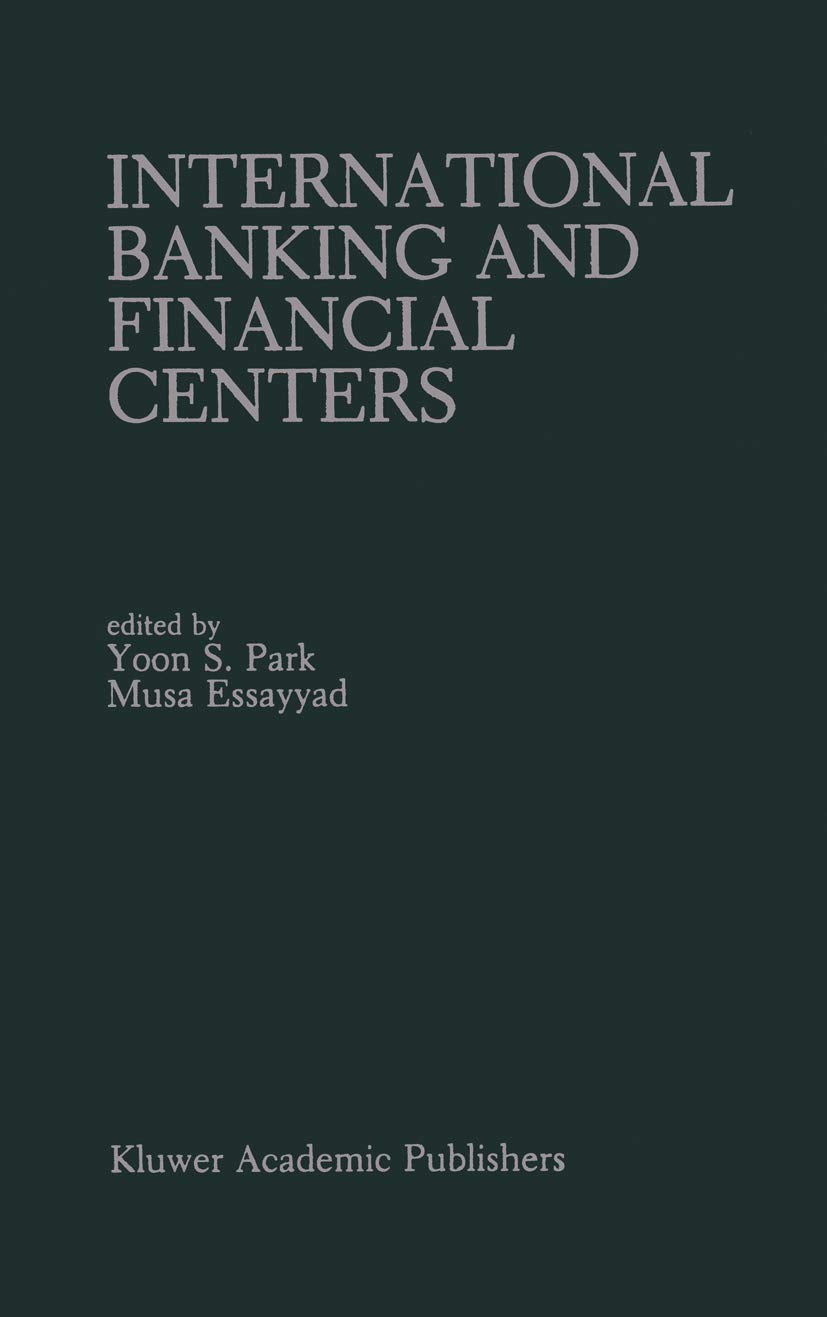
The development of international financial centers (IFCs) has paralleled the rapid expansion of international banking and Eurocurrency activities. During the past decade and a half, the international banking and financial markets have experienced phenomenal growth along with the parallel expansion of IFCs. The size of the Eurocurrency market grew from $110 billion in 1970 to over $4,000 billion by 1987, while the total international assets of all banking institutions rose from $130 billion to $4,800 billion during the same period. Some of the preeminent IFCs are playing a major role in the international financial markets, as demonstrated by the size of their international assets: Bahamas ($144 billion), Cayman Islands ($174 billion), Singapore ($150 billion), Hong Kong ($130 billion), Bahrain ($46 billion), and Panama ($32 billion). The patterns of Euroborrowing and Eurolending activities in these IFCs have been undergoing major changes. These changes came about as a result of the introduction of the floating exchange rate system in 1973, recent financial deregulation, internationalization of the financial markets, securitization of financial assets and liabilities, and global financial innovations. Since the pioneering work of Kindleberger in 1974 on the formation of financial centers, there has not been a comprehensive study to reflect the recent developments, trends and the mystique that have surrounded the IFCs' functions and operations in the international money and capital markets.
⚠️ WARNING (California Proposition 65):
This product may contain chemicals known to the State of California to cause cancer,
birth defects, or other reproductive harm.
For MAP (Minimum Advertised Price) violations and Intellectual Property (IP) or Trademark concerns, please contact:
support@ergodebooks.com
⚠️ California Proposition 65 Warning: Some products sold on this website may expose you to chemicals known to the State of California to cause cancer, birth defects, or other reproductive harm. For more information, visit www.P65Warnings.ca.gov.