
Title
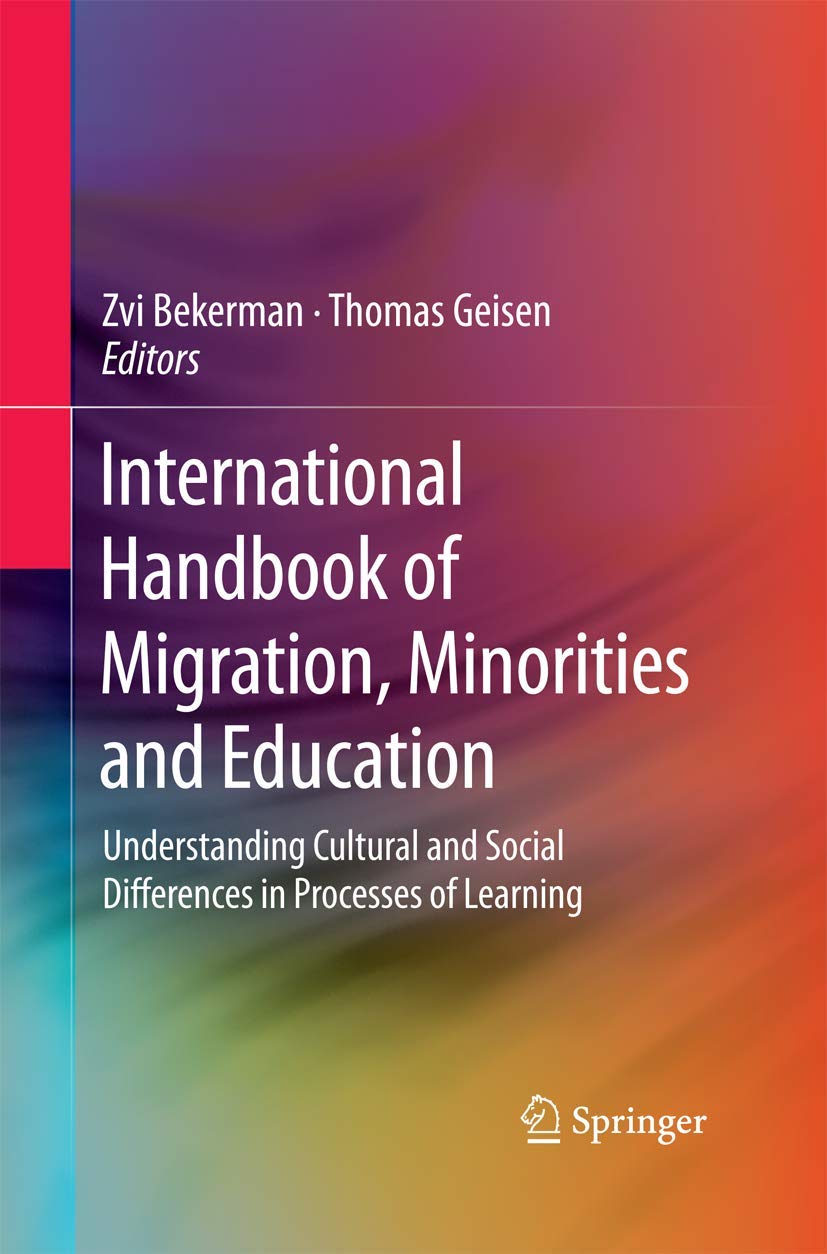
International Handbook of Migration, Minorities and Education: Understanding Cultural and Social Differences in Processes of Lea,Used
Sold by Ergodebooks, an authorized reseller.
Returns accepted within 30 days | support@ergodebooks.com
Shipping Information
- Free Standard Shipping — United States only
- Processing Time: 3–5 business days
- Estimated Delivery: 6–10 business days after dispatch
- Double-boxed, fully insured & discreetly packaged
- Tracking number sent via email once dispatched
Returns & Refund
Returns accepted within 30 days of delivery.
Damaged or Defective Item
Free return shipping + replacement or full refund
Wrong Item Received
Free return shipping + replacement or full refund
Change of Mind
Return shipping at customer's expense · 25% restocking fee applies
Payment Option

Product Description Migrants and minorities are always at risk of being caught in essentialized cultural definitions and being denied the right to express their cultural preferences because they are perceived as threats to social cohesion. Migrants and minorities respond to these difficulties in multiple ways as active agents in the pedagogical, political, social, and scientific processes that position them in this or that cultural sphere. On the one hand, they reject ascribed cultural attributes while striving towards integration in a variety of social spheres, e.g. school and workplace, in order to achieve social mobility. On the other hand, they articulate demands for cultural selfdetermination. This discursive duality is met with suspicion by the majority culture. For societies with high levels of migration or with substantial minority cultures, questions related to the meaning of cultural heterogeneity and the social and cultural limits of learning and communication (e.g. migration education or critical multiculturalism) are very important. It is precisely here where the chances for new beginnings and new trials become of great importance for educational theorizing, which urgently needs to find answers to current questions about individual freedom, community/cultural affiliations, and social and democratic cohesion. Answers to these questions must account for both political and learning perspectives at the macro, mezzo, and micro contextual levels. The contributions of this edited volume enhance the knowledge in the field of migrant/minority education, with a special emphasis on the meaning of culture and social learning for educational processes. From the Back Cover Migrants and minorities are always at risk of being caught in essentialized cultural definitions and being denied the right to express their cultural preferences because they are perceived as threats to social cohesion. Migrants and minorities respond to these difficulties in multiple ways as active agents in the pedagogical, political, social, and scientific processes that position them in this or that cultural sphere. On the one hand, they reject ascribed cultural attributes while striving towards integration in a variety of social spheres, e.g. school and workplace, in order to achieve social mobility. On the other hand, they articulate demands for cultural selfdetermination. This discursive duality is met with suspicion by the majority culture. For societies with high levels of migration or with substantial minority cultures, questions related to the meaning of cultural heterogeneity and the social and cultural limits of learning and communication (e.g. migration education or critical multiculturalism) are very important. It is precisely here where the chances for new beginnings and new trials become of great importance for educational theorizing, which urgently needs to find answers to current questions about individual freedom, community/cultural affiliations, and social and democratic cohesion. Answers to these questions must account for both political and learning perspectives at the macro, mezzo, and micro contextual levels. The contributions of this edited volume enhance the knowledge in the field of migrant/minority education, with a special emphasis on the meaning of culture and social learning for educational processes. About the Author Zvi Bekerman, teaches anthropology of education at the School of Education and the Melton Center, at the Hebrew University of Jerusalem. From 2003 to 2007 he was a Research Fellow at the Truman Institute for the Advancement of Peace, Hebrew University. His main interests are in the study of cultural, ethnic and national identity, including identity processes and negotiation during intercultural encounters and in formal/informal learning contexts. Since 1999 he has been conducting, with the support of the Ford, Spencer and Bernard Van Leer Foundations, a long term ethnographic
⚠️ WARNING (California Proposition 65):
This product may contain chemicals known to the State of California to cause cancer, birth defects, or other reproductive harm.
For more information, please visit www.P65Warnings.ca.gov.