
Title
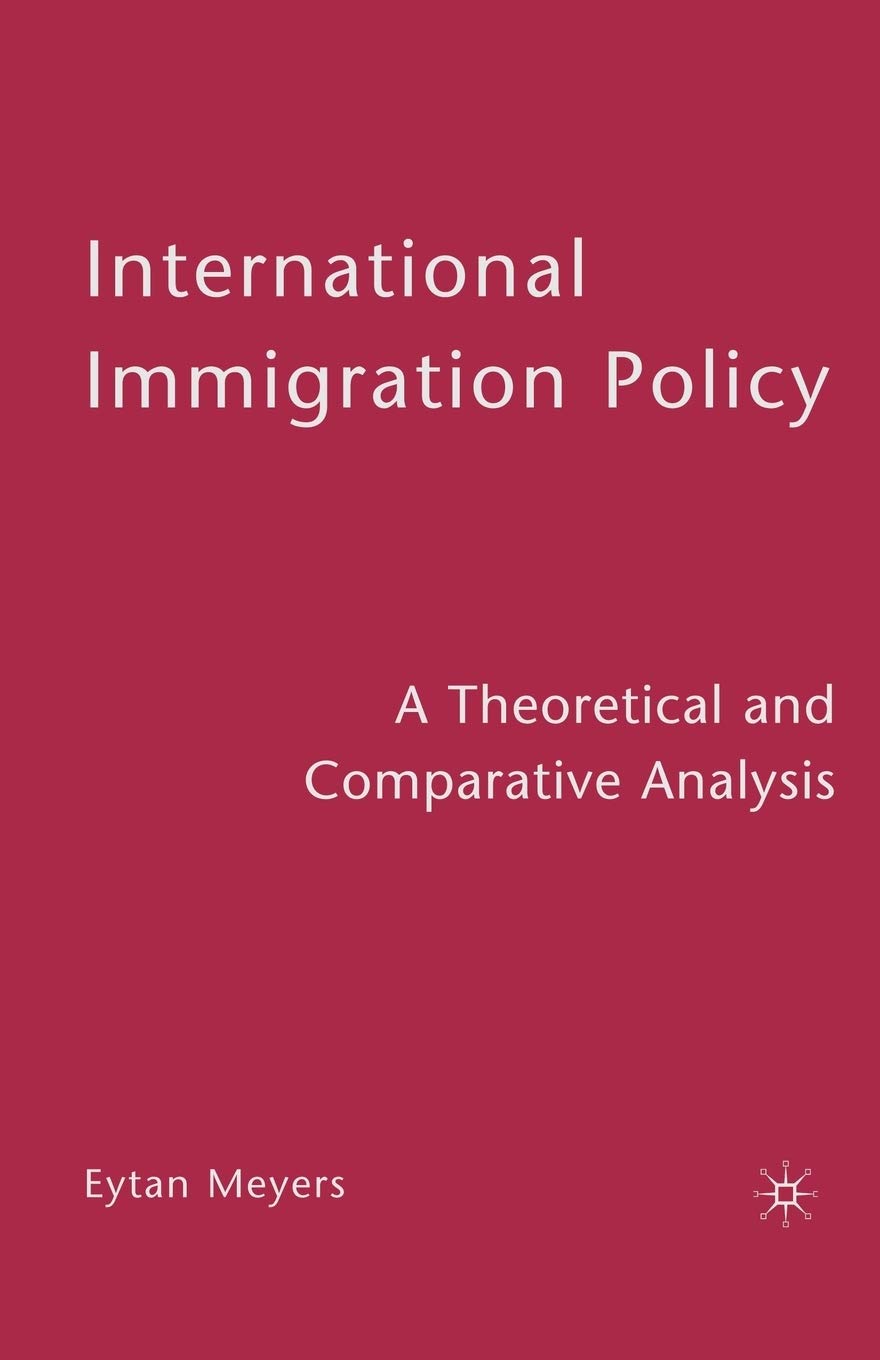
International Immigration Policy: A Theoretical and Comparative Analysis,Used
Sold by Ergodebooks, an authorized reseller.
Returns accepted within 30 days | support@ergodebooks.com
Shipping Information
- Free Standard Shipping — United States only
- Processing Time: 3–5 business days
- Estimated Delivery: 6–10 business days after dispatch
- Double-boxed, fully insured & discreetly packaged
- Tracking number sent via email once dispatched
Returns & Refund
Returns accepted within 30 days of delivery.
Damaged or Defective Item
Free return shipping + replacement or full refund
Wrong Item Received
Free return shipping + replacement or full refund
Change of Mind
Return shipping at customer's expense · 25% restocking fee applies
Payment Option

Numerous studies explore immigration policies of individual receiving countries. But these studies share several weaknesses. First and foremost, they are empirically orientated and lack a general theory. Second, most examine the policy of single country during a limited period, or, in a few cases, are contributed volumes analyzing each country separately. In general, immigration policy literature tends to be atheoretic, to focus on specific periods and particular countries, and constitutes an array of discrete bits. This book is a response to this trend, offering a theoretical approach to immigration policy. It explains how governments decide on the number of immigrants they will accept; whether to differentiate between various ethnic groups; whether to accept refugees and on what basis; and whether to favour permanent immigration over migrant workers. The book also answers such questions as: How much influence do extremeright parties have on the determination of immigration policy? Why do antiimmigration parties and initiatives enjoy greater success in localstate elections, and in the elections for the European Parliament, than in national elections? And under what circumstances does immigration policy become an electoral issue? Meyers draws on a wide array of sources on migration policymaking and using them derives proposed models in a way that few others have done before him. In addition, the book interrelates global and domestic factors that jointly influence government policymaking on international migration in a way that helps to clarify both spheres. Lastly, the work combines historical data with contemporary processes, in a way that draws lessons from the past while recognizing that changing circumstances usually revise governmental responses.
⚠️ WARNING (California Proposition 65):
This product may contain chemicals known to the State of California to cause cancer, birth defects, or other reproductive harm.
For more information, please visit www.P65Warnings.ca.gov.