
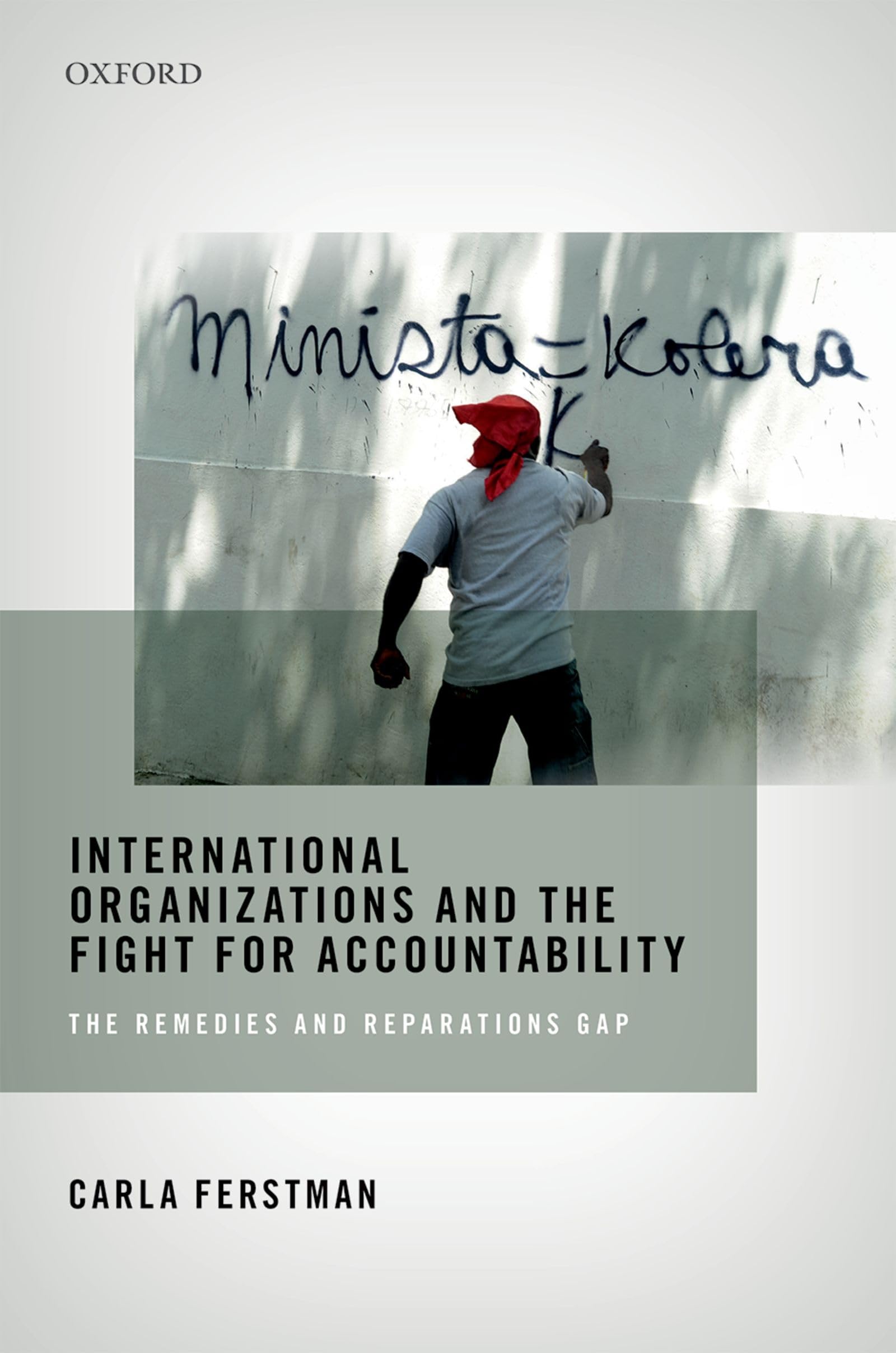
Title
International Organizations and the Fight for Accountability: The Remedies and Reparations Gap,Used
Sold by Ergodebooks, an authorized reseller.
Returns accepted within 30 days | support@ergodebooks.com
Shipping Information
- Free Standard Shipping — United States only
- Processing Time: 3–5 business days
- Estimated Delivery: 6–10 business days after dispatch
- Double-boxed, fully insured & discreetly packaged
- Tracking number sent via email once dispatched
Returns & Refund
Returns accepted within 30 days of delivery.
Damaged or Defective Item
Free return shipping + replacement or full refund
Wrong Item Received
Free return shipping + replacement or full refund
Change of Mind
Return shipping at customer's expense · 25% restocking fee applies
Payment Option

International organizations have increasingly taken on state or quasi statelike functions in order to exercise control over individuals and societies, most pressingly in contexts of conflict and transition. Their engagement in peace operations has progressively widened, with mandates now regularly including the protection of civilian populations and, in several new operations, containing peace enforcement responsibilities with active combat duties. This increases the risk that their conduct may infringe human rights and international humanitarian law.This book explores the ways in which the principles of accountability and reparation apply to international organizations. When considering whether international organizations are obliged to afford reparation and to whom it is owed, as well as what it entails, we are confronted with the challenge of understanding how the law of responsibility intersects with specialized regimes of human rights and international humanitarian law, particularly in its application to individuals. The justifications for organizational immunities and other limits on international organizations' responsibilities were conceived to ensure IOs independence from state influences and their capacity to engage in often difficult circumstances. Many, if not all, of these rationales remain relevant today, yet disciplinary, oversight, and judicial structures that exist in state administrations to promote accountability and forestall abuses have only partially been put into place for international organizations. At the same time, individuals affected by their conduct have had no, or only cursory recourse to domestic, regional and international courts and they have not been able to rely on their states of nationality to pursue claims on their behalf.
⚠️ WARNING (California Proposition 65):
This product may contain chemicals known to the State of California to cause cancer, birth defects, or other reproductive harm.
For more information, please visit www.P65Warnings.ca.gov.