If you have any questions, you are always welcome to contact us. We'll get back to you as soon as possible, withing 24 hours on weekdays.
Customer service
All questions about your order, return and delivery must be sent to our customer service team by e-mail at yourstore@yourdomain.com
Sale & Press
If you are interested in selling our products, need more information about our brand or wish to make a collaboration, please contact us at press@yourdomain.com
Help
If you have any questions, you are always welcome to contact us. We'll get back to you as soon as possible, withing 24 hours on weekdays.
Customer service
All questions about your order, return and delivery must be sent to our customer service team by e-mail at yourstore@yourdomain.com
Sale & Press
If you are interested in selling our products, need more information about our brand or wish to make a collaboration, please contact us at press@yourdomain.com
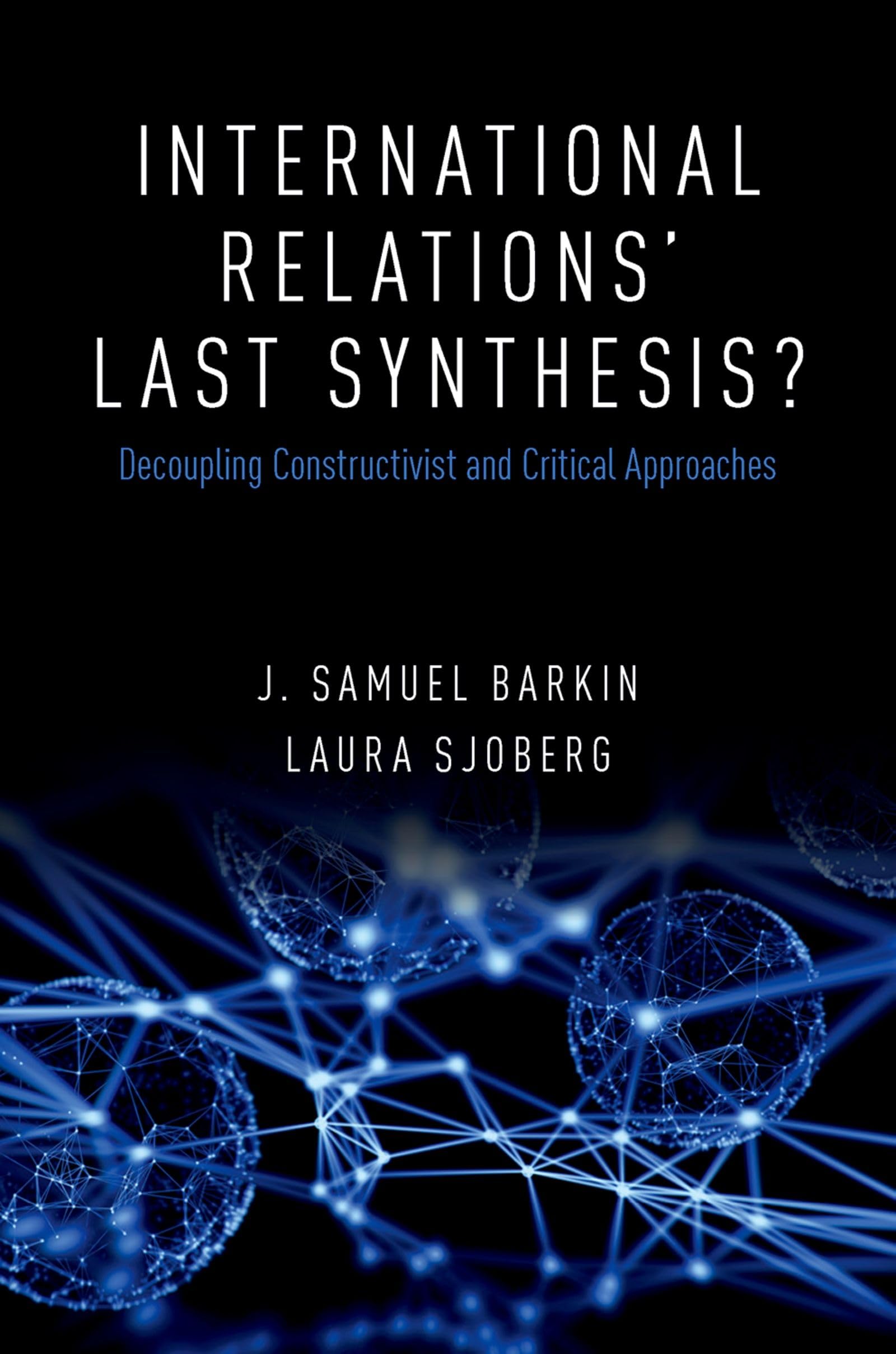
Many scholars, intentionally or unintentionally, have entangled constructivisms and critical theories in problematic ways, either by assigning a criticaltheoretical politics to constructivisms or by assuming the appropriateness of constructivist epistemology and methods for critical theorizing. IR's Last Synthesis? makes the argument that these connections mirror IR's grand theoretical syntheses of the 1980s and 1990s and have similar constraining effects on the possibilities of IR theory. They have been made without adequate reflection, in contradiction to the base assumptions of each theoretical perspective, and to the detriment of both knowledge accumulation about global politics and theoretical rigor in disciplinary IR. It is not that constructivisms and critical theories have no common ground; rather, the fact that it has become routine for IR scholars to overstate their common ground is counterproductive to the discovery and utilization of their potential dialogues. To that end, IR's Last Synthesis? argues that scholars using the two in conjunction should be cognizant of, rather than gloss over, the tensions between the approaches and the tools they have to offer. Along these lines, the book uses the concept of affordances to look at what each has to offer the other, and to argue for a modest, reflective, specified return to (constructivist and critical) IR theorizing. By rejecting its oversimple syntheses, this book hews a road toward reviving IR theorizing.
⚠️ WARNING (California Proposition 65):
This product may contain chemicals known to the State of California to cause cancer,
birth defects, or other reproductive harm.
For MAP (Minimum Advertised Price) violations and Intellectual Property (IP) or Trademark concerns, please contact:
support@ergodebooks.com
⚠️ California Proposition 65 Warning: Some products sold on this website may expose you to chemicals known to the State of California to cause cancer, birth defects, or other reproductive harm. For more information, visit www.P65Warnings.ca.gov.