
Title
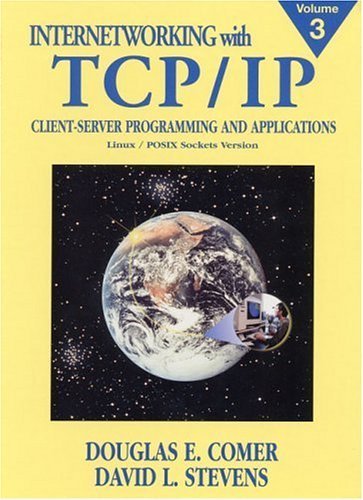
Internetworking With Tcp/Ip: ClientServer Programming and Applications,Used
Sold by Ergodebooks, an authorized reseller.
Returns accepted within 30 days | support@ergodebooks.com
Shipping Information
- Free Standard Shipping — United States only
- Processing Time: 3–5 business days
- Estimated Delivery: 6–10 business days after dispatch
- Double-boxed, fully insured & discreetly packaged
- Tracking number sent via email once dispatched
Returns & Refund
Returns accepted within 30 days of delivery.
Damaged or Defective Item
Free return shipping + replacement or full refund
Wrong Item Received
Free return shipping + replacement or full refund
Change of Mind
Return shipping at customer's expense · 25% restocking fee applies
Payment Option

Internetworking with TCP/IP, Volume III describes the fundamental concepts of clientserver computing used to build all distributed computing systems, and presents an indepth guide to the Posix sockets standard utilized by Linux and other operating systems. Dr. Douglas E. Comer compares leading server designs, and describes the key tools and techniques used to build clients and servers, including Remote Procedure Call (RPC). The book contains examples of running programs that illustrate each approach.KEY TOPICS:Comer introduces the clientserver model and its software design implications; the role of concurrent processing and threads; the Socket API, and differences that impact Linux programmers. Understand the key algorithms and issues associated with client and server software design; then review three leading approaches: iterative, connectionless servers (UPD); and both iterative and concurrent connectionoriented servers (TCP). The book contains extensive coverage of threading, including a new chapter on using threads for concurrency; as well as coverage of singlethreaded and multithreaded concurrent servers. Comer introduces multiprotocol and multiservice services; reviews client concurrency; tunneling at the transport and application levels; and external data representation (XDR). He reviews RPC, distributed program generation, NFS concepts and protocol; Telnet; streaming media transport; and finally, techniques for avoiding deadlock and starvation in clientserver systems.MARKET:For everyone who wants to master TCP/IP and understand how the Internet works.Internetworking with TCP/IP, Volume III describes the fundamental concepts of clientserver computing used to build all distributed computing systems, and presents an indepth guide to the Posix sockets standard utilized by Linux and other operating systems. Dr. Douglas E. Comer compares leading server designs, and describes the key tools and techniques used to build clients and servers, including Remote Procedure Call (RPC). The book contains examples of running programs that illustrate each approach. Comer introduces the clientserver model and its software design implications; the role of concurrent processing and threads; the Socket API, and differences that impact Linux programmers. Understand the key algorithms and issues associated with client and server software design; then review three leading approaches: iterative, connectionless servers (UPD); and both iterative and concurrent connectionoriented servers (TCP). The book contains extensive coverage of threading, including a new chapter on using threads for concurrency; as well as coverage of singlethreaded and multithreaded concurrent servers. Comer introduces multiprotocol and multiservice services; reviews client concurrency; tunneling at the transport and application levels; and external data representation (XDR). He reviews RPC, distributed program generation, NFS concepts and protocol; Telnet; streaming media transport; and finally, techniques for avoiding deadlock and starvation in clientserver systems. For everyone who wants to master TCP/IP and understand how the Internet works.
⚠️ WARNING (California Proposition 65):
This product may contain chemicals known to the State of California to cause cancer, birth defects, or other reproductive harm.
For more information, please visit www.P65Warnings.ca.gov.
- Q: How many pages does the book have? A: The book contains six hundred one pages. This extensive length provides a comprehensive look at TCP/IP and client-server programming.
- Q: What is the binding type of this book? A: This book is hardcover. The durable cover ensures longevity and protection for the content inside.
- Q: What are the dimensions of the book? A: The book measures seven point twenty-four inches in length, one point five inches in width, and nine point twenty-five inches in height. These dimensions make it a standard-sized textbook.
- Q: Who is the author of this book? A: The author is Douglas E. Comer. He is a recognized expert in the field of networking and TCP/IP.
- Q: What key topics are covered in the book? A: The book covers client-server models, concurrent processing, and the Socket API among other topics. It provides a thorough understanding of distributed computing systems.
- Q: What is the primary audience for this book? A: The book is aimed at anyone wanting to master TCP/IP and understand Internet functionality. It is suitable for both beginners and advanced learners.
- Q: How do I apply the concepts from this book? A: You can apply the concepts by implementing client-server models in programming. The book includes examples of running programs to illustrate each approach.
- Q: Is this book suitable for beginners? A: Yes, this book is suitable for beginners. It introduces fundamental concepts in an accessible manner and builds up to more complex topics.
- Q: Are there exercises or examples in the book? A: Yes, the book contains examples of running programs. These examples help illustrate the practical application of the theoretical concepts discussed.
- Q: How should I care for this hardcover book? A: To care for the hardcover book, store it in a cool, dry place and avoid exposing it to moisture. This will help preserve its condition.
- Q: Is this book safe for young readers? A: The book is primarily intended for an adult audience. It covers technical topics that may not be suitable for younger readers.
- Q: What should I do if the book arrives damaged? A: If the book arrives damaged, contact the seller immediately for a return or replacement. Most sellers have policies in place for such situations.
- Q: Can I find this book in digital format? A: Yes, this book may be available in digital format. Check online retailers for eBook options.
- Q: Does this book cover multi-threading? A: Yes, the book includes extensive coverage of multi-threading. It discusses using threads for concurrency, which is crucial in client-server design.
- Q: What is the publisher of this book? A: The book is published by Prentice Hall. It is a reputable publisher known for educational and technical books.