If you have any questions, you are always welcome to contact us. We'll get back to you as soon as possible, withing 24 hours on weekdays.
Customer service
All questions about your order, return and delivery must be sent to our customer service team by e-mail at yourstore@yourdomain.com
Sale & Press
If you are interested in selling our products, need more information about our brand or wish to make a collaboration, please contact us at press@yourdomain.com
Help
If you have any questions, you are always welcome to contact us. We'll get back to you as soon as possible, withing 24 hours on weekdays.
Customer service
All questions about your order, return and delivery must be sent to our customer service team by e-mail at yourstore@yourdomain.com
Sale & Press
If you are interested in selling our products, need more information about our brand or wish to make a collaboration, please contact us at press@yourdomain.com
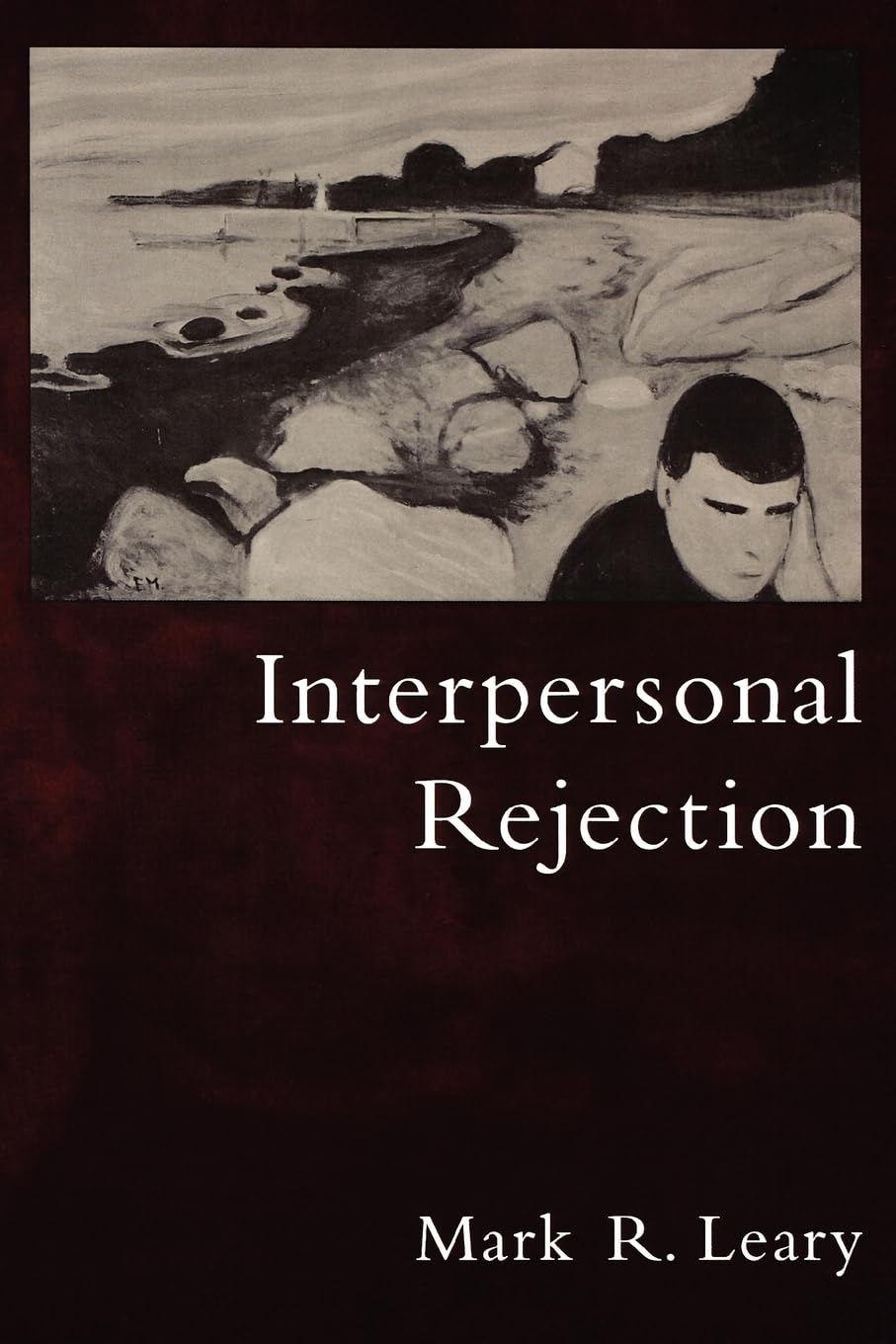
Interpersonal rejection ranks among the most potent and distressing events that people experience. Romantic rejection, ostracism, stigmatization, job termination, and other kinds of rejections have the power to compromise the quality of people's lives. As a result, people are highly motivated to avoid social rejection, and, indeed, much of human behavior appears to be designed to avoid such experiences. Yet, despite the widespread effects of real, anticipated, and even imagined rejections, psychologists have devoted only passing attention to the topic, and the research on rejection has been scattered throughout a number of psychological subspecialties (e.g., social, clinical, developmental, personality). In the past few years, however, we have seen a surge of interest in the effects of interpersonal rejection on behavior and emotion. The goal of this book is to pull together the contributions of several scholars whose work is on the cutting edge of rejection research, providing a scholarly yet readable overview of recent advances in the area. In doing so, it not only provides a look at the current state of the area but also helps to establish the topic of rejection as an identifiable area for future research. Topics covered in the book include: ostracism, unrequited love, betrayal, stigmatization, rejection sensitivity, rejection and selfesteem, peer rejection in childhood, emotional responses to rejection, and personality moderators of reactions to rejection.
⚠️ WARNING (California Proposition 65):
This product may contain chemicals known to the State of California to cause cancer,
birth defects, or other reproductive harm.
For MAP (Minimum Advertised Price) violations and Intellectual Property (IP) or Trademark concerns, please contact:
support@ergodebooks.com
⚠️ California Proposition 65 Warning: Some products sold on this website may expose you to chemicals known to the State of California to cause cancer, birth defects, or other reproductive harm. For more information, visit www.P65Warnings.ca.gov.