
Title
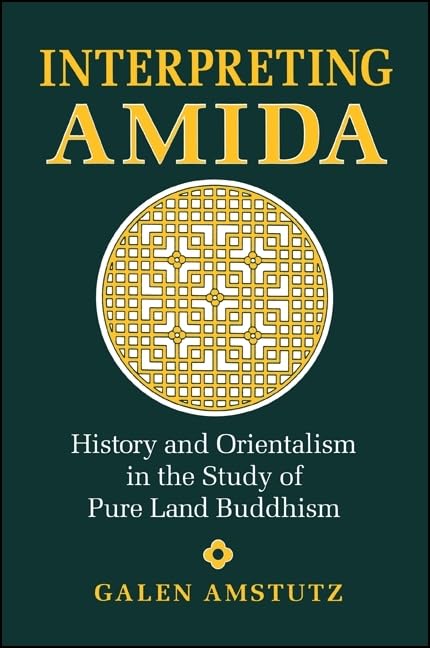
Interpreting Amida: History and Orientalism in the Study of Pure Land Buddhism (SUNY Series in Buddhist Studies),Used
Sold by Ergodebooks, an authorized reseller.
Returns accepted within 30 days | support@ergodebooks.com
Shipping Information
- Free Standard Shipping — United States only
- Processing Time: 3–5 business days
- Estimated Delivery: 6–10 business days after dispatch
- Double-boxed, fully insured & discreetly packaged
- Tracking number sent via email once dispatched
Returns & Refund
Returns accepted within 30 days of delivery.
Damaged or Defective Item
Free return shipping + replacement or full refund
Wrong Item Received
Free return shipping + replacement or full refund
Change of Mind
Return shipping at customer's expense · 25% restocking fee applies
Payment Option

Amstutz clearly demonstrates how the sources of Western and Eastern misunderstanding of Pure Land Buddhism have been engendered, both consciously and unconsciously, by orientalist assumptions current in scholarly understanding of the history and practice of Pure Land Buddhism. Before academic studies in Pure Land Buddhism can advance much further, all of us in the field must confront the issues of orientalist assumptions and biaseslurking in our scholarship. The author has pointed these out within their historical contexts in a powerful way, and perhaps this is the most important contribution this book has to offer. I know that after reading Amstutz's critique, I will be more careful and alert in my own work in Pure Land Buddhism in particular and Buddhist studies in general.' Paul O. Ingram, Pacific Lutheran UniversityPure Land Buddhism was the largest traditional religion in Japan. It had an enormous impact on Japanese culture and was among the first forms of Buddhism encountered by Western culture. Not only has it been neglected in modern descriptions of Japan, but it also has been relatively ignored by Buddhist studies. The author shows that Pure Land Buddhism, despite a Mahayana Buddhist philosophical basis, has paralleled the social and political qualities associated with the JudeoChristian tradition. It has variously been threatening to mainstream Westerners, uninteresting to Westerners seeking the exotic, and disagreeable to cultural brokers on all sides who want to depict Japanese culture as radically opposed to the West. The faulty appreciation of Pure Land Buddhism is one of the leading world examples of a counterproductive orientalism that restricts rather than improves crosscultural communication.'This book will not only illuminate the Western assumptions about Buddhism and Asian religions, but also offer a glimpse into the status of premodern religious institutions in the postmodern period. There have been quite a number of treatments of new Japanese religions in the modern period but little that discuss the classical institutions.' Kenneth K. Tanaka, Institute of Buddhist Studies
⚠️ WARNING (California Proposition 65):
This product may contain chemicals known to the State of California to cause cancer, birth defects, or other reproductive harm.
For more information, please visit www.P65Warnings.ca.gov.