
Title
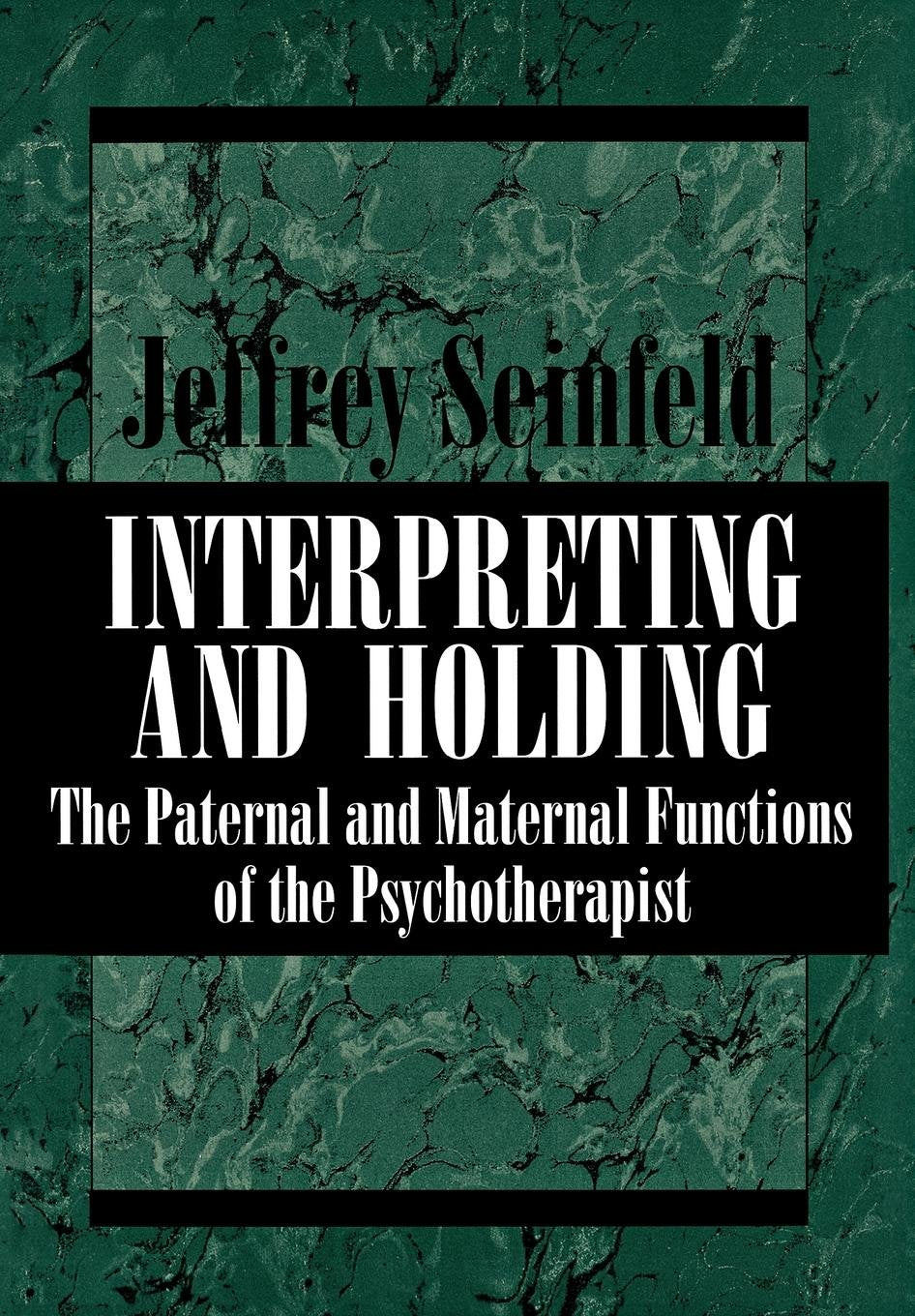
INTERPRETING AND HOLDING: The Paternal and Maternal Functions of the Psychotherapist,New
Sold by Ergodebooks, an authorized reseller.
Returns accepted within 30 days | support@ergodebooks.com
Shipping Information
- Free Standard Shipping — United States only
- Processing Time: 3–5 business days
- Estimated Delivery: 6–10 business days after dispatch
- Double-boxed, fully insured & discreetly packaged
- Tracking number sent via email once dispatched
Returns & Refund
Returns accepted within 30 days of delivery.
Damaged or Defective Item
Free return shipping + replacement or full refund
Wrong Item Received
Free return shipping + replacement or full refund
Change of Mind
Return shipping at customer's expense · 25% restocking fee applies
Payment Option

This book demonstrates that both interpreting and holding are necessary in the psychotherapy of clinical disorders. There is a tendency to view interpreting and holding as mutually exclusive techniques. This either/or position is the result of theories that view patients as suffering either from deficits in early nurturing object relations or conflicts around dependence and independence. Dr. Seinfeld does not believe that deficit states and conflict states are mutually exclusive but rather that most patients suffer from both. This book illustrates how the clinician can utilize both holding and interpretation.Dr. Seinfeld describes how the therapist interprets psychoneurotic symptoms and oedipal conflicts on an object relations basis, and how to interpret splitting and projective identification and the patient's tie to bad objects. Many patients suffer from dependence on objects that frustrate and reject them. This book discusses how the clinician addresses the patient's destructive relationships. The reader is also shown how to recognize and interpret manifestations of the true and false self in patients' dreams, phantasies, and the therapeutic relationship.No matter how accurate and convincing the therapist's interpretations are, this strategy alone will foster neither the emergence of the fragile true self nor the patient's separation from bad objects. The therapist must also provide holding as a goodenough object for the patient to take such frightening risks. The therapist is shown how to hold the patient through exploring early abuse and neglect, being available as a constant object, and creating a potential space for therapeutic transitional play.Dr. Seinfeld is primarily influenced by Ronald Fairbairn, Donald Winnicott, and Harry Guntrip, but the book also describes the object relations dimension in the classical theories of Freud, Abraham, and Klein, as well as Ferenczi's original contribution to holding. Psychotherapists will find this work extremely useful clinically since it describes the evolution of interpretation and holding and shows how to integrate both strategies in clinical practice.
⚠️ WARNING (California Proposition 65):
This product may contain chemicals known to the State of California to cause cancer, birth defects, or other reproductive harm.
For more information, please visit www.P65Warnings.ca.gov.