
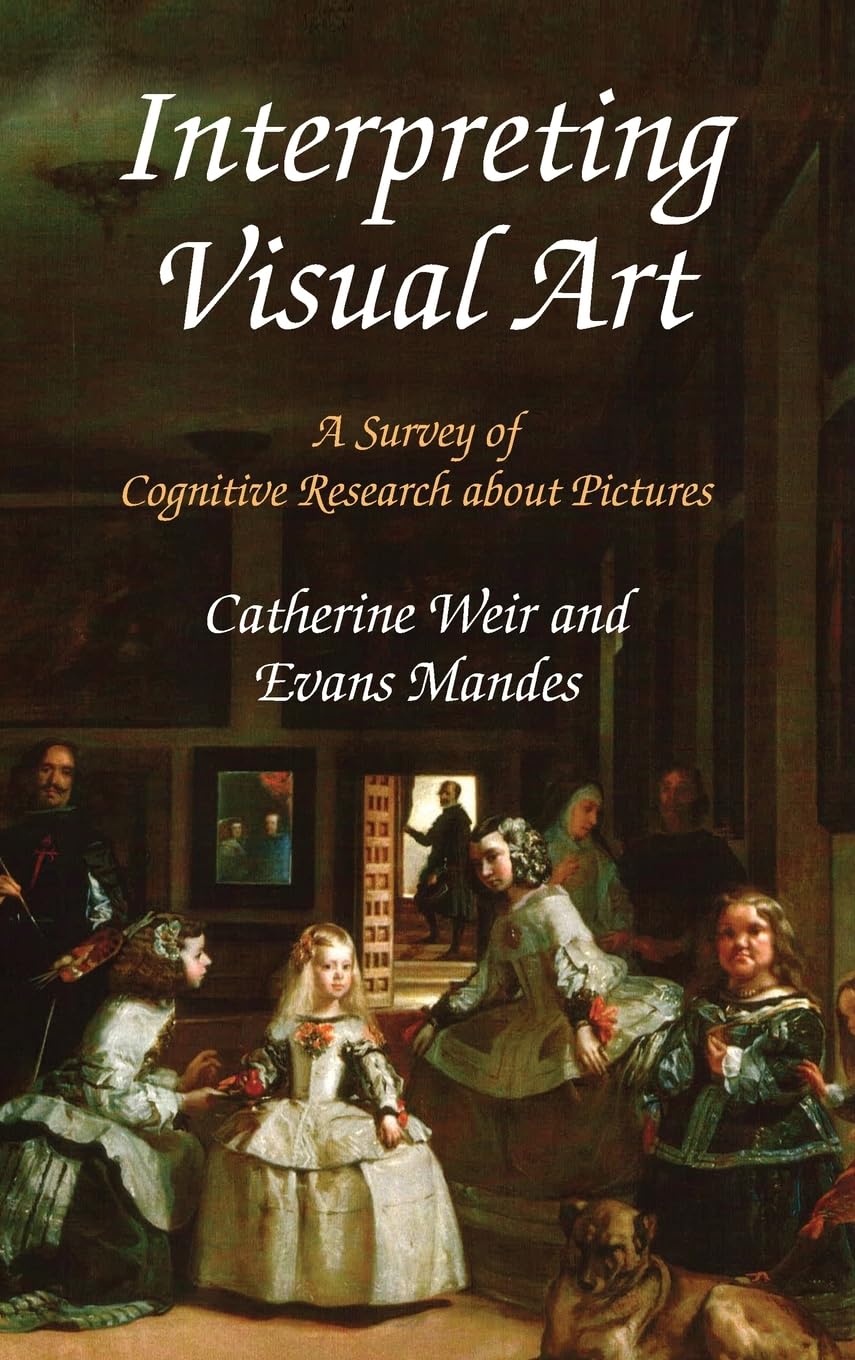
Title
Interpreting Visual Art: A Survey of Cognitive Research About Pictures,Used
Sold by Ergodebooks, an authorized reseller.
Returns accepted within 30 days | support@ergodebooks.com
Shipping Information
- Free Standard Shipping — United States only
- Processing Time: 3–5 business days
- Estimated Delivery: 6–10 business days after dispatch
- Double-boxed, fully insured & discreetly packaged
- Tracking number sent via email once dispatched
Returns & Refund
Returns accepted within 30 days of delivery.
Damaged or Defective Item
Free return shipping + replacement or full refund
Wrong Item Received
Free return shipping + replacement or full refund
Change of Mind
Return shipping at customer's expense · 25% restocking fee applies
Payment Option

Interpreting Visual Art explores the psychological and cognitive mechanisms that underlie one's interpretation of art. After the brain encodes visual information, this encoding is then processed by perceptual mechanisms to identify objects and depth in pictures. The brain incorporates many factors in order for people to "see" the art. Cognitive processes have a major role in how people interpret artworks because attention, memory, and language are also linked to the aesthetic experience. Catherine Weir and Evans Mandes first examine major attributes of aesthetic judgement balance, symmetry, color, line, and shape from an empirical point of view as opposed to more philosophical and speculative approaches. Then, they explore the perceptual process, paying special attention to art history in the Western world and emphasizing techniques from cave paintings to modern art. The role beauty and emotions play in our interpretations of pictures have been investigated from many approaches: evolutionary psychology, neuroscience, and appraisal theory. Through the application of empirical research in cognitive science to master works from Botticelli to Pollock, readers are introduced to a researchoriented understanding of how art has been perceived, interpreted, and appreciated in the twentyfirst century. This book will appeal to those interested in art as well as those teaching art history, psychology, and neuroscience.
⚠️ WARNING (California Proposition 65):
This product may contain chemicals known to the State of California to cause cancer, birth defects, or other reproductive harm.
For more information, please visit www.P65Warnings.ca.gov.