If you have any questions, you are always welcome to contact us. We'll get back to you as soon as possible, withing 24 hours on weekdays.
Customer service
All questions about your order, return and delivery must be sent to our customer service team by e-mail at yourstore@yourdomain.com
Sale & Press
If you are interested in selling our products, need more information about our brand or wish to make a collaboration, please contact us at press@yourdomain.com
Help
If you have any questions, you are always welcome to contact us. We'll get back to you as soon as possible, withing 24 hours on weekdays.
Customer service
All questions about your order, return and delivery must be sent to our customer service team by e-mail at yourstore@yourdomain.com
Sale & Press
If you are interested in selling our products, need more information about our brand or wish to make a collaboration, please contact us at press@yourdomain.com
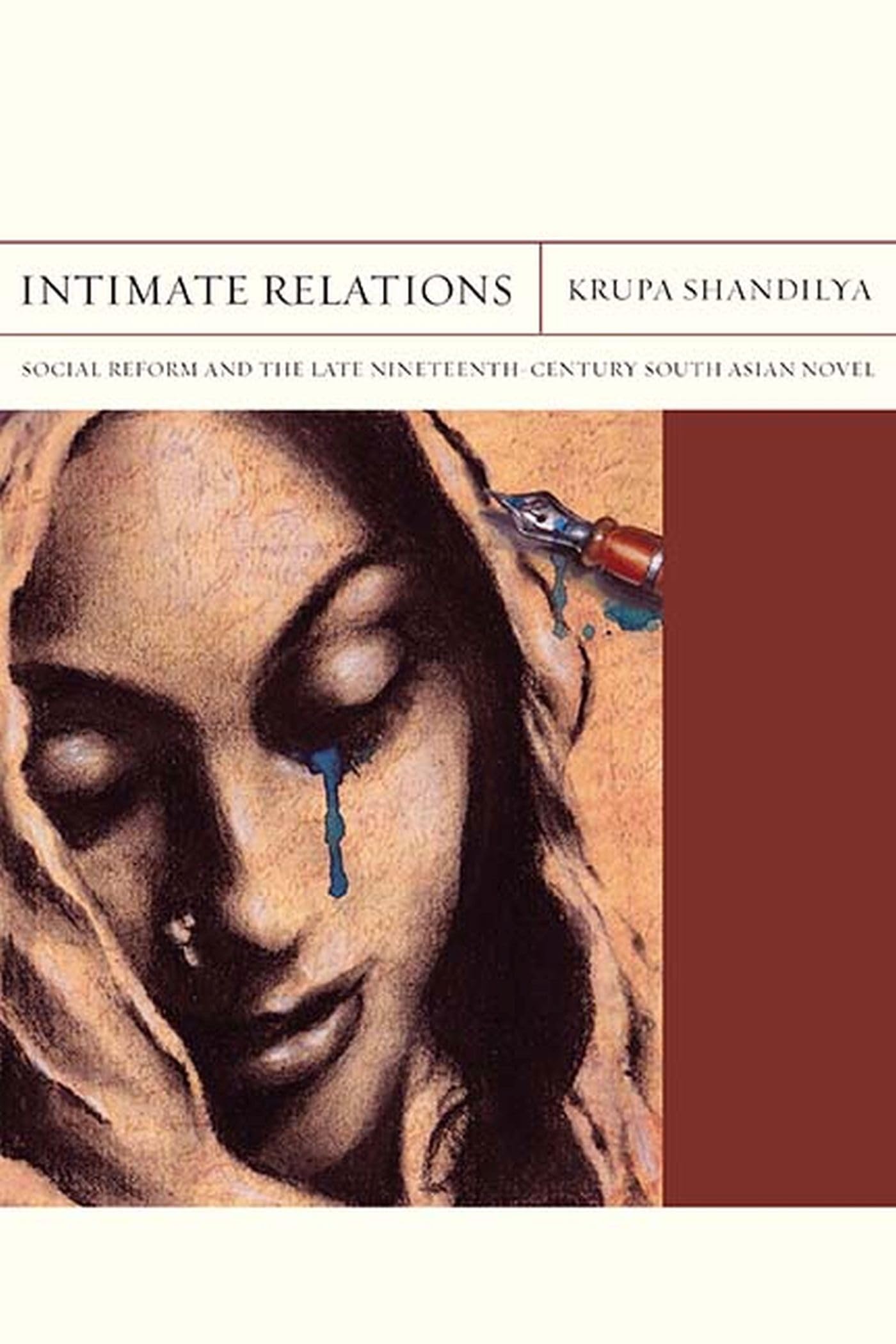
Intimate Relations remaps the discussion on gender and the nation in South Asia through a close study of the domestic novel as a literary genre and a tool for social reform. As a product of the intersection of literary and social reform movements, in the late nineteenth century the domestic novel became a site for literary innovation and also for rethinking womens roles in society and politics. Krupa Shandilya focuses primarily on social reform movements that negotiated the intimate relations between men and women in Hindu and Muslim society, namely, the widow remarriage act in Bengal (1856) and the education of women promoted by the Aligarh movement (18581900). Both movements were invested in recovering woman as a respectable subject for the Hindu and Muslim nation, where respectability connoted asexual spirituality. While most South Asian literary scholarship has focused on a normative Hindu woman, Intimate Relations couples discussion of the representation of the widow in bhadralok (uppercaste, middleclass) society with that of the courtesan of sharif (upperclass, Muslim, feudal) society in Bengali and Urdu novels from the 1880s to the 1920s. By drawing together their disparate histories in the context of contemporaneous social reform movements, Shandilya reflects on the similarities of Hindu and Islamic constructions of the gendered nation.
⚠️ WARNING (California Proposition 65):
This product may contain chemicals known to the State of California to cause cancer,
birth defects, or other reproductive harm.
For MAP (Minimum Advertised Price) violations and Intellectual Property (IP) or Trademark concerns, please contact:
support@ergodebooks.com
⚠️ California Proposition 65 Warning: Some products sold on this website may expose you to chemicals known to the State of California to cause cancer, birth defects, or other reproductive harm. For more information, visit www.P65Warnings.ca.gov.