
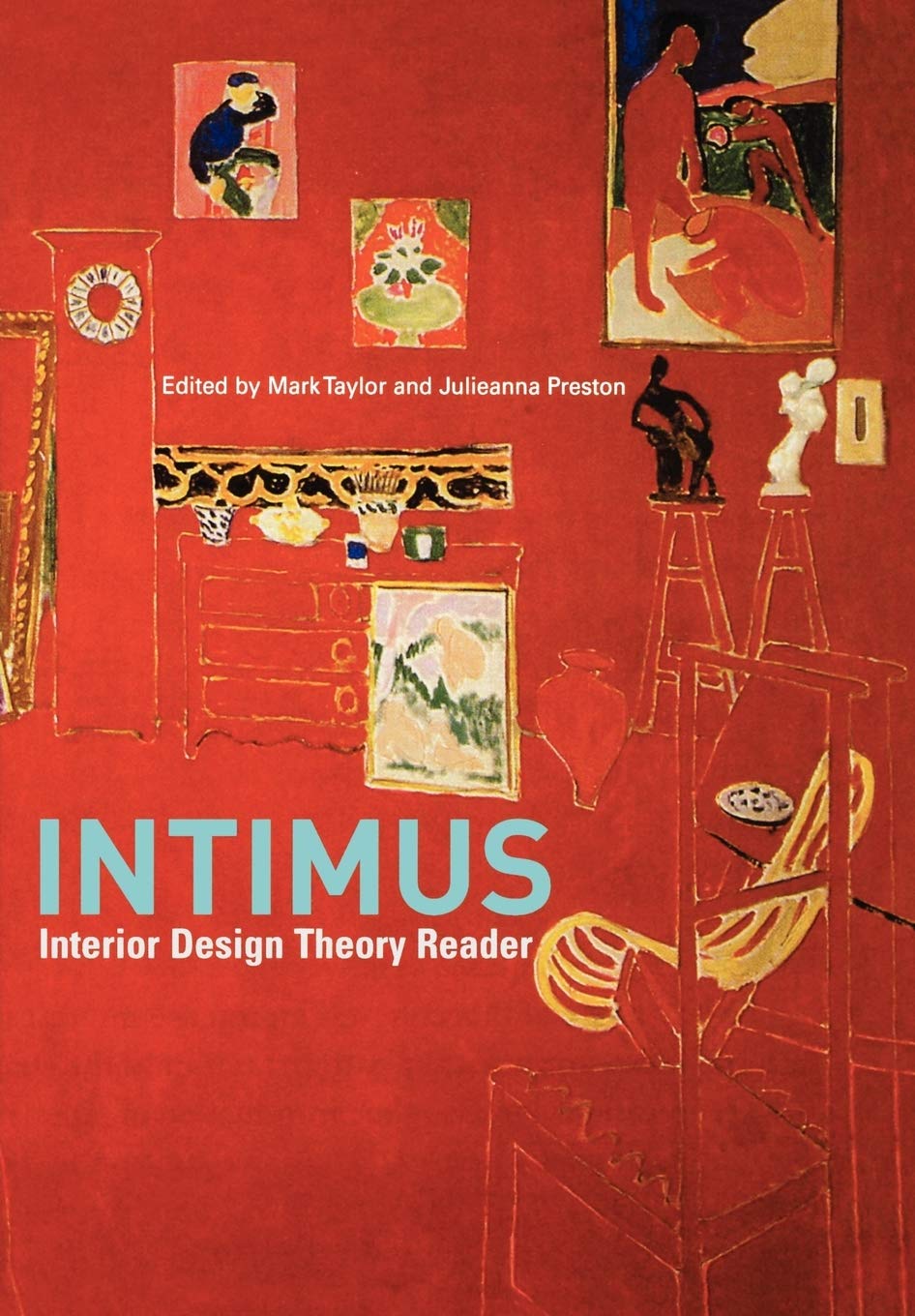
Title
INTIMUS: Interior Design Theory Reader,Used
Sold by Ergodebooks, an authorized reseller.
Returns accepted within 30 days | support@ergodebooks.com
Shipping Information
- Free Standard Shipping — United States only
- Processing Time: 3–5 business days
- Estimated Delivery: 6–10 business days after dispatch
- Double-boxed, fully insured & discreetly packaged
- Tracking number sent via email once dispatched
Returns & Refund
Returns accepted within 30 days of delivery.
Damaged or Defective Item
Free return shipping + replacement or full refund
Wrong Item Received
Free return shipping + replacement or full refund
Change of Mind
Return shipping at customer's expense · 25% restocking fee applies
Payment Option

Walter Benjamin observed in his writings on the interior that 'to live means to leave traces.' This interior design theory reader focuses on just how such traces might manifest themselves. In order to explore interior design's links to other disciplines, the selected texts reflect a wide range of interests extending beyond the traditional confines of design and architecture. It is conceived as a matrix, which intersects social, political, psychological, philosophical, technological and gender discourse, with practice issues, such as materials, lighting, colour, furnishing, and the body. The anthology presents a complex and sometimes conflicting terrain, while also creating a distinct body of knowledge particular to the interior. Locating theory on the interior through these multifarious sources, it encourages future discourse in an area often marginalised but now emerging in its own right.Within the reader individual excerpts are referenced to their place in the matrix and sequenced alphabetically. This organising strategy resists both a chronological and themed structure in order to provoke associations and inferences between excerpts. In this way the book offers the possibility of examining the interior from multiple vantage points: a disciplinary focus, the spatial and physical attributes of interiors, historical sequence, and topical issue based. Excerpts from Thomas Hope, Catherine E. Beecher and Harriet Beecher Stowe, Edith Wharton and Charles Eastlake provide contemporary nineteenth century accounts as the profession emerges, whereas Barbara Penner, Penny Sparke, Charles Rice, Georges Teyssot and Rebecca Houze offer reinterpretations of this period. The complexities of the twentiethcentury interior are revealed by Robyn Longhurst, Kevin Melchionne, George Wagner, John Macgregor Wise, Joel Sanders and many others.
⚠️ WARNING (California Proposition 65):
This product may contain chemicals known to the State of California to cause cancer, birth defects, or other reproductive harm.
For more information, please visit www.P65Warnings.ca.gov.
- Q: What is the main focus of the book 'INTIMUS: Interior Design Theory Reader'? A: The book focuses on the traces left by interiors and explores the connections between interior design and various disciplines such as social, political, psychological, philosophical, and gender discourse.
- Q: Who is the author of 'INTIMUS: Interior Design Theory Reader'? A: The author of the book is Mark Taylor.
- Q: How many pages does 'INTIMUS: Interior Design Theory Reader' have? A: The book contains 416 pages.
- Q: What type of binding does 'INTIMUS: Interior Design Theory Reader' have? A: The book is available in paperback binding.
- Q: When was 'INTIMUS: Interior Design Theory Reader' published? A: The book was published on July 28, 2006.
- Q: What themes does 'INTIMUS: Interior Design Theory Reader' explore? A: The book explores themes related to practice issues in interior design, including materials, lighting, color, furnishing, and the body.
- Q: Are there excerpts from well-known authors in 'INTIMUS: Interior Design Theory Reader'? A: Yes, the book includes excerpts from notable authors such as Thomas Hope, Edith Wharton, and Barbara Penner.
- Q: What approach does 'INTIMUS: Interior Design Theory Reader' take in organizing its content? A: The book organizes its content alphabetically and references excerpts to their place in a conceptual matrix, resisting chronological and thematic structures.
- Q: What is the target audience for 'INTIMUS: Interior Design Theory Reader'? A: The target audience includes students, professionals, and anyone interested in understanding the complexities of interior design theory.
- Q: Does 'INTIMUS: Interior Design Theory Reader' provide new perspectives on interior design? A: Yes, it offers re-interpretations of historical accounts and encourages future discourse in the often marginalized field of interior design.