
Title
Intolerance And the Gospel: Selected Texts from the New Testament,Used
Sold by Ergodebooks, an authorized reseller.
Returns accepted within 30 days | support@ergodebooks.com
Shipping Information
- Free Standard Shipping — United States only
- Processing Time: 3–5 business days
- Estimated Delivery: 6–10 business days after dispatch
- Double-boxed, fully insured & discreetly packaged
- Tracking number sent via email once dispatched
Returns & Refund
Returns accepted within 30 days of delivery.
Damaged or Defective Item
Free return shipping + replacement or full refund
Wrong Item Received
Free return shipping + replacement or full refund
Change of Mind
Return shipping at customer's expense · 25% restocking fee applies
Payment Option

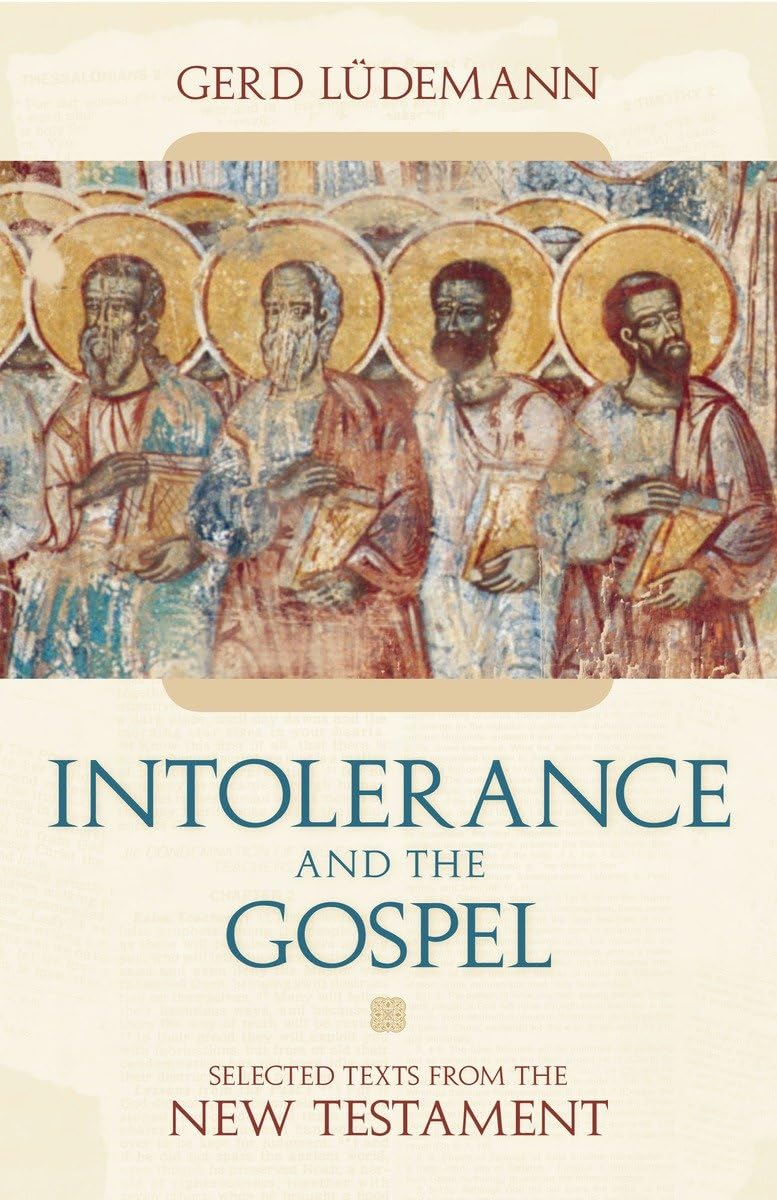
Contemporary Christians usually suppose that Christianity is quite congenial to the democratic ideals that are the basis of free, open Western societies. Among these ideals is freedom of religion, which encourages a broad tolerance for different belief systems. Nonetheless, a careful examination of core Christian beliefs and the history of Christianity reveal little tolerance for thinking or acting outside the orthodox Christian tradition. In this enlightening analysis of key New Testament texts, historian of early Christianity Gerd Ldemann discusses the inherently intolerant attitude that has characterized monotheistic belief systems generally and Christianity in particular. As Ldemann points out, Christianity evolved within the context of the pluralistic Roman Empire, which generally allowed separate belief systems as long as political allegiance to the Roman state was never questioned. Ironically, Christians inherited their essential intolerance from Judaism, whose first commandment is the expression of a jealous God: "I am the Lord your God.... Thou shalt have no other gods before me." After Christianity became the state religion of Rome, tolerance disappeared and did not reappear on the world stage until the European Enlightenment of the 18th century.Besides the discussion of these issues, Ldemann presents a textual analysis in five chapters of some of the letters in the New Testament. In each case he translates the letter, presents textual commentary, and demonstrates how the text reflects Christian intolerance of heretics and nonbelievers. In conclusion, Ldemann suggests that attempts to harmonize Christianity with the democratic ideal of tolerance cannot really work because there is a logical contradiction.
⚠️ WARNING (California Proposition 65):
This product may contain chemicals known to the State of California to cause cancer, birth defects, or other reproductive harm.
For more information, please visit www.P65Warnings.ca.gov.