
Title
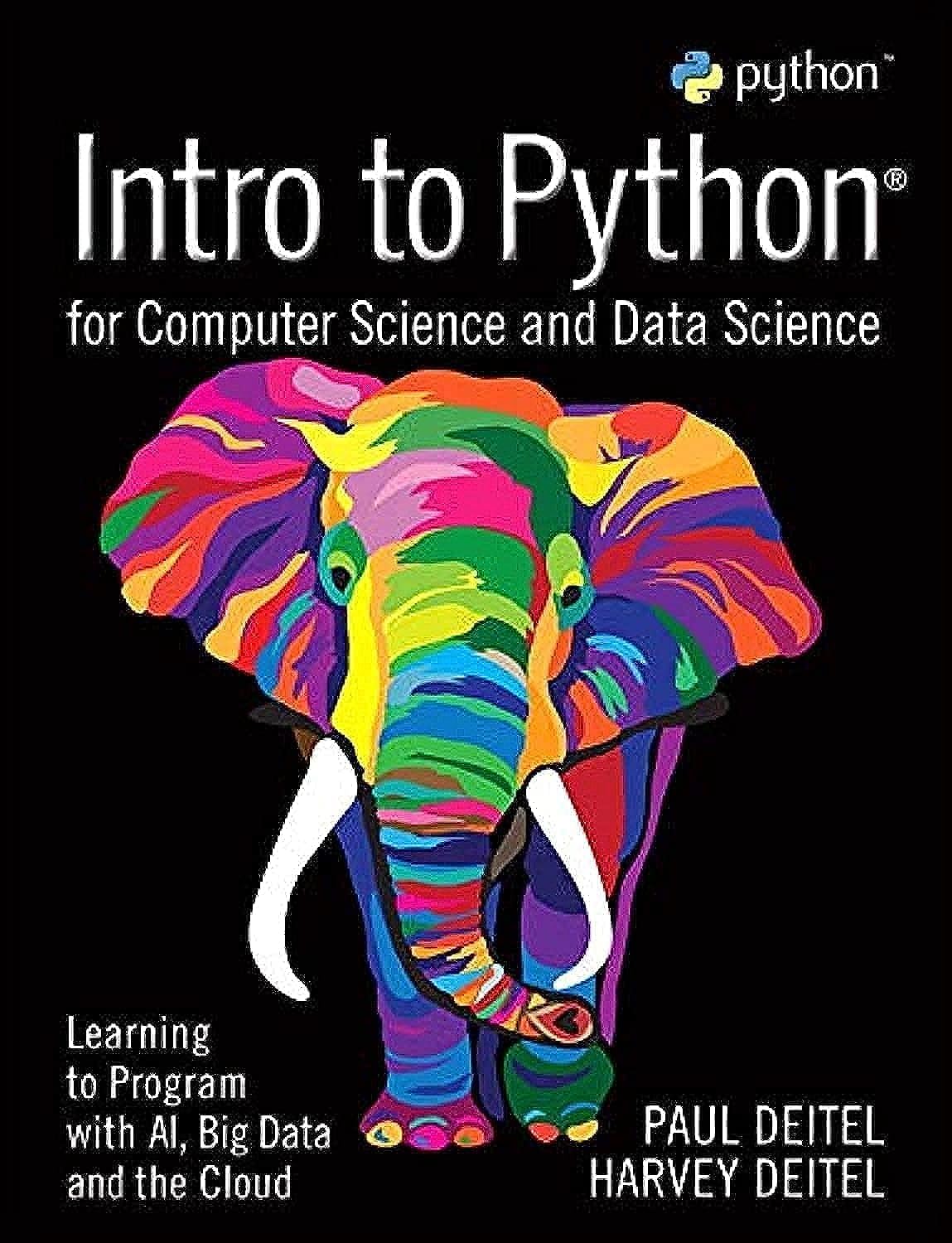
Intro to Python for Computer Science and Data Science: Learning to Program with AI, Big Data and The Cloud,Used
Sold by Ergodebooks, an authorized reseller.
Returns accepted within 30 days | support@ergodebooks.com
Shipping Information
- Free Standard Shipping — United States only
- Processing Time: 3–5 business days
- Estimated Delivery: 6–10 business days after dispatch
- Double-boxed, fully insured & discreetly packaged
- Tracking number sent via email once dispatched
Returns & Refund
Returns accepted within 30 days of delivery.
Damaged or Defective Item
Free return shipping + replacement or full refund
Wrong Item Received
Free return shipping + replacement or full refund
Change of Mind
Return shipping at customer's expense · 25% restocking fee applies
Payment Option

For introductorylevel Python programming and/or datascience courses.A groundbreaking, flexible approach to computer science and data scienceThe Deitels? Introduction to Python for Computer Science and Data Science: Learning to Program with AI, Big Data and the Cloud offers a unique approach to teaching introductory Python programming, appropriate for both computerscience and datascience audiences. Providing the most current coverage of topics and applications, the book is paired with extensive traditional supplements as well as Jupyter Notebooks supplements. Realworld datasets and artificialintelligence technologies allow students to work on projects making a difference in business, industry, government and academia. Hundreds of examples, exercises, projects (EEPs), and implementation case studies give students an engaging, challenging and entertaining introduction to Python programming and handson data science.The book's modular architecture enables instructors to conveniently adapt the text to a wide range of computerscience and datascience courses offered to audiences drawn from many majors. Computerscience instructors can integrate as much or as little datascience and artificialintelligence topics as they'd like, and datascience instructors can integrate as much or as little Python as they'd like. The book aligns with the latest ACM/IEEE CSandrelated computing curriculum initiatives and with the Data Science Undergraduate Curriculum Proposal sponsored by the National Science Foundation.
⚠️ WARNING (California Proposition 65):
This product may contain chemicals known to the State of California to cause cancer, birth defects, or other reproductive harm.
For more information, please visit www.P65Warnings.ca.gov.
- Q: What is the main focus of 'Intro to Python for Computer Science and Data Science'? A: The book focuses on teaching introductory-level Python programming along with data science concepts, making it suitable for both computer science and data science courses.
- Q: Who is the author of this book? A: The author of the book is Paul Deitel, known for his expertise in programming and computer science.
- Q: What is the publication date of the book? A: The book was published on February 15, 2019.
- Q: How many pages does the book have? A: The book contains 880 pages, providing extensive content for learning.
- Q: What type of binding does the book have? A: The book is available in paperback binding, making it easy to handle and read.
- Q: Is this book suitable for beginners? A: Yes, this book is designed for beginners in Python programming and data science, offering a foundational understanding of both fields.
- Q: Does the book include practical exercises? A: Yes, it includes hundreds of examples, exercises, and projects that engage students in hands-on learning.
- Q: Can instructors customize the content for their courses? A: Yes, the book's modular architecture allows instructors to adapt the material to fit various computer science and data science courses.
- Q: What topics are covered in the book? A: The book covers topics related to AI, Big Data, and cloud computing, along with Python programming fundamentals.
- Q: Is this book aligned with current academic standards? A: Yes, it aligns with the latest ACM/IEEE computing curriculum initiatives and the Data Science Undergraduate Curriculum Proposal.