
Title
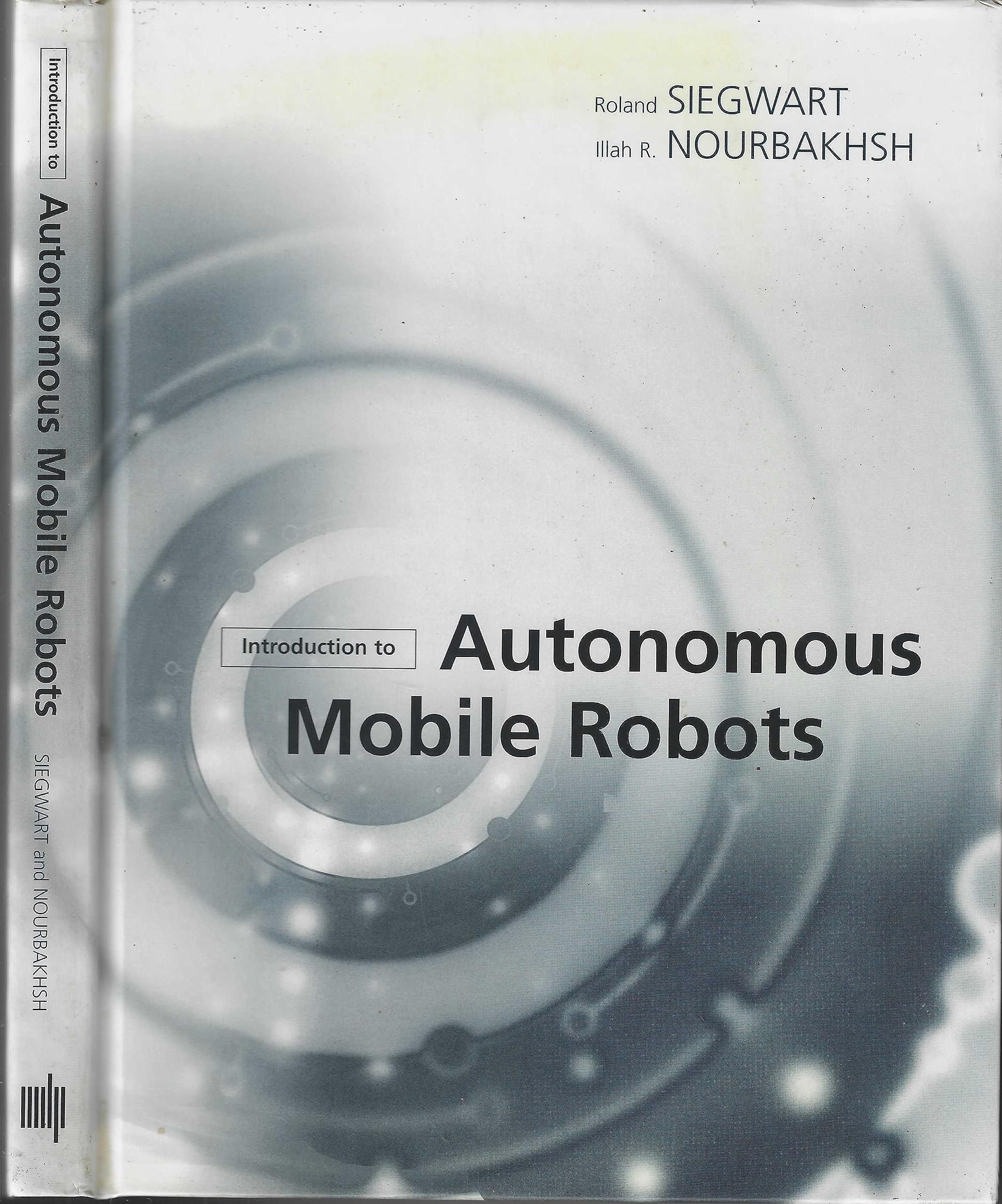
Introduction to Autonomous Mobile Robots (Intelligent Robots and Autonomous Agents),Used
Sold by Ergodebooks, an authorized reseller.
Returns accepted within 30 days | support@ergodebooks.com
Shipping Information
- Free Standard Shipping — United States only
- Processing Time: 3–5 business days
- Estimated Delivery: 6–10 business days after dispatch
- Double-boxed, fully insured & discreetly packaged
- Tracking number sent via email once dispatched
Returns & Refund
Returns accepted within 30 days of delivery.
Damaged or Defective Item
Free return shipping + replacement or full refund
Wrong Item Received
Free return shipping + replacement or full refund
Change of Mind
Return shipping at customer's expense · 25% restocking fee applies
Payment Option

Mobile robots range from the teleoperated Sojourner on the Mars Pathfinder mission to cleaning robots in the Paris Metro. Introduction to Autonomous Mobile Robots offers students and other interested readers an overview of the technology of mobility the mechanisms that allow a mobile robot to move through a real world environment to perform its tasks including locomotion, sensing, localization, and motion planning. It discusses all facets of mobile robotics, including hardware design, wheel design, kinematics analysis, sensors and perception, localization, mapping, and robot control architectures.The design of any successful robot involves the integration of many different disciplines, among them kinematics, signal analysis, information theory, artificial intelligence, and probability theory. Reflecting this, the book presents the techniques and technology that enable mobility in a series of interacting modules. Each chapter covers a different aspect of mobility, as the book moves from lowlevel to highlevel details. The first two chapters explore lowlevel locomotory ability, examining robots' wheels and legs and the principles of kinematics. This is followed by an indepth view of perception, including descriptions of many 'offtheshelf' sensors and an analysis of the interpretation of sensed data. The final two chapters consider the higherlevel challenges of localization and cognition, discussing successful localization strategies, autonomous mapping, and navigation competence. Bringing together all aspects of mobile robotics into one volume, Introduction to Autonomous Mobile Robots can serve as a textbook for coursework or a working tool for beginners in the field.
⚠️ WARNING (California Proposition 65):
This product may contain chemicals known to the State of California to cause cancer, birth defects, or other reproductive harm.
For more information, please visit www.P65Warnings.ca.gov.
- Q: What is the page count of this book? A: This book has three hundred thirty-one pages. It provides a comprehensive overview of autonomous mobile robots and their technology.
- Q: What are the dimensions of the book? A: The book measures seven point zero one inches in length, zero point seventy-five inches in width, and nine point zero two inches in height.
- Q: What is the binding type of this book? A: This book is available in hardcover binding. This makes it durable and suitable for frequent use in educational settings.
- Q: What subjects does this book cover? A: The book covers mobile robotics, including topics like locomotion, sensing, and motion planning. It's ideal for students and professionals interested in robotics.
- Q: Who is the author of this book? A: The author of this book is Roland Siegwart. He is recognized for his expertise in intelligent robotics and autonomous agents.
- Q: How can I use this book for learning? A: You can use this book as a textbook for coursework or as a practical guide for beginners in the field of mobile robotics.
- Q: Is this book suitable for beginners? A: Yes, this book is suitable for beginners. It starts with foundational concepts and gradually moves to more advanced topics in robotics.
- Q: What level of expertise is required to understand this book? A: A basic understanding of robotics and engineering principles is helpful but not necessary. The book is designed to be accessible to newcomers.
- Q: Does the book include practical examples? A: Yes, the book includes practical examples and case studies. These illustrate the concepts of mobile robotics in real-world applications.
- Q: How should I care for this book? A: To care for this book, keep it in a dry place and avoid exposure to direct sunlight. This helps preserve its condition over time.
- Q: Is this book safe for all ages? A: Yes, this book is safe for all ages. It focuses on educational content without any inappropriate material.
- Q: What is the return policy for this book? A: The return policy typically allows returns within thirty days of purchase. Ensure the book is in good condition for a full refund.
- Q: What should I do if my book arrives damaged? A: If your book arrives damaged, contact customer service for assistance. They will guide you through the return or exchange process.
- Q: Is this book available in digital format? A: The availability of a digital format depends on the publisher. Check with retailers for eBook options.
- Q: Can I use this book for a robotics course? A: Yes, this book is suitable for use in robotics courses. It covers essential topics that align with academic curricula.