If you have any questions, you are always welcome to contact us. We'll get back to you as soon as possible, withing 24 hours on weekdays.
Customer service
All questions about your order, return and delivery must be sent to our customer service team by e-mail at yourstore@yourdomain.com
Sale & Press
If you are interested in selling our products, need more information about our brand or wish to make a collaboration, please contact us at press@yourdomain.com
Help
If you have any questions, you are always welcome to contact us. We'll get back to you as soon as possible, withing 24 hours on weekdays.
Customer service
All questions about your order, return and delivery must be sent to our customer service team by e-mail at yourstore@yourdomain.com
Sale & Press
If you are interested in selling our products, need more information about our brand or wish to make a collaboration, please contact us at press@yourdomain.com
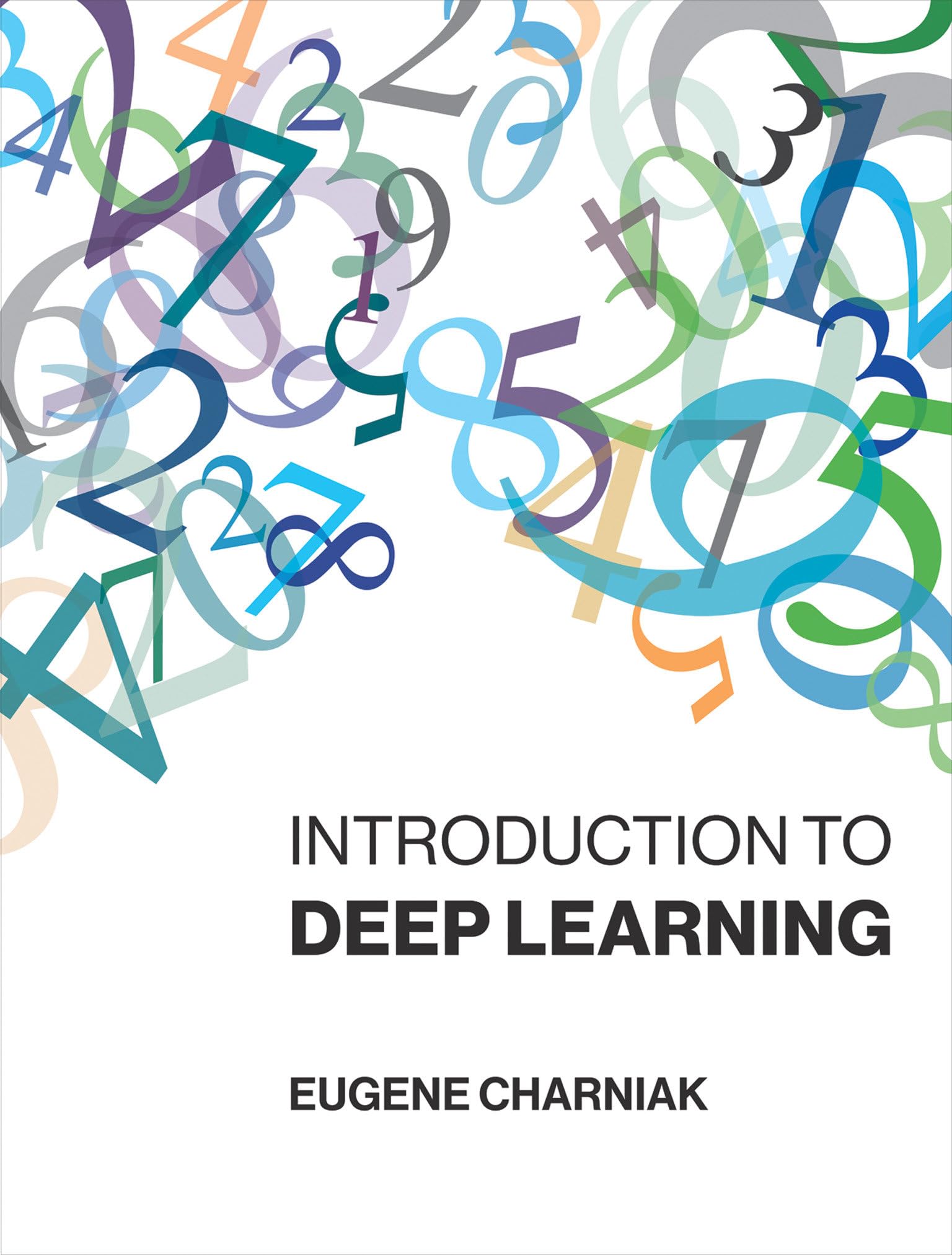
A projectbased guide to the basics of deep learning.This concise, projectdriven guide to deep learning takes readers through a series of programwriting tasks that introduce them to the use of deep learning in such areas of artificial intelligence as computer vision, naturallanguage processing, and reinforcement learning. The author, a longtime artificial intelligence researcher specializing in naturallanguage processing, covers feedforward neural nets, convolutional neural nets, word embeddings, recurrent neural nets, sequencetosequence learning, deep reinforcement learning, unsupervised models, and other fundamental concepts and techniques. Students and practitioners learn the basics of deep learning by working through programs in Tensorflow, an opensource machine learning framework. I find I learn computer science material best by sitting down and writing programs, the author writes, and the book reflects this approach.Each chapter includes a programming project, exercises, and references for further reading. An early chapter is devoted to Tensorflow and its interface with Python, the widely used programming language. Familiarity with linear algebra, multivariate calculus, and probability and statistics is required, as is a rudimentary knowledge of programming in Python. The book can be used in both undergraduate and graduate courses; practitioners will find it an essential reference.
⚠️ WARNING (California Proposition 65):
This product may contain chemicals known to the State of California to cause cancer,
birth defects, or other reproductive harm.
For MAP (Minimum Advertised Price) violations and Intellectual Property (IP) or Trademark concerns, please contact:
support@ergodebooks.com
⚠️ California Proposition 65 Warning: Some products sold on this website may expose you to chemicals known to the State of California to cause cancer, birth defects, or other reproductive harm. For more information, visit www.P65Warnings.ca.gov.