
Title
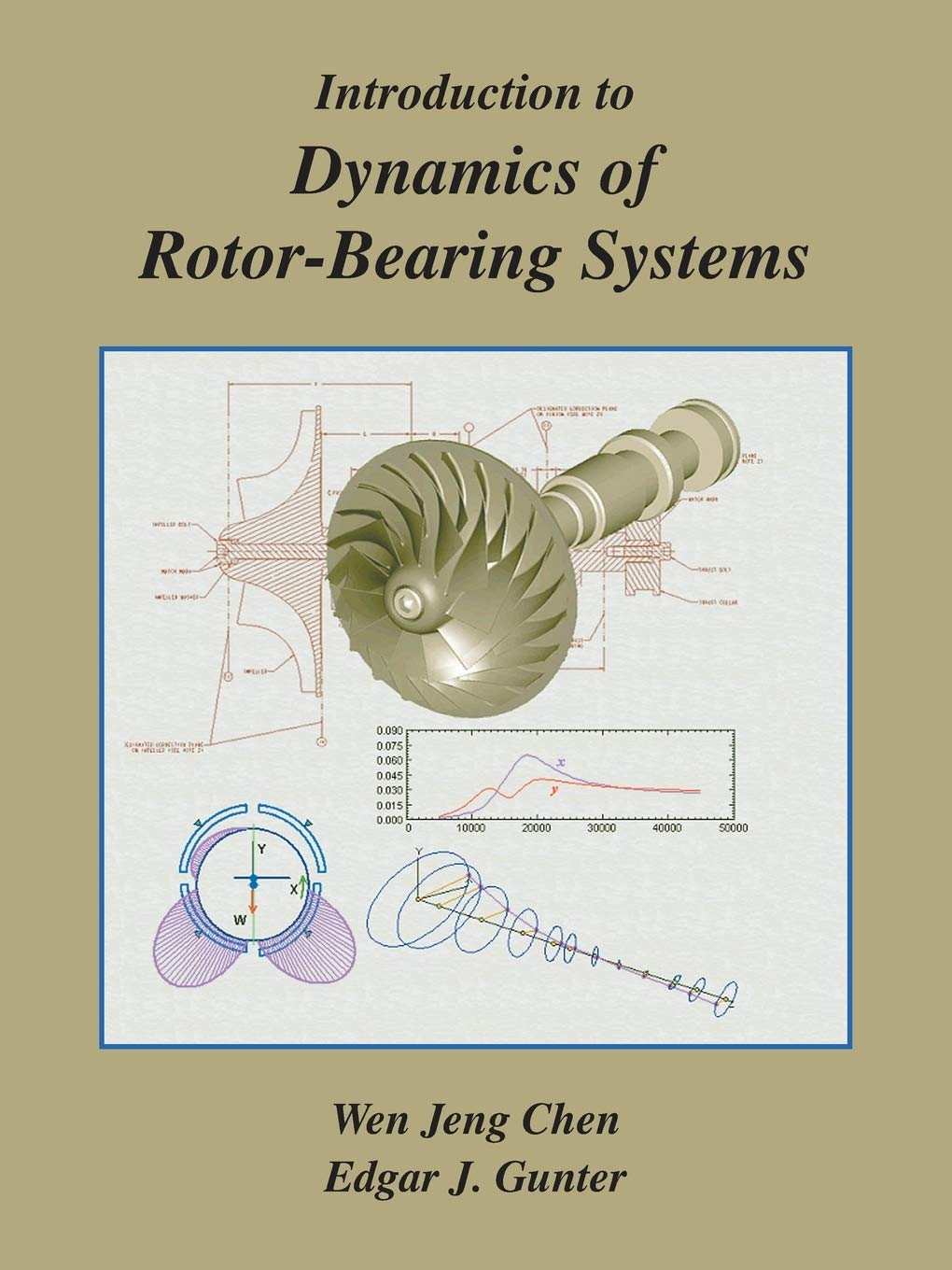
Introduction to Dynamics of RotorBearing Systems,Used
Sold by Ergodebooks, an authorized reseller.
Returns accepted within 30 days | support@ergodebooks.com
Shipping Information
- Free Standard Shipping — United States only
- Processing Time: 3–5 business days
- Estimated Delivery: 6–10 business days after dispatch
- Double-boxed, fully insured & discreetly packaged
- Tracking number sent via email once dispatched
Returns & Refund
Returns accepted within 30 days of delivery.
Damaged or Defective Item
Free return shipping + replacement or full refund
Wrong Item Received
Free return shipping + replacement or full refund
Change of Mind
Return shipping at customer's expense · 25% restocking fee applies
Payment Option

This book is written as an introduction to rotorbearing dynamics for practicing engineers and students who are involved in rotordynamics and bearing design. The goal of this book is to provide a stepbystep approach to the understanding of fundamentals of rotorbearing dynamics by using DyRoBeS . Therefore, the emphasis of this book is on the basic principals, phenomena, modeling, and interpretation of the results. Numerous examples, from a singledegreeoffreedom system to complicated industrial rotating machinery, are employed throughout this book to illustrate these fundamental dynamic behaviors. The concepts in the text are reinforced by parametric studies and numerous illustrative examples and figures. The book begins with a brief discussion of the mathematical modeling of physical dynamic systems and an overview of the basic vibration concepts in Chapter 1. The coordinate systems and the kinematics of the rotor motion are presented in Chapter 2. A simple twodegreesoffreedom rotor system, the LavalJeffcott rotor model, is utilized in Chapter 3 to demonstrate many important phenomena in rotordynamics. This simple 2DOF model provides many valuable physical insights into more practical and complicated systems. Chapter 4 discusses the rotating disk equations and rigid rotor dynamics. Chapter 5 covers the finite element formulation for a rotating shaft element. Chapter 6 deals with various types of bearings, dampers, seals and other interconnection components. All the reaction forces from these components are nonlinear in nature. The concept of linearization around the static equilibrium is discussed. Chapter 7 summarizes the lateral vibration study with several practical examples. Various solution techniques and interpretation of the results are discussed. Chapter 8 is devoted to the important subject of torsional vibration. Finally, a brief description of the balancing method, influence coefficient method is presented in Chapter 9.
⚠️ WARNING (California Proposition 65):
This product may contain chemicals known to the State of California to cause cancer, birth defects, or other reproductive harm.
For more information, please visit www.P65Warnings.ca.gov.