
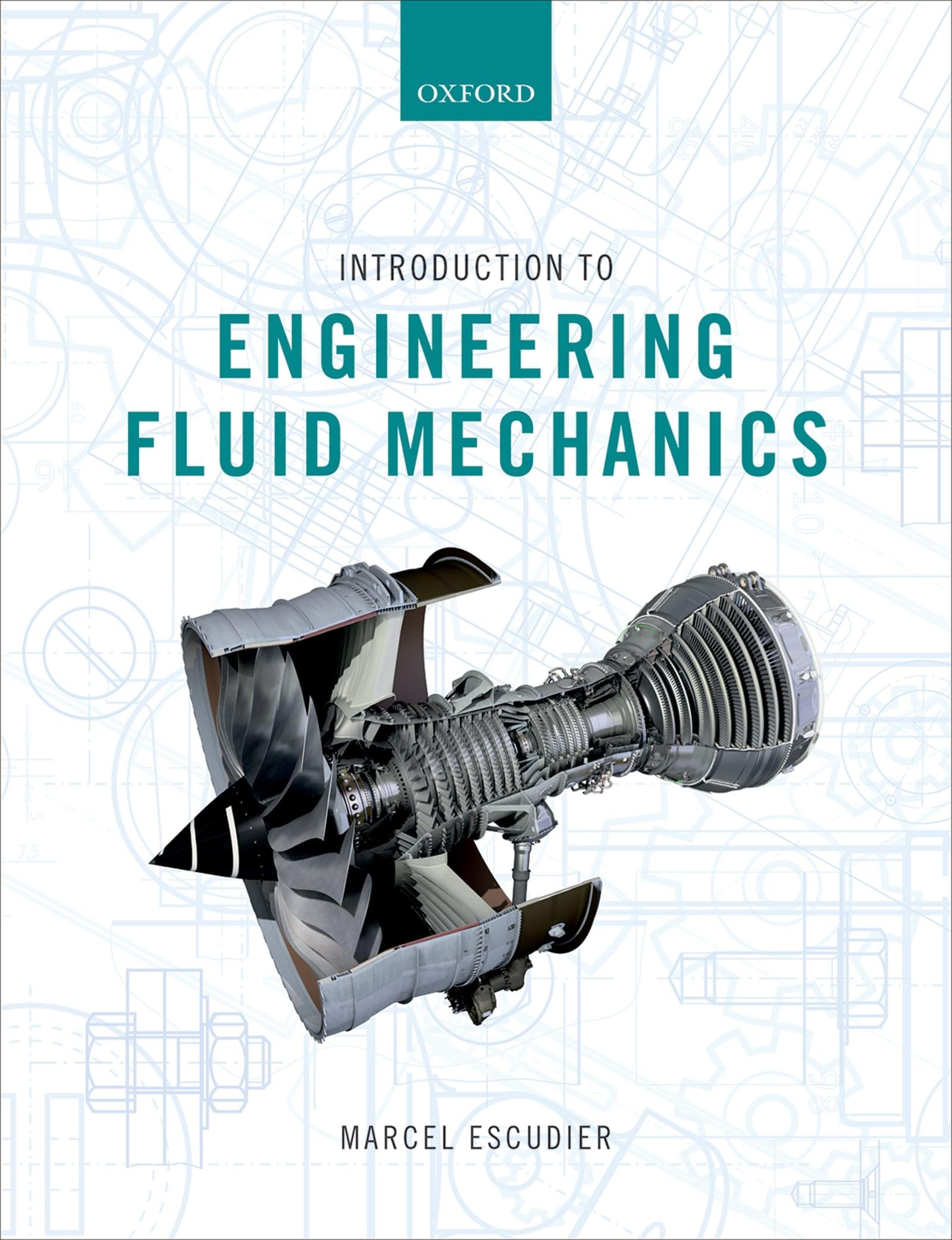
Title
Introduction To Engineering Fluid Mechanics
Sold by Ergodebooks, an authorized reseller.
Returns accepted within 30 days | support@ergodebooks.com
Shipping Information
- Free Standard Shipping — United States only
- Processing Time: 3–5 business days
- Estimated Delivery: 6–10 business days after dispatch
- Double-boxed, fully insured & discreetly packaged
- Tracking number sent via email once dispatched
Returns & Refund
Returns accepted within 30 days of delivery.
Damaged or Defective Item
Free return shipping + replacement or full refund
Wrong Item Received
Free return shipping + replacement or full refund
Change of Mind
Return shipping at customer's expense · 25% restocking fee applies
Payment Option

We Inhabit A World Of Fluids, Including Air (A Gas), Water (A Liquid), Steam (Vapour) And The Numerous Natural And Synthetic Fluids Which Are Essential To Modernday Life. Fluid Mechanics Concerns The Way Fluids Flow In Response To Imposed Stresses. The Subject Plays A Central Role In The Education Of Students Of Mechanical Engineering, As Well As Chemical Engineers, Aeronautical And Aerospace Engineers, And Civil Engineers. This Textbook Includes Numerous Examples Of Practical Applications Of The Theoretical Ideas Presented, Such As Calculating The Thrust Of A Jet Engine, The Shock And Expansionwave Patterns For Supersonic Flow Over A Diamondshaped Aerofoil, The Forces Created By Liquid Flow Through A Pipe Bend And/Or Junction, And The Power Output Of A Gas Turbine.The First Ten Chapters Of The Book Are Suitable For Firstyear Undergraduates. The Latter Half Covers Material Suitable For Fluidmechanics Courses For Upperlevel Students Although Knowledge Of Calculus Is Essential, This Text Focuses On The Underlying Physics. The Book Emphasizes The Role Of Dimensions And Dimensional Analysis, And Includes More Material On The Flow Of Nonnewtonian Liquids Than Is Usual In A General Book On Fluid Mechanics A Reminder That The Majority Of Synthetic Liquids Are Nonnewtonian In Character.
⚠️ WARNING (California Proposition 65):
This product may contain chemicals known to the State of California to cause cancer, birth defects, or other reproductive harm.
For more information, please visit www.P65Warnings.ca.gov.
- Q: What is the page count of this book? A: This book has six hundred eight pages. It provides a comprehensive overview of fluid mechanics suitable for both undergraduates and advanced students.
- Q: What are the dimensions of this textbook? A: The book measures nine point six nine inches in length, seven point four four inches in width, and nine point six nine inches in height. These dimensions make it a standard size for academic textbooks.
- Q: What type of binding does this book have? A: This book features a paperback binding. This makes it lightweight and flexible, ideal for carrying in a backpack or briefcase.
- Q: What educational level is this book suitable for? A: This textbook is suitable for first-year undergraduates and covers advanced material for upper-level students. It is designed for students in mechanical, chemical, and civil engineering.
- Q: Is prior knowledge of calculus required to read this book? A: Yes, prior knowledge of calculus is essential. The book focuses on the underlying physics of fluid mechanics, which requires a solid understanding of calculus concepts.
- Q: How does this book apply to real-world engineering problems? A: The book includes practical applications of fluid mechanics, such as calculating jet engine thrust and analyzing fluid flow in pipes. These examples bridge theory and real-world engineering challenges.
- Q: How should I care for this textbook? A: To keep this textbook in good condition, store it in a cool, dry place and avoid exposure to direct sunlight. Handle it with care to maintain the integrity of the binding and pages.
- Q: Can I clean this book if it gets dirty? A: Yes, you can clean this book by gently wiping the cover with a damp cloth. Avoid using harsh chemicals or submerging it in water to prevent damage.
- Q: What if the book arrives damaged? A: If the book arrives damaged, contact the seller for return or exchange options. Most sellers offer a warranty or return policy for damaged items.
- Q: Does this book include examples of non-Newtonian fluids? A: Yes, the book includes extensive material on non-Newtonian liquids. This is particularly relevant as many synthetic fluids exhibit non-Newtonian characteristics.
- Q: Is this textbook suitable for self-study? A: Yes, this textbook is suitable for self-study. It provides clear explanations and numerous examples that can aid independent learners in mastering fluid mechanics.
- Q: What topics are covered in the first ten chapters? A: The first ten chapters cover foundational concepts suitable for first-year students. Topics include fluid properties, fluid statics, and basic fluid dynamics principles.
- Q: Is this textbook mainly theoretical or practical? A: This textbook balances both theory and practical applications. While it emphasizes the underlying physics, it also includes real-world examples and calculations.
- Q: Who is the author of this textbook? A: The author of this textbook is Escudier. He is recognized for his contributions to the field of fluid mechanics and engineering education.
- Q: What is the publisher of this book? A: This book is published by Oxford University Press, USA. The publisher is known for its high-quality academic resources in various fields.