
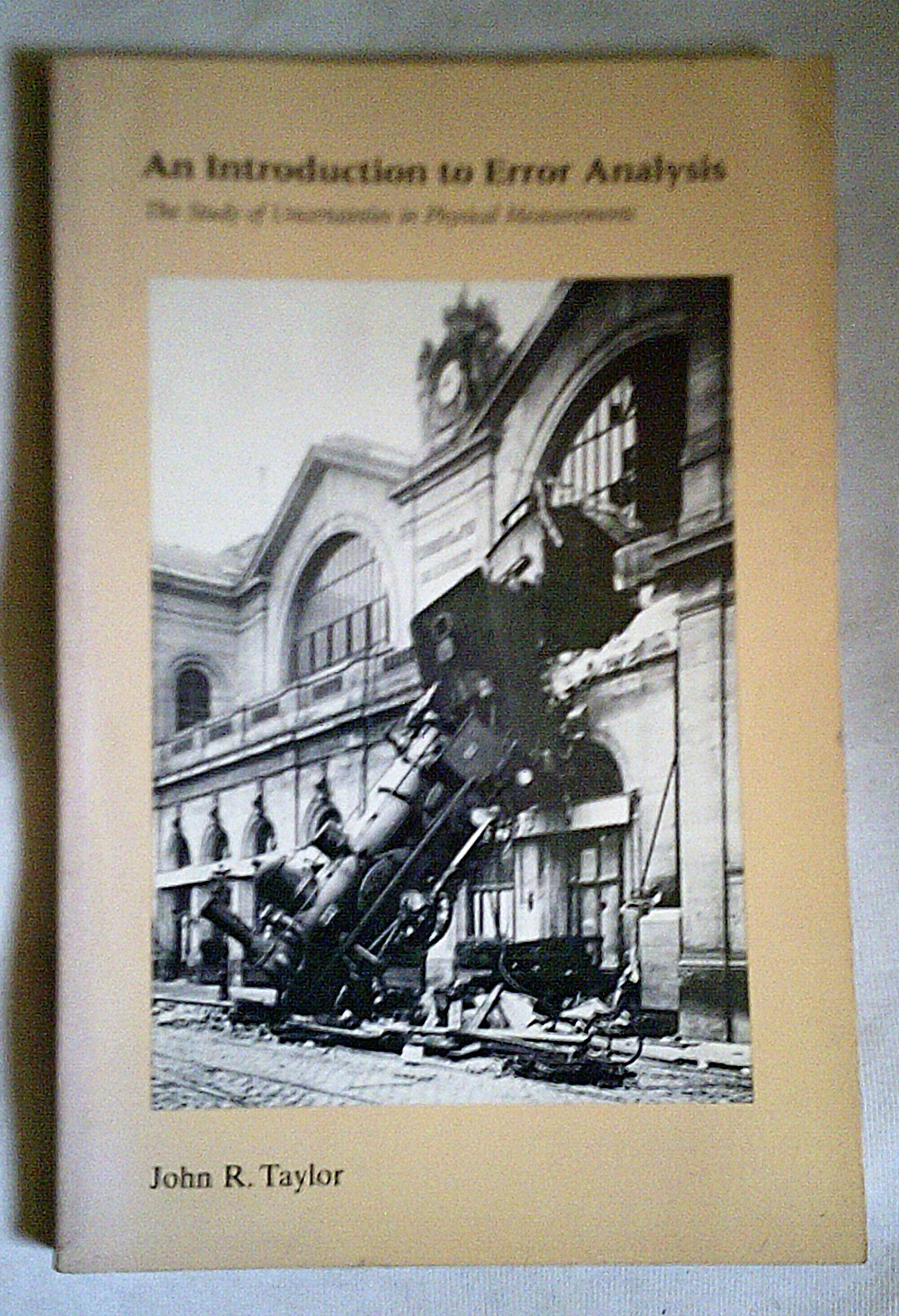
Title
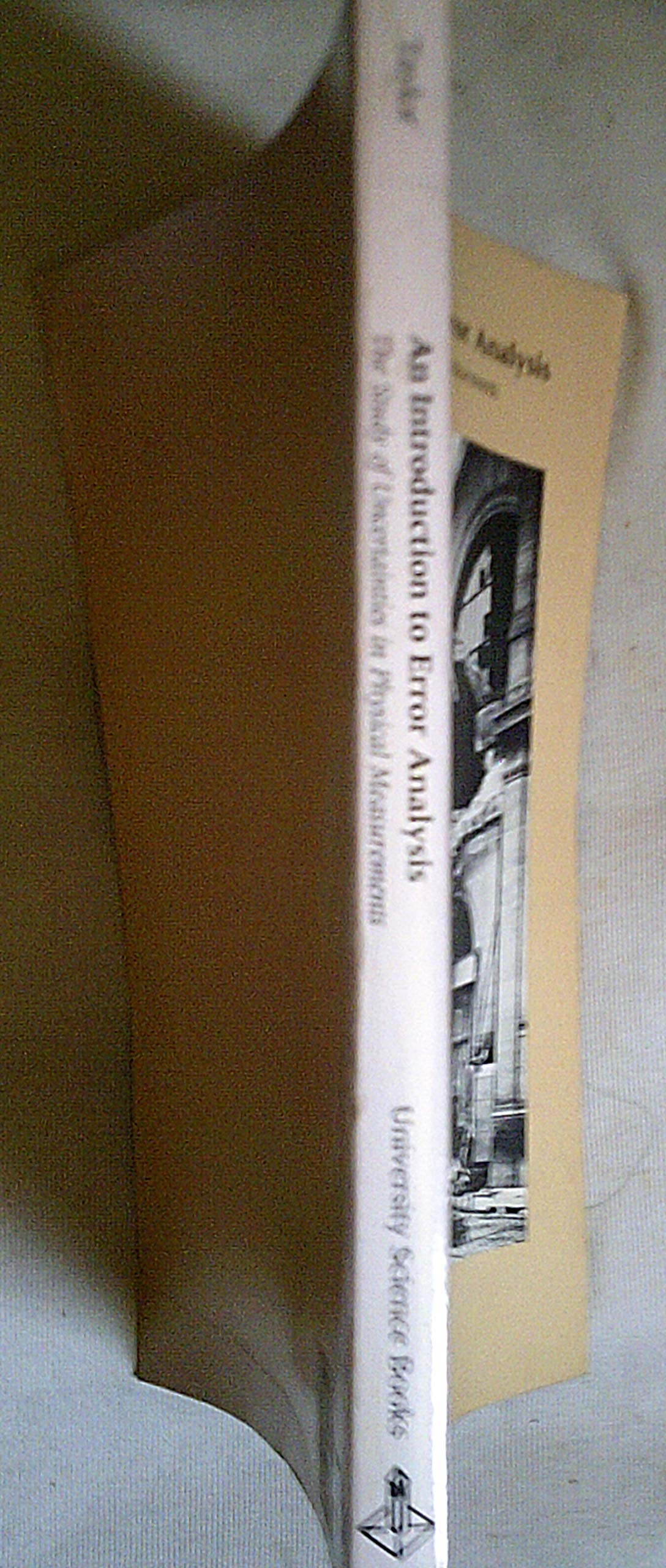
Introduction to Error Analysis: Uncertainties in Physical Measurements by University Science Books
Sold by Ergodebooks, an authorized reseller.
Returns accepted within 30 days | support@ergodebooks.com
Shipping Information
- Free Standard Shipping — United States only
- Processing Time: 3–5 business days
- Estimated Delivery: 6–10 business days after dispatch
- Double-boxed, fully insured & discreetly packaged
- Tracking number sent via email once dispatched
Returns & Refund
Returns accepted within 30 days of delivery.
Damaged or Defective Item
Free return shipping + replacement or full refund
Wrong Item Received
Free return shipping + replacement or full refund
Change of Mind
Return shipping at customer's expense · 25% restocking fee applies
Payment Option

Unlock the World of Uncertainties with the Second Edition of John Taylor's Best-Selling Text
The study of uncertainties is crucial for aspiring scientists and engineers. This second edition of John Taylor's acclaimed text serves as a comprehensive introduction designed specifically for lower division science students. It presents the essential concepts of error analysis in an accessible manner, making it a valuable resource in the fields of physics, chemistry, and engineering lab courses.
Product Overview:
John Taylor? book is ideal for students with no prior knowledge of the subject. Through engaging and relatable examples, including practical scenarios from carpentry to renowned historical experiments, the author makes complex topics understandable. The book not only elucidates the theoretical underpinnings of error analysis but also emphasizes practical application, ensuring that students grasp the significance of uncertainties in scientific studies.
Key Features:
- Comprehensive Coverage: Detailed exploration of error analysis tailored for lower division science students.
- Accessible Language: Clear explanations and relatable examples that cater to readers with no prior knowledge.
- Worked Examples: Numerous pertinent worked examples throughout the text, reinforcing the concepts introduced.
- Exercises: Simple exercises included in each chapter to promote active learning and self-assessment.
- Chapter-End Problems: A variety of problems at the end of each chapter to challenge students and test their understanding.
- Multilingual Availability: The first edition has been translated into six languages, expanding its accessibility to a global audience.
- Ideal for Lab Courses: Perfectly suited for use in laboratory settings across physics, chemistry, and engineering disciplines.
Why Choose This Text?
This book stands out for its student-friendly approach and its ability to demystify the often intimidating subject of uncertainties. The second edition has been thoughtfully revised to incorporate feedback from educators and students alike, ensuring an even more effective learning experience. With its emphasis on practical applications and clear explanations, this text is not just a book; it's a gateway to understanding the fundamental principles that underpin scientific inquiry.
About the Author:
John Taylor is a renowned author who has dedicated his career to making complex scientific concepts accessible to students. His works are celebrated for their clarity, thoroughness, and practical relevance, making them essential resources in educational institutions worldwide.
Elevate your learning experience and enhance your understanding of uncertainties with John Taylor's second edition?our essential guide to mastering error analysis in science!
⚠️ WARNING (California Proposition 65):
This product may contain chemicals known to the State of California to cause cancer, birth defects, or other reproductive harm.
For more information, please visit www.P65Warnings.ca.gov.
- Q: How many pages does this book have? A: This book contains two hundred seventy pages. It provides extensive coverage of error analysis in physical measurements.
- Q: What are the dimensions of this book? A: The book measures zero point five inches in thickness, five point five inches in width, and nine point twenty-five inches in height.
- Q: What type of binding does this book have? A: This book is available in paperback binding. This format is lightweight and easy to handle for students.
- Q: Who is the author of this book? A: The author is John R. Taylor, who is well-known for his expertise in physics and error analysis.
- Q: What subject does this book cover? A: This book covers the subject of mathematical analysis, specifically focusing on uncertainties in physical measurements.
- Q: Is this book suitable for beginners? A: Yes, this book is suitable for beginners. It assumes no prior knowledge and uses familiar examples to explain concepts.
- Q: What kind of examples are included in the book? A: The book includes examples from carpentry and historic experiments, making complex concepts relatable and easier to understand.
- Q: Can this book be used for lab courses? A: Yes, it is ideal for use in physics, chemistry, and engineering lab courses. It includes numerous exercises and problems for practice.
- Q: Is this book appropriate for high school students? A: Yes, high school students can benefit from this book. It introduces fundamental concepts in error analysis in an accessible manner.
- Q: Does this book require prior knowledge in physics? A: No, the book assumes no prior knowledge in physics. It is designed to be approachable for all students.
- Q: How should I store this book? A: Store the book in a cool, dry place away from direct sunlight. This will help preserve its condition over time.
- Q: Can I easily clean this book? A: Yes, you can clean the cover with a damp cloth. Avoid using harsh chemicals to maintain its quality.
- Q: What if the book arrives damaged? A: If the book arrives damaged, you should contact customer support for assistance. Most retailers offer return or exchange options.
- Q: Does this book come with a warranty? A: No, books typically do not come with warranties. However, check with your retailer for their return policy.
- Q: How can I get support if I have questions about the book? A: You can reach out to the publisher or retailer for support. They can provide additional information and assistance.