
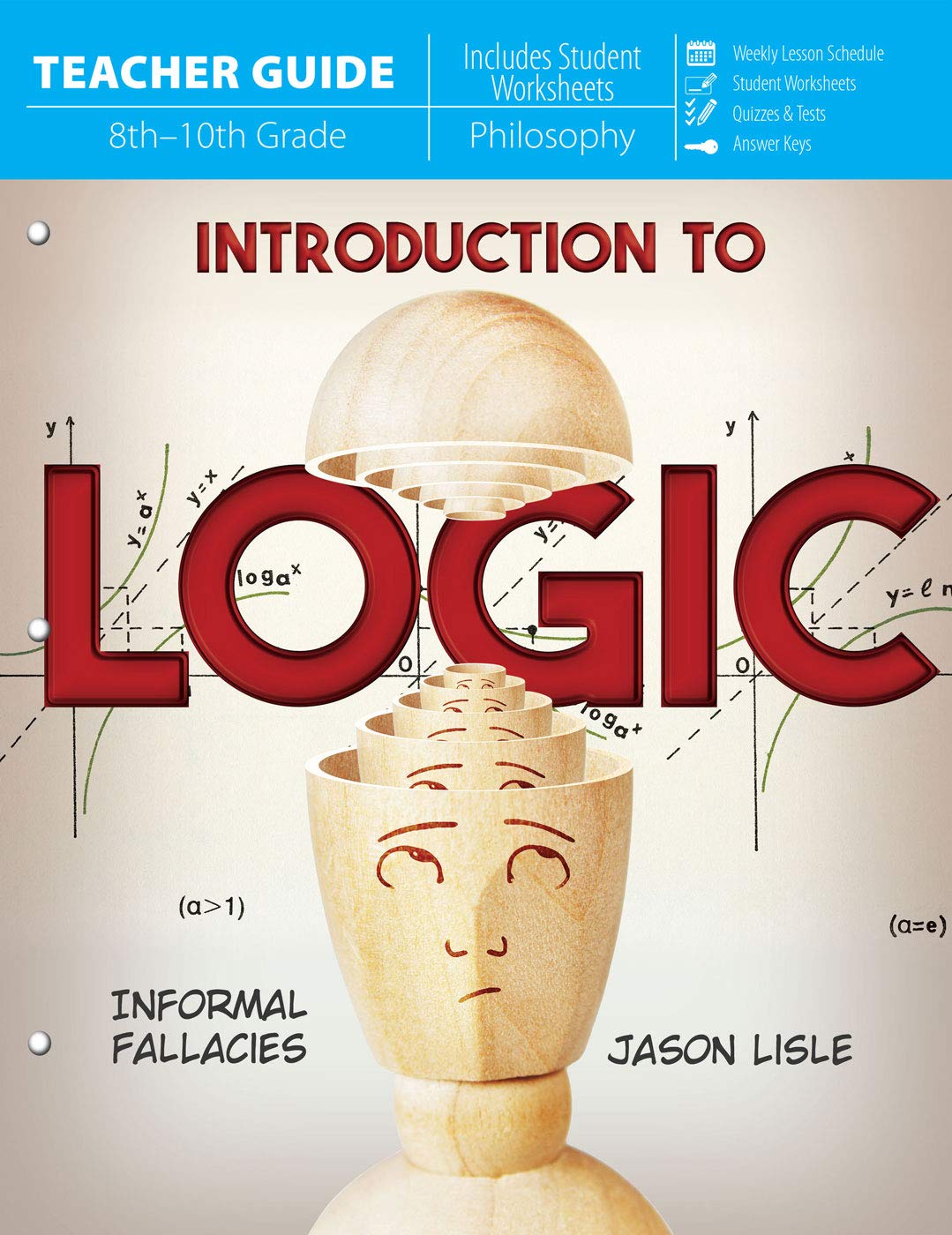
Title
Introduction to Logic (Teacher Guide),New
Sold by Ergodebooks, an authorized reseller.
Returns accepted within 30 days | support@ergodebooks.com
Shipping Information
- Free Standard Shipping — United States only
- Processing Time: 3–5 business days
- Estimated Delivery: 6–10 business days after dispatch
- Double-boxed, fully insured & discreetly packaged
- Tracking number sent via email once dispatched
Returns & Refund
Returns accepted within 30 days of delivery.
Damaged or Defective Item
Free return shipping + replacement or full refund
Wrong Item Received
Free return shipping + replacement or full refund
Change of Mind
Return shipping at customer's expense · 25% restocking fee applies
Payment Option

The vital resource for grading all assignments from the Introduction To Logic course, which includes: Instructional insights enhanced with worksheets and additional practice sheets Special chapter reviews at the beginning of each new chapter worksheet, created to help students and teachers grasp the scope of each section.OVERVIEW: Welcome to the world of logic. This logic course will both challenge and inspire students to be able to defend their faith against atheists and skeptics alike. Because learning logical terms and principles is often like learning a foreign language, the course has been developed to help students of logic learn the practical understanding of logical arguments. To make the course content easier to grasp, the schedule provides worksheets and practice sheets to help students better recognize logical fallacies, as well as review weeks for the quizzes and the final. The practice sheets in the back of the book offer practical study for both the final exam and for actual arguments you might encounter online or in the media.FEATURES: The calendar provides daily sessions with clear objectives and worksheets, quizzes, and tests, all based on the readings from the course book.
⚠️ WARNING (California Proposition 65):
This product may contain chemicals known to the State of California to cause cancer, birth defects, or other reproductive harm.
For more information, please visit www.P65Warnings.ca.gov.
- Q: What is the primary purpose of the 'Introduction to Logic (Teacher Guide)'? A: The primary purpose of the 'Introduction to Logic (Teacher Guide)' is to serve as a vital resource for teachers grading assignments in the Introduction to Logic course, providing instructional insights, worksheets, and additional practice materials.
- Q: What features are included in the Teacher Guide? A: The Teacher Guide includes special chapter reviews, instructional insights, worksheets, quizzes, tests, and practical study sheets designed to help both students and teachers understand logical arguments and prepare for assessments.
- Q: Who is the author of the 'Introduction to Logic (Teacher Guide)'? A: The author of the 'Introduction to Logic (Teacher Guide)' is Jason Lisle.
- Q: What is the publication date of this Teacher Guide? A: The 'Introduction to Logic (Teacher Guide)' was published on December 10, 2018.
- Q: How many pages does the Teacher Guide contain? A: The Teacher Guide contains a total of 157 pages.
- Q: What is the binding type of the 'Introduction to Logic (Teacher Guide)'? A: The binding type of the 'Introduction to Logic (Teacher Guide)' is paperback.
- Q: Is there any additional material provided in the Teacher Guide? A: The Teacher Guide does not specify additional material; however, it includes worksheets and practice sheets designed to enhance the learning experience for students.
- Q: What is the intended audience for the 'Introduction to Logic (Teacher Guide)'? A: The intended audience for the 'Introduction to Logic (Teacher Guide)' is teachers and educators involved in teaching the Introduction to Logic course.
- Q: What educational approach does the Teacher Guide take towards teaching logic? A: The Teacher Guide takes an educational approach that emphasizes practical understanding of logical arguments, incorporating worksheets and reviews to help students recognize logical fallacies and prepare for quizzes.
- Q: Can the Teacher Guide be used for self-study? A: While the Teacher Guide is primarily designed for educators, students may also find it useful for self-study, especially with its worksheets and practice materials.