
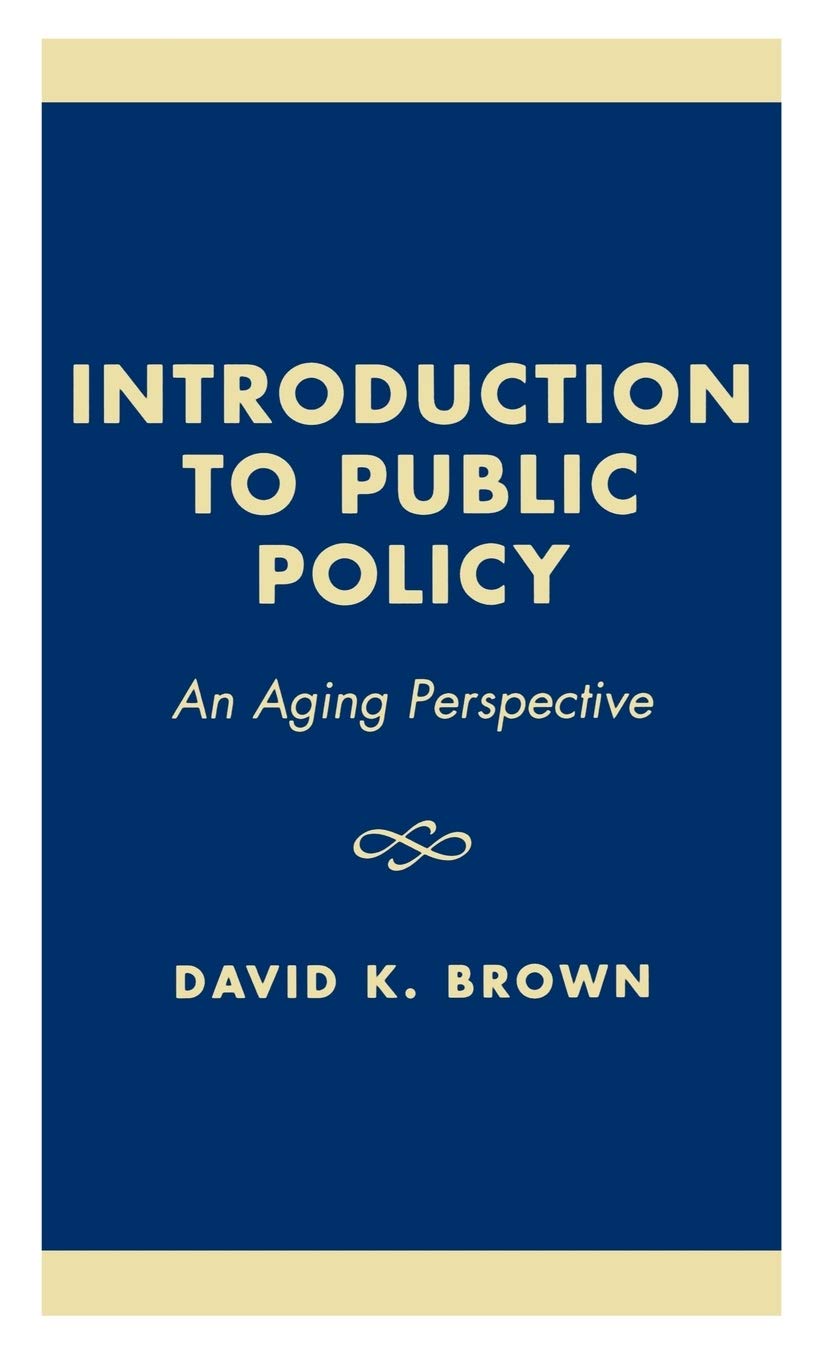
Title
Introduction to Public Policy: An Aging Perspective,New
Sold by Ergodebooks, an authorized reseller.
Returns accepted within 30 days | support@ergodebooks.com
Shipping Information
- Free Standard Shipping — United States only
- Processing Time: 3–5 business days
- Estimated Delivery: 6–10 business days after dispatch
- Double-boxed, fully insured & discreetly packaged
- Tracking number sent via email once dispatched
Returns & Refund
Returns accepted within 30 days of delivery.
Damaged or Defective Item
Free return shipping + replacement or full refund
Wrong Item Received
Free return shipping + replacement or full refund
Change of Mind
Return shipping at customer's expense · 25% restocking fee applies
Payment Option

Review...a clear, thoughtful and challenging perspective on aging public policy...a book that will be welcomed by teachers of aging policy, students, and all those working in the arena of aging programs. This is an excellent text for social policy and agingcourses...and of great assistance for social workers and others who are interested in understanding federal/state/local policy and how the policy system works.>>> (Journal Of Gerontological Social Work)...a clear, thoughtful and challenging perspective on aging public policy...a book that will be welcomed by teachers of aging policy, students, and all those working in the arena of aging programs. This is an excellent text for social policy and aging courses...and of great assistance for social workers and others who are interested in understanding federal/state/local policy and how the policy system works. (Journal Of Gerontological Social Work)Product DescriptionThis book proposes a policy context upon which to build a framework for programs and services for the aging. The approach is grounded in principles which view public policy as an open, competitive process in which decisions about the distribution of scarce and limited resources are made. The traditional view of the aging network as neat, circumscribed levels of federal, state, area agency and local provider entities each with clearly defined levels of authority is laid aside in favor of a circuitous, intensely competitive and interactive system. It is further suggested that if the aging network is to survive into the next century as a major policy player, it will need to develop its institutionbuilding approach through discrete and strategic penetration of a myriad of coalitions, policy makers and policy centers on all levels. Roles, values and mission are discussed in this context.About the AuthorDavid K. Brown is Associate Director at the Center on Aging at West Verginia University.
⚠️ WARNING (California Proposition 65):
This product may contain chemicals known to the State of California to cause cancer, birth defects, or other reproductive harm.
For more information, please visit www.P65Warnings.ca.gov.