
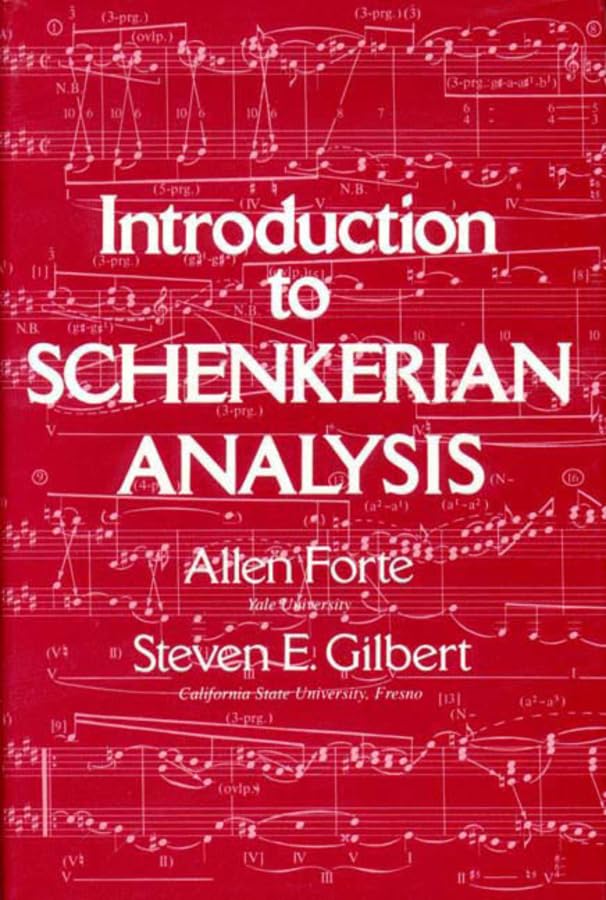
Title
Introduction To Schenkerian Analysis
Sold by Ergodebooks, an authorized reseller.
Returns accepted within 30 days | support@ergodebooks.com
Shipping Information
- Free Standard Shipping — United States only
- Processing Time: 3–5 business days
- Estimated Delivery: 6–10 business days after dispatch
- Double-boxed, fully insured & discreetly packaged
- Tracking number sent via email once dispatched
Returns & Refund
Returns accepted within 30 days of delivery.
Damaged or Defective Item
Free return shipping + replacement or full refund
Wrong Item Received
Free return shipping + replacement or full refund
Change of Mind
Return shipping at customer's expense · 25% restocking fee applies
Payment Option

This Book Is Intended To Serve As A Basic Textbook On Schenkerian Analysis, The Analytical Approach Developed Over A Period Of Many Years By The Austrian Music Theorist Heinrich Schenker (18681935).The Book Begins With A Thorough Coverage Of A Number Of Elementary Matters. This May Be Regarded Either As A Review Or As A Reorientation In Preparation For The Systematic Presentation That Follows.Beginning In Part Two Ideas That Are More Specifically Schenkerian Are Developed And Applied To The Analysis Of Short Compositions. Since The Book Is Also Intended To Cover All Of The Basic Standard Form It Has Seemed Logical To Use This Feature In Organizing The Material. Thus, Part Two Ends With Longer Forms And Part Three Covers The Main Large Forms (Sonata, Rondo, And So On). The Various Types Of Schenkerian Prolongations Are Introduced Gradually And Discussed And Illustrated Thoroughly In The Text.Each Chapter Ends With A Set Of Exercises Keyed To The Topics That Have Been Presented, And The Student Is Given Precise Instructions For Completing The Exercises As Well As Occasional Hints About Pitfalls And Special Problems That They Contain.
⚠️ WARNING (California Proposition 65):
This product may contain chemicals known to the State of California to cause cancer, birth defects, or other reproductive harm.
For more information, please visit www.P65Warnings.ca.gov.
- Q: How many pages does the book have? A: The book has four hundred sixteen pages. This length provides an in-depth exploration of Schenkerian analysis.
- Q: What is the binding type of this book? A: The book is paperback bound. This makes it lightweight and flexible for easy handling and reading.
- Q: Who is the author of 'Introduction to Schenkerian Analysis'? A: The author is Allen Forte. He is known for his contributions to music theory and analysis.
- Q: What topics does this book cover? A: The book covers Schenkerian analysis and basic standard forms. It includes exercises and illustrations for better understanding.
- Q: Is this book suitable for beginners? A: Yes, this book is suitable for beginners. It starts with elementary concepts before delving into more complex Schenkerian ideas.
- Q: How do I approach the exercises in the book? A: Each chapter ends with exercises keyed to the topics presented. The book provides precise instructions and hints for completing them.
- Q: What should I do if the book arrives damaged? A: If the book arrives damaged, contact the seller for a return or exchange. Most sellers have policies in place to address such issues.
- Q: Can I use this book for advanced music analysis? A: Yes, the book can be used for advanced music analysis. It covers a wide range of Schenkerian techniques suitable for deeper studies.
- Q: Is there a warranty on this book? A: No, there is typically no warranty on books. However, return policies may apply if the book is defective.
- Q: How should I store this book? A: Store the book in a cool, dry place away from direct sunlight. This will help preserve its quality and prevent damage.
- Q: What if I need help understanding the content? A: If you need help, consider joining a study group or seeking online resources related to Schenkerian analysis.
- Q: Is this book appropriate for music theory students? A: Yes, this book is highly appropriate for music theory students. It provides foundational knowledge essential for further study.
- Q: Are there illustrations in the book? A: Yes, the book includes illustrations. These visual aids help clarify the concepts and techniques discussed.
- Q: What is the recommended age for readers of this book? A: The book is suitable for readers aged fifteen and up. It is designed for students and enthusiasts of music theory.
- Q: Does the book include references or further readings? A: Yes, the book includes references for further readings. This allows readers to explore more about Schenkerian analysis and related topics.