
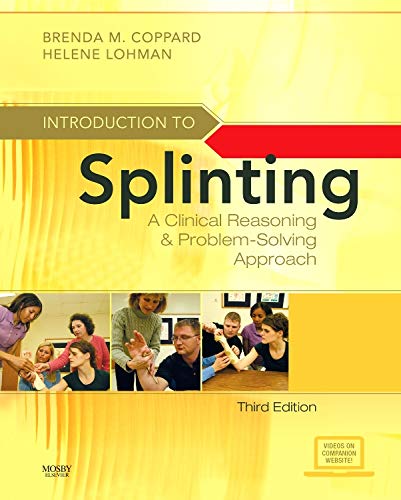
Title
Introduction To Splinting: A Clinical Reasoning And Problemsolving Approach,New
Sold by Ergodebooks, an authorized reseller.
Returns accepted within 30 days | support@ergodebooks.com
Shipping Information
- Free Standard Shipping — United States only
- Processing Time: 3–5 business days
- Estimated Delivery: 6–10 business days after dispatch
- Double-boxed, fully insured & discreetly packaged
- Tracking number sent via email once dispatched
Returns & Refund
Returns accepted within 30 days of delivery.
Damaged or Defective Item
Free return shipping + replacement or full refund
Wrong Item Received
Free return shipping + replacement or full refund
Change of Mind
Return shipping at customer's expense · 25% restocking fee applies
Payment Option

The Third Edition Of Introduction To Splinting: A Clinical Reasoning And Problemsolving Approach Helps Readers Master The Basic Theory, Principles, And Techniques Of Splinting Needed For Clinical Practice. Using A Combination Textbook/Workbook Format, It Integrates Theory And Technical Knowledge With Handson Learning Features That Equip Readers With Essential Clinical Knowledge, Critical Thinking Skills, And Problemsolving Skills Associated With Splinting. Comprehensive Coverage Presents The Fundamentals Of Splinting That A Therapist Needs To Know. Selfquizzes, Case Studies, And Lab Exercises Help Readers Bridge The Gap Between Learning And Practice And Apply What They'Ve Learned To Reallife Situations. Key Terms, Chapter Outlines, And Review Questions Highlights Specific Information That The Reader Can Expect To Learn From Each Chapter. Combined Textbook/Workbook Format Reinforces Information As It Is Learned And Encourages Practical Application Of Concepts. Content Has Been Updated To Include New Research And Techniques, Current Trends, And New Information Sources. Lists Of Key Terms For Each Chapter Help Familiarize The Reader With Relevant Terminology. Two New Case Studies Have Been Added To Each Chapter, Strengthening The Book'S Clinical Application Focus. Companion Cd Contains Video Clips Demonstrating How To Fabricate Specific Splints. Four New Chapters Cover Topics Such As Occupationbased Splinting, Tools, Processes, And Techniques Of Splinting, And Splints For The Elbow, Shoulder, And Fingers. Chapters Are Divided Into Three Units: Splinting Foundations; Splints For Conditions And Populations; And Topics Related To Splinting. A New Appendix Directs Readers To Helpful Online Resources And Vendors.
⚠️ WARNING (California Proposition 65):
This product may contain chemicals known to the State of California to cause cancer, birth defects, or other reproductive harm.
For more information, please visit www.P65Warnings.ca.gov.
- Q: How many pages are in 'Introduction to Splinting'? A: This book contains five hundred forty-four pages. It provides comprehensive coverage of splinting theory and practical applications.
- Q: What is the binding type of the book? A: The book is available in paperback binding. This format is ideal for both reading and practical use in clinical settings.
- Q: What are the dimensions of the book? A: The book measures nine and a half inches in length, three-quarters of an inch in width, and eleven and a half inches in height. These dimensions make it portable and easy to handle.
- Q: Who is the author of 'Introduction to Splinting'? A: The author is Brenda M. Coppard, PhD, OTR/L, FAOTA. She brings extensive clinical experience and knowledge to the material presented in the book.
- Q: What topics are covered in the book? A: The book covers topics such as occupation-based splinting, tools and techniques, and splints for various conditions. It is designed to enhance both theoretical understanding and practical skills.
- Q: How do I apply the concepts learned in this book? A: You can apply the concepts through self-quizzes, case studies, and hands-on lab exercises included in the book. These features help bridge the gap between theory and practice.
- Q: Is this book suitable for beginners in splinting? A: Yes, this book is suitable for beginners. It integrates foundational knowledge with practical applications, making it accessible for those new to splinting.
- Q: Can advanced practitioners benefit from this book? A: Yes, advanced practitioners can also benefit. The updated content includes new research, techniques, and case studies that enhance clinical practice.
- Q: Are there exercises included in the book? A: Yes, the book includes various lab exercises. These exercises allow readers to practice techniques and apply their knowledge in clinical scenarios.
- Q: How do I care for this book to keep it in good condition? A: To keep the book in good condition, store it in a dry place away from direct sunlight. Avoid bending or damaging the spine when handling it.
- Q: Is there a companion resource for this book? A: Yes, the book comes with a companion CD. This CD contains video clips demonstrating how to fabricate specific splints, enhancing the learning experience.
- Q: What if I receive a damaged copy of the book? A: If you receive a damaged copy, contact the seller for a return or exchange. Most sellers have policies in place to address such issues.
- Q: Does this book include review questions? A: Yes, each chapter includes review questions. These questions help reinforce key concepts and prepare readers for practical application.
- Q: Are there online resources mentioned in the book? A: Yes, a new appendix directs readers to helpful online resources and vendors. This helps enhance learning and access to additional materials.
- Q: What is the primary focus of 'Introduction to Splinting'? A: The primary focus is to teach clinical reasoning and problem-solving in splinting. It aims to equip readers with essential skills for effective practice.