
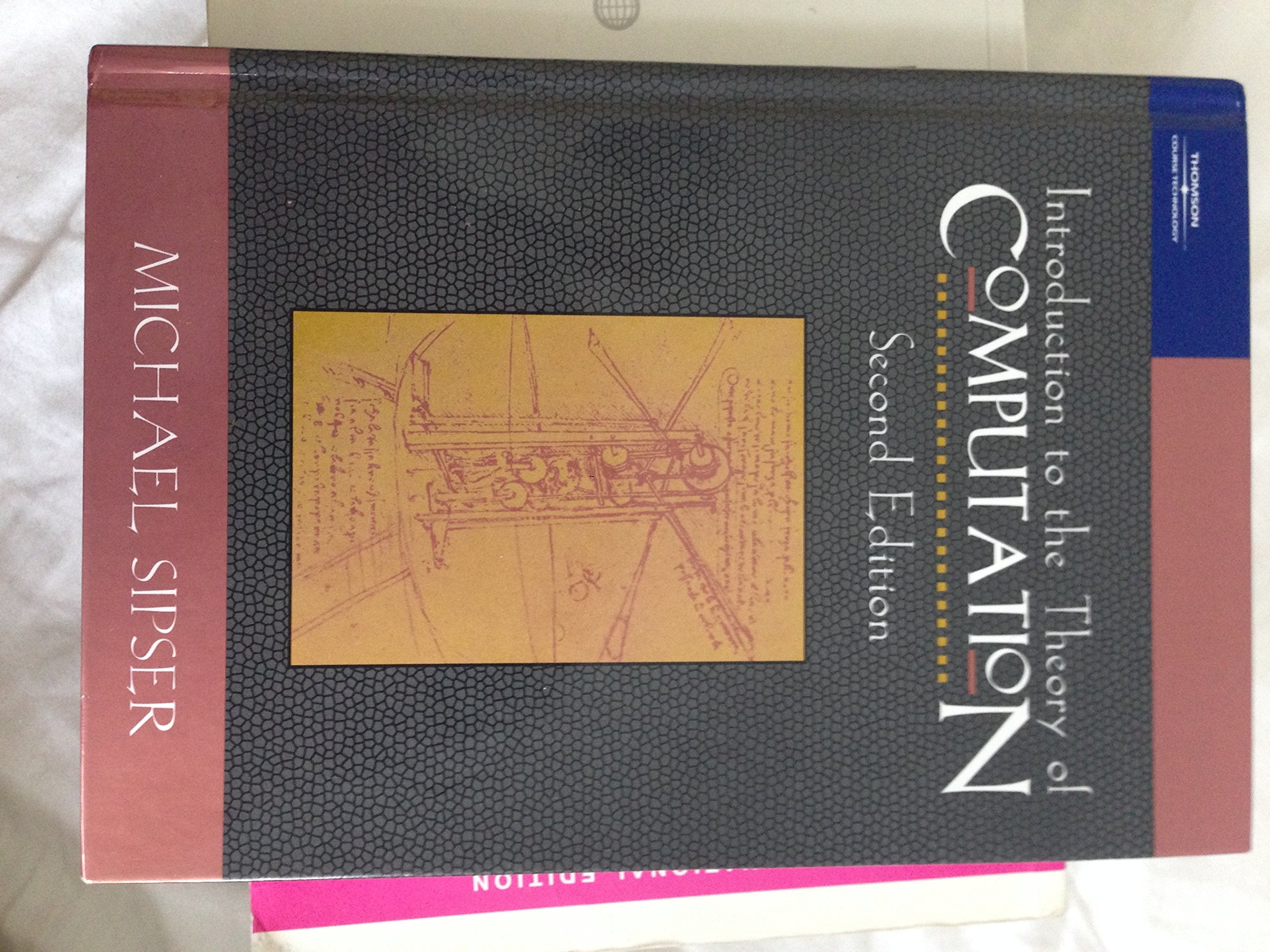
Title
Introduction To The Theory Of Computation,New
Sold by Ergodebooks, an authorized reseller.
Returns accepted within 30 days | support@ergodebooks.com
Shipping Information
- Free Standard Shipping — United States only
- Processing Time: 3–5 business days
- Estimated Delivery: 6–10 business days after dispatch
- Double-boxed, fully insured & discreetly packaged
- Tracking number sent via email once dispatched
Returns & Refund
Returns accepted within 30 days of delivery.
Damaged or Defective Item
Free return shipping + replacement or full refund
Wrong Item Received
Free return shipping + replacement or full refund
Change of Mind
Return shipping at customer's expense · 25% restocking fee applies
Payment Option

This Highly Anticipated Revision Builds Upon The Strengths Of The Previous Edition. Sipser'S Candid, Crystalclear Style Allows Students At Every Level To Understand And Enjoy This Field. His Innovative 'Proof Idea' Sections Explain Profound Concepts In Plain English. The New Edition Incorporates Many Improvements Students And Professors Have Suggested Over The Years, And Offers Updated, Classroomtested Problem Sets At The End Of Each Chapter.
⚠️ WARNING (California Proposition 65):
This product may contain chemicals known to the State of California to cause cancer, birth defects, or other reproductive harm.
For more information, please visit www.P65Warnings.ca.gov.
- Q: What is the page count of this book? A: This book contains four hundred thirty-one pages. It provides an in-depth exploration of computational theory.
- Q: What are the dimensions of this book? A: The book measures six and a half inches in length, one inch in width, and nine and a quarter inches in height. These dimensions make it suitable for easy handling and reading.
- Q: What type of binding does this book have? A: This book features a hardcover binding. This type of binding enhances durability and provides a professional appearance.
- Q: Who is the author of this book? A: The author of this book is Michael Sipser. He is well-regarded for his contributions to the field of computation.
- Q: What genre does this book belong to? A: This book falls under the genre of Machine Theory. It focuses on the fundamental principles of computation.
- Q: Is this book suitable for beginners? A: Yes, this book is suitable for beginners as well as advanced students. Sipser’s clear writing style makes complex topics accessible.
- Q: What reading level is this book targeted at? A: This book is targeted at college-level students studying computer science. It is appropriate for those taking introductory courses.
- Q: How can I best utilize this book for study? A: To utilize this book effectively, read each chapter thoroughly and complete the problem sets provided. These practices reinforce understanding of the material.
- Q: Can this book be used for self-study? A: Yes, this book can be used for self-study. Its structured chapters and problem sets facilitate independent learning.
- Q: How should I care for this book? A: To care for this book, store it upright in a dry place. Avoid exposing it to moisture or direct sunlight to maintain its condition.
- Q: Is this book safe for handling by young students? A: Yes, this book is safe for handling by young students. However, it is recommended for those at a college level or older due to its advanced content.
- Q: What if the book arrives damaged? A: If the book arrives damaged, you should contact the seller immediately for a replacement or refund. Most sellers offer a return policy for such cases.
- Q: Does this book come with a warranty? A: No, this book does not come with a warranty. However, check the seller's return policy for options if issues arise.
- Q: Are there any additional resources to accompany this book? A: Yes, many instructors provide additional resources and problem sets to accompany this book. Check with your course syllabus for details.
- Q: Is this book used in university courses? A: Yes, this book is often used in university courses on computation and theoretical computer science. It is widely regarded in academic settings.
- Q: What improvements does the new edition offer? A: The new edition incorporates many improvements suggested by students and professors over the years, including updated problem sets and clearer explanations.