
Title
Inventing Flight: The Wright Brothers And Their Predecessors,New
Sold by Ergodebooks, an authorized reseller.
Returns accepted within 30 days | support@ergodebooks.com
Shipping Information
- Free Standard Shipping — United States only
- Processing Time: 3–5 business days
- Estimated Delivery: 6–10 business days after dispatch
- Double-boxed, fully insured & discreetly packaged
- Tracking number sent via email once dispatched
Returns & Refund
Returns accepted within 30 days of delivery.
Damaged or Defective Item
Free return shipping + replacement or full refund
Wrong Item Received
Free return shipping + replacement or full refund
Change of Mind
Return shipping at customer's expense · 25% restocking fee applies
Payment Option

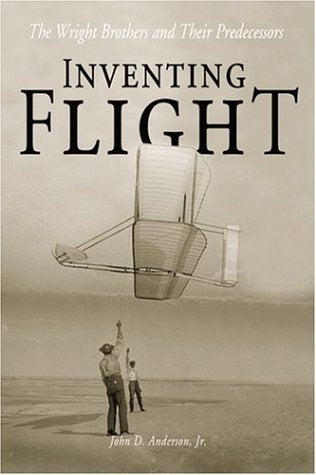
The Invention Of Flight Craft Heavier Than Air Counts Among Humankind'S Defining Achievements. In This Book, Aviation Engineer And Historian John D. Anderson, Jr., Offers A Concise And Engaging Account Of The Technical Developments That Anticipated The Wright Brothers' Successful First Flight On December 17, 1903. While The Accomplishments Of The Wrights Have Become Legendary, We Do Well To Remember That They Inherited A Body Of Aerodynamics Knowledge And Flying Machine Technology. How Much Did They Draw Upon This Legacy? Did It Prove Useful Or Lead To Dead Ends?Beginning With The Earliest Attempts At Flight, Anderson Explains How Leonardo Davinci First Began To Grasp The Concepts Of Lift And Drag Which Would Be Essential To The Invention Of Powered Flight. He Describes The Many Failed Efforts Of The Socalled 'Tower Jumpers,' From Benedictine Monk Oliver Of Malmesbury In 1022 To The Eighteenthcentury Marquis De Bacqueville. He Tells The Fascinating Story Of Aviation Pioneers Such As Sir George Cayley, Who In A Stroke Of Genius First Proposed The Modern Design Of A Fixedwing Craft With A Fuselage And Horizontal And Vertical Tail Surfaces In 1799, And William Samuel Henson, A Lacemaking Engineer Whose Ambitious 'Aerial Steam Carriage' Was Patented In 1842 But Never Built. Anderson Describes The Groundbreaking Nineteenthcentury Laboratory Experiments In Fluid Dynamics, The Building Of The World'S First Wind Tunnel In 1870, And The Key Contributions Of Various Scientists And Inventors In Such Areas As Propulsion (Propellers, Not Flapping Wings) And Wing Design (Curved, Not Flat). He Also Explains The Crucial Contributions To The Science Of Aerodynamics By The German Engineer Otto Lilienthal, Later Praised By The Wrights As Their 'Most Important' Predecessor.In Telling The Dramatic Story Of The Wright Brothers' Many Experiments At Kitty Hawk As They Raced To Become The First In Flight, Anderson Shows How The Brothers Succeeded Where Others Failed By Taking The Best Of Early Technology And Building Upon It Using A Carefully Planned, Stepbystep Experimental Approach. (They Recognized, For Example, That It Was Necessary To Become A Skilled Glider Pilot Before Attempting Powered Flight.) With Vintage Photographs And Informative Diagrams To Enhance The Text, Inventing Flight Will Interest Anyone Who Has Ever Wondered What Lies Behind The Miracle Of Flight.
⚠️ WARNING (California Proposition 65):
This product may contain chemicals known to the State of California to cause cancer, birth defects, or other reproductive harm.
For more information, please visit www.P65Warnings.ca.gov.