
Title
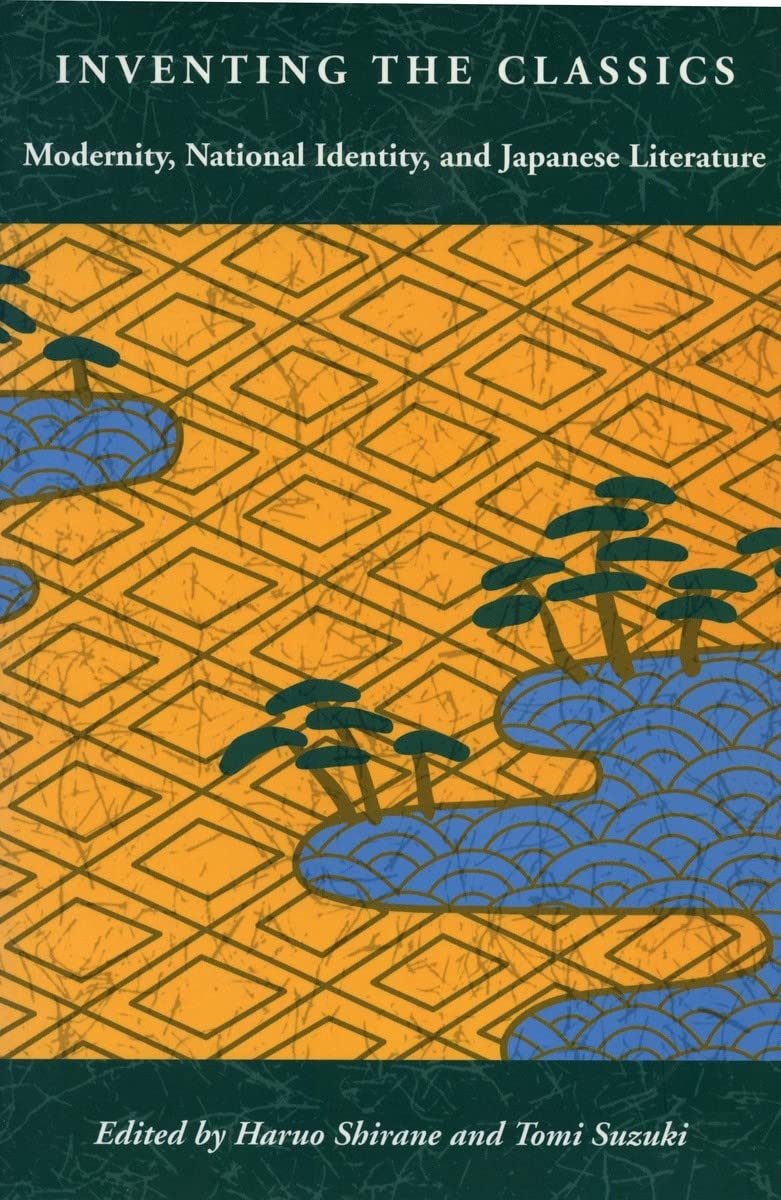
Inventing The Classics: Modernity, National Identity, And Japanese Literature,Used
Sold by Ergodebooks, an authorized reseller.
Returns accepted within 30 days | support@ergodebooks.com
Shipping Information
- Free Standard Shipping — United States only
- Processing Time: 3–5 business days
- Estimated Delivery: 6–10 business days after dispatch
- Double-boxed, fully insured & discreetly packaged
- Tracking number sent via email once dispatched
Returns & Refund
Returns accepted within 30 days of delivery.
Damaged or Defective Item
Free return shipping + replacement or full refund
Wrong Item Received
Free return shipping + replacement or full refund
Change of Mind
Return shipping at customer's expense · 25% restocking fee applies
Payment Option

Today the term 'Japanese literary classics' implies such texts as the Man'yoshu, Kojiki, Tale of Genji, Tale of the Heike, Noh drama, and the works of Saikaku, Chikamatsu, and Basho, which are considered the wellspring and embodiment of Japanese tradition and culture. Most of these texts, however, did not become 'classics' until the end of the nineteenth century, in a process closely related to the emergence of Japan as a modern nationstate and to the radical reconfiguration of notions of literature and learning under Western influence. As in Europe and elsewhere, the construction of a national literature and language with a putative ancient lineage was critical to the creation of a distinct nationstate. This book addresses the issue of national identity and the ways in which modern European disciplinary notions of 'literature' and genres played a major role in the modern canonization process. These 'classics' did not have inherent, unchanging value; instead, their value was produced and reproduced by various institutions and individuals in relation to socioeconomic power. How then were these texts elevated and used? What kinds of values were given to them? How was this process related to larger social, political, and religious configurations? This book, which looks in depth at each of the major 'classics,' explores these questions in a broad historical context, from the medieval period, when multiple canons competed with each other, through the early modern and modern periods. Throughout, the essays focus on the roles of schools, commentators, and socioreligious institutions, and on issues of gender. The result is a new view of the transformation of the Japanese canon and its intimate connection with the issue of national and cultural identity.
⚠️ WARNING (California Proposition 65):
This product may contain chemicals known to the State of California to cause cancer, birth defects, or other reproductive harm.
For more information, please visit www.P65Warnings.ca.gov.